





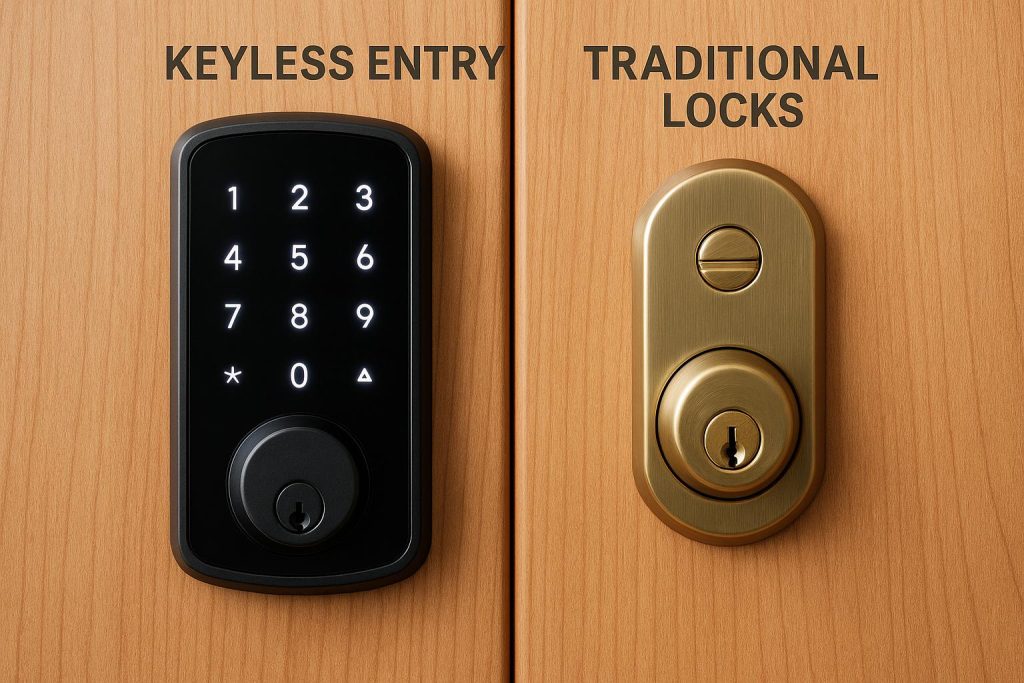
When deciding how to secure your property, you’ll likely compare keyless entry systems and traditional locks. Both have their strengths and drawbacks, depending on your needs for security, convenience, and cost. Here’s the breakdown:
- Keyless Entry: Offers PIN codes, smartphone access, or key fobs. Great for remote control, flexible access, and activity tracking. However, it’s more expensive upfront, relies on batteries, and may face risks like hacking or technical glitches.
- Traditional Locks: Dependable, mechanical security with no reliance on power or apps. They’re affordable and easier to maintain but require physical keys, which can be lost or duplicated.
Quick Comparison
| Feature | Keyless Entry | Traditional Locks |
|---|---|---|
| Access Method | PIN, app, fingerprint, key fob | Physical key |
| Upfront Cost | $100–$250 | $30–$50 |
| Maintenance | Battery replacements (6–12 months) | Minimal – occasional lubrication |
| Security Risks | Hacking, worn keypads | Picking, key duplication |
| Convenience | Remote access, temporary codes | Simple and familiar |
| Power Dependency | Requires batteries | Fully mechanical |
Keyless systems are ideal for those needing flexibility or managing multiple users, while traditional locks suit those prioritizing simplicity and reliability. For expert guidance, consult a locksmith to ensure proper installation and maximum security.
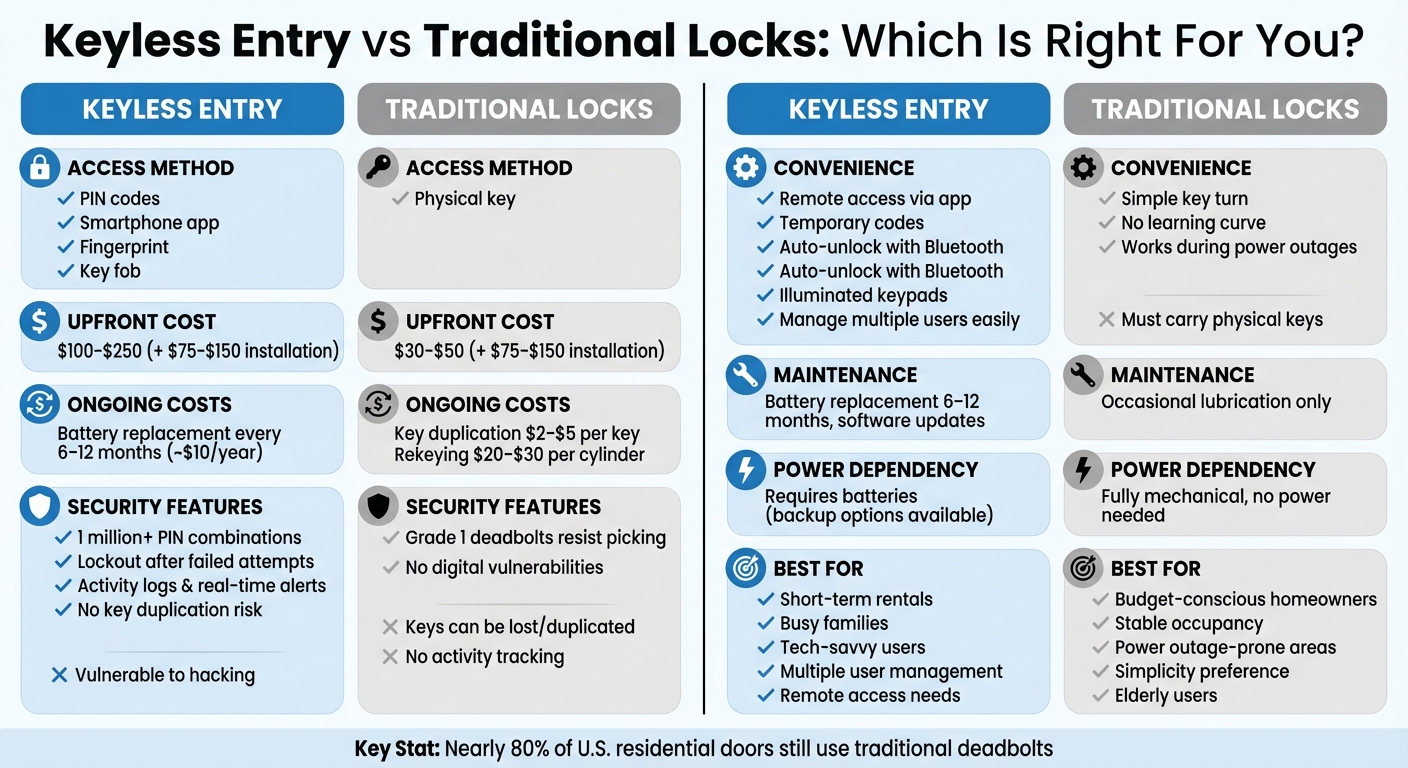
Keyless Entry vs Traditional Locks: Complete Comparison Guide
How To Choose "Keyless" Deadbolts | Ask This Old House
What Are Keyless Entry Systems?
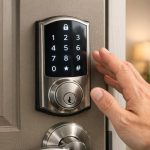
Keyless entry systems let you unlock doors without needing a traditional key. Instead, they use methods like PIN codes, smartphone apps, key fobs, or even fingerprints for access. Typically mounted outside the door frame, these systems rely on a keypad or scanner to send an electronic signal that unlocks the door once the correct credentials are provided.
There are several types of keyless entry systems, including keypad locks, smart locks, and fob/RFID options. Mechanical keypad locks require physical removal to change the code, a process that can take 15–20 minutes. In contrast, electronic keypad models allow quick reprogramming in seconds using a master code. Smart locks often use Bluetooth or Wi-Fi to connect and can retrofit onto existing deadbolts. Fobs and RFID cards, on the other hand, unlock doors through proximity detection.
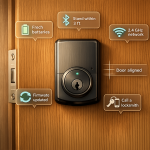
Most of these systems run on batteries, usually four AA batteries that last between 6–12 months. They alert users to low battery levels through app notifications or audible beeps. While some Wi-Fi-enabled models may require a hub for stable connectivity, most installations are wireless. To avoid lockouts, many systems include backup keys or manual overrides in case of battery failure or internet issues.
Keyless entry systems offer a range of features, such as temporary guest codes that expire automatically, remote control via smartphone apps, and auto-locking functions that typically engage within 30 seconds. Many models also integrate with other smart devices like security cameras, alarms, and voice assistants such as Alexa or Google Assistant.
Electronic keypad locks provide more security options compared to mechanical models. They can generate over 1 million possible 4- to 6-digit PIN combinations, including repeating digits, whereas mechanical locks typically allow only thousands of combinations and might exclude patterns like "1122". Additionally, electronic systems let you easily add, delete, or suspend multiple user codes, making them ideal for families or businesses needing flexible access control.
What Are Traditional Locks?
Traditional locks are mechanical devices that secure doors using a physical key to engage internal components. Unlike newer electronic systems, these locks are built directly into the door structure and have been a trusted security solution for centuries.
Most traditional locks use a pin tumbler cylinder mechanism. When you insert a key, its unique cuts align with spring-loaded pins inside the cylinder. This alignment allows the cylinder to turn, moving a bolt in or out of the door frame to lock or unlock it. Since the process is purely mechanical, traditional locks remain functional even during power outages or technical failures.
Types of Traditional Locks
- Single-cylinder deadbolts: These are the most common locks in U.S. homes. They have a keyway on the outside and a thumbturn on the inside, making them ideal for exterior doors without glass panels.
- Double-cylinder deadbolts: These require a key on both sides of the door, offering added security for doors with glass panels. This design prevents intruders from unlocking the door by reaching through broken glass. However, they can pose a fire safety risk if keys aren’t readily accessible, so they’re more common in high-security commercial settings.
- Knob and lever locks: Often found on interior doors or in commercial spaces, knob locks house the locking mechanism within the doorknob itself. Lever locks, on the other hand, are easier to operate and meet ADA accessibility standards, making them a popular choice for high-traffic areas.
- Mortise locks: These are installed into the edge of a door rather than mounted on its surface. Known for their durability and security, mortise locks are frequently used in businesses and retail settings. For instance, many commercial spaces in Pittsburgh rely on Schlage lever locks for offices and mortise locks for storefronts.
How They Work
One of the key strengths of traditional locks is their simplicity. The straightforward key-turn mechanism works reliably, regardless of power outages, internet issues, or extreme weather conditions. No apps, Wi-Fi, or batteries are needed, making them a dependable choice in any situation.
Benefits of Traditional Locks
Traditional locks offer a range of practical advantages. Their durability is a standout feature – high-quality locks can last for decades with minimal maintenance, usually just occasional lubrication. Grade 1 deadbolts, which offer the highest security rating, are designed to resist picking and bumping attempts effectively.
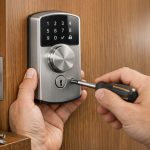
Their ease of use is another plus. Most people are familiar with key-based locks, and installing them is often a simple DIY project requiring just a screwdriver. For those who prefer professional installation, locksmith services typically cost around $75 per hour. Traditional locks are also budget-friendly, with basic deadbolts priced between $30 and $50. It’s no surprise, then, that nearly 80% of residential doors in the U.S. still rely on deadbolts and knob locks for security.
Security Comparison
Understanding the differences in security between keyless and traditional locks can help you make an informed choice. While both rely on deadbolts for protection, they differ in how they manage access and handle vulnerabilities. Let’s break down the strengths and weaknesses of each system.
Keyless Entry Security
Keyless locks eliminate the risks associated with lost, stolen, or duplicated keys. If you need to revoke access – whether for a former tenant, employee, or house cleaner – you can simply delete their code or app access without changing the hardware. This flexibility makes keyless systems particularly convenient for rental properties or businesses.
Many keyless locks come with features that traditional locks can’t match. For instance, lockout protection temporarily disables the system after multiple incorrect code attempts, reducing the risk of someone guessing your PIN. Some models also offer activity logs and real-time alerts, letting you track exactly when and how your door was accessed. These features can be especially helpful for managing multiple users or monitoring access remotely.
However, keyless systems aren’t without their challenges. Hacking and digital attacks are real concerns, particularly for Wi-Fi or Bluetooth-enabled locks that could be exploited through software bugs or network vulnerabilities. Simple PIN codes, like "1234", can still be guessed, though modern systems with millions of possible combinations and automatic lockouts make this less likely. Other risks include shoulder surfing, where someone observes your code entry, and worn keypads, which may reveal commonly pressed digits over time. Additionally, keyless locks rely on batteries or power sources, meaning a dead battery or electronic failure could lock you out. Thankfully, most models include backup options, like mechanical keys or external power ports, to prevent this.
Now, let’s look at the reliability of traditional locks.
Traditional Lock Security
Traditional locks rely on mechanical systems that have stood the test of time. Since they don’t involve electronics, they’re completely immune to hacking, software glitches, or network attacks. A high-quality Grade 1 deadbolt combined with a reinforced strike plate offers excellent resistance to forced entry. Unlike keyless locks, traditional locks work without needing batteries or a power supply, making them dependable even during power outages.
That said, traditional locks have their own vulnerabilities. Lock-picking and lock-bumping remain common threats, especially for lower-grade locks without anti-pick features. Key duplication is another issue – anyone with access to your key can easily make a copy at a hardware store. If your keys are lost or stolen, you’ll need to go through the hassle and expense of rekeying or replacing the lock. Additionally, traditional locks don’t offer built-in access logs, so you won’t know who has entered your property unless you install separate monitoring systems, like cameras or alarms.
Side-by-Side Security Comparison
| Security Factor | Keyless Entry | Traditional Locks |
|---|---|---|
| Physical Attack Resistance | Comparable to traditional locks with quality deadbolts; depends on door/frame strength | Strong with Grade 1 deadbolts and reinforced hardware |
| Resistance to Picking/Bumping | Depends on the cylinder; high-end models offer good resistance | Vulnerable unless using pick-resistant cylinders |
| Digital/Network Attacks | Susceptible to hacking, software exploits, and wireless interception | Not applicable – no digital components to attack |
| Lost/Stolen Credentials | No physical keys to lose; codes are easily changed remotely | Keys can be lost, stolen, or duplicated; requires rekeying |
| Access Management | Allows unique, temporary, and revocable codes | Relies on physical keys that must be distributed and collected |
| Monitoring & Logs | Provides activity logs and real-time alerts | No built-in logging features |
| Power/Battery Failure | Requires batteries; most models offer backup options | No power dependency; fully mechanical |
| Brute-Force Protection | Lockout after multiple wrong attempts; alarms available | No built-in protection against repeated physical attempts |
Both keyless and traditional locks can provide strong security when installed correctly. Choosing the right lock depends on your specific needs and lifestyle. Whether you prioritize digital convenience or mechanical reliability, professional installation with reinforced hardware ensures maximum protection.
sbb-itb-643e28e
Convenience and Daily Use
When it comes to everyday use, ease and practicality play a big role in choosing between keyless systems and traditional locks. Each offers distinct experiences that cater to different needs and lifestyles.
Keyless Entry Convenience
Keyless locks shine when it comes to convenience. Imagine arriving home with your hands full – no need to fumble for keys. Many smart locks automatically unlock when your phone is nearby, thanks to Bluetooth technology. Plus, illuminated keypads make nighttime entry a breeze, saving you from struggling to find the keyhole in the dark.
With a smartphone app, you can lock or unlock your door remotely. This feature is a lifesaver when you need to grant access to a contractor, a dog walker, or a teenager who forgot their keys. Temporary codes add even more flexibility, allowing you to grant time-limited access as needed.
Managing access for multiple users is also much easier with keyless systems. You can add, change, or delete codes right from the app or keypad – no more worrying about misplaced keys or calling a locksmith to rekey. Some models even store dozens of codes and provide activity logs, showing who accessed the door and when. This is especially useful for landlords, small businesses, or parents keeping tabs on curfews.
That said, keyless systems do come with some responsibilities. You’ll need to replace the batteries every 6–12 months to avoid lockouts, and connectivity issues can occasionally disrupt remote features. There’s also a bit of a learning curve for those less comfortable with technology, and you’ll need to update access codes regularly to stay secure.
While keyless locks bring modern convenience, traditional locks offer a simpler, more familiar experience.
Traditional Lock Convenience
Traditional locks are all about simplicity. Everyone knows how to use a key – no apps, codes, or setups required. For those who prefer to avoid technology, the straightforward nature of traditional locks can be reassuring.
Because they’re purely mechanical, traditional locks don’t rely on batteries, Wi-Fi, or Bluetooth. This means they’ll keep working during power outages, storms, or device failures. As long as the hardware is intact, turning the key will always get you inside. Maintenance is minimal, too – usually just a drop of lubricant or a small adjustment now and then.
However, traditional locks aren’t without their inconveniences. Carrying physical keys can be a hassle, especially during exercise, quick errands, or when you want to travel light. Keys can also be lost, stolen, or locked inside, leading to potential lockouts that might require professional help. Sharing access means duplicating keys, and changing access often involves rekeying the lock.
Side-by-Side Convenience Comparison
| Convenience Factor | Keyless Entry | Traditional Locks |
|---|---|---|
| Entry Method | PIN code, smartphone app, fingerprint, or auto-unlock via Bluetooth | Physical key insertion and turn |
| Hands-Free Access | Yes – auto-unlock when your phone is nearby | No – requires retrieving and inserting a key |
| Remote Control | Lock/unlock from anywhere via an app | Not possible – requires physical presence |
| User Management | Add, change, or delete codes instantly; supports multiple users | Requires key duplication and rekeying for changes |
| Access Logs | Tracks who unlocked the door and when | No tracking available |
| Night/Low-Light Use | Illuminated keypads or phone screens simplify entry | Manual key insertion required |
| Maintenance Needs | Battery replacement every 6–12 months; occasional software updates | Minimal – occasional lubrication only |
| Power/Connectivity | Requires batteries and network connectivity for remote access | Fully mechanical – no power or connectivity needed |
| Learning Curve | Moderate – requires setup and code management | Minimal – familiar and straightforward |
| Best For | Tech-savvy users, busy families, landlords, and short-term rentals | Those who prefer simplicity or live in areas prone to outages |
Ultimately, the best choice depends on your lifestyle. If you prioritize remote access and easy user management, keyless locks are hard to beat. On the other hand, if you prefer a no-fuss option that works without batteries or apps, traditional locks are a dependable alternative.
For professional advice and installation in Pittsburgh, Sherlock’s Locksmith offers 24/7 mobile service. Their certified technicians can help you set up keyless locks, configure access codes, demonstrate backup options, or upgrade your traditional hardware to fit your needs.
Cost and Long-Term Value
Initial Costs
When it comes to upfront expenses, traditional deadbolts are more budget-friendly, typically priced between $30–$50. On the other hand, keyless and smart locks range from $100–$250, depending on features like Wi-Fi, Bluetooth, fingerprint readers, or app integration. High-end electronic locks, particularly for commercial use, can go for several hundred dollars.
Professional installation costs are fairly similar for both types if you’re replacing an existing lock. Most locksmiths in the U.S. charge about $75 per hour for labor, with installation fees running between $75–$150 per visit. This means a traditional deadbolt, fully installed, will cost around $100–$150, whereas a basic keyless lock typically falls in the $200–$325 installed range per door.
For keyless systems, you might also need a Wi-Fi or smart home hub, which adds $30–$100 to the overall setup. Traditional locks, by contrast, rarely require anything beyond the lock hardware itself.
Ongoing Costs
The expenses don’t stop after installation, and this is where traditional and keyless locks begin to differ further.
For traditional locks, ongoing costs are minimal if you rarely need to change access. Key duplication typically costs $2–$5 per key, and occasional rekeying – which involves a locksmith visit – usually runs $20–$30 per cylinder, plus a trip fee. Rekeying becomes necessary if you lose keys or move into a new home to maintain security.
In settings like rental properties or offices with frequent turnover, rekeying or replacing lock cylinders after each tenant or employee departure can add up quickly. Managing multiple doors or units compounds these costs over time.
Keyless locks shift the financial burden to digital management. Batteries need replacing every 6–12 months, costing under $10 for common types like AA, AAA, or 9V batteries. Some smart lock brands also charge subscription fees of $3–$10 per month for premium features like extended activity logs or multi-property management. However, many consumer models offer these features without mandatory subscriptions. Over time, electronic components such as keypads or sensors may fail and require replacement, which tends to be pricier than repairing mechanical locks.
The upside? Keyless locks let you change access codes or digital credentials instantly, without needing a locksmith. This can save significant time and money, especially in situations where access needs to be updated frequently.
Total Cost Over Time
Looking at the bigger picture, the long-term costs vary depending on how the lock is used.
For a single-family home with stable occupants, traditional locks are generally the more economical choice over a 5–10 year period. A one-time professional installation and perhaps one or two rekeyings over that time keep expenses low. By comparison, a keyless lock in the same scenario involves higher upfront costs, regular battery replacements, and potential electronic repairs – all while the homeowner may rarely use features like remote access or frequent code changes.
However, in high-turnover properties like short-term rentals, student housing, or small offices, keyless systems start to make more financial sense. Traditional locks in these scenarios rack up costs from repeated rekeying and key management. One property manager noted that mechanical digital locks often need to be removed from the door to change codes, taking 15–20 minutes per lock, while electronic keypad locks allow instant code updates without removal, saving both time and money.
By eliminating physical rekeying, reducing locksmith visits, and allowing instant access changes, keyless systems prove more efficient in these high-turnover settings. The ability to centrally manage multiple users and access schedules often offsets the higher initial investment and ongoing maintenance costs.
For expert advice on costs and installation, consider reaching out to Sherlock’s Locksmith in Pittsburgh. Their 24/7 certified technicians can help you calculate total ownership costs, recommend locks suited to your door traffic, and provide warranties for both hardware and installation to help manage long-term expenses.
How to Choose Between Keyless and Traditional Locks
Deciding between keyless and traditional locks comes down to your specific needs and how you use your property on a daily basis. Each option has its strengths, catering to different lifestyles and security requirements.
When Keyless Entry Makes Sense
Keyless entry systems are ideal when you need flexibility or remote access control. For example, short-term rental hosts on platforms like Airbnb can generate unique, temporary codes for guests, eliminating the hassle of physical keys. Busy households with frequent visitors – like dog walkers, cleaners, or extended family – can assign temporary PIN codes instead of constantly replacing keys.
Small businesses and clinics also benefit from keyless systems by assigning individual codes to employees and tracking entry logs for added accountability. Tech enthusiasts often appreciate features like smartphone control, voice assistant integration, and auto-locking. If you’re someone who misplaces keys regularly or needs to grant access while away, keyless systems can save you a lot of stress.
When Traditional Locks Make Sense
Traditional locks are a straightforward and budget-friendly option. For homeowners seeking reliable, low-maintenance security, a sturdy deadbolt often does the job. These locks are especially practical in areas where power or internet outages might disrupt keyless systems.
Small businesses with stable staff and minimal security needs, as well as storage areas where advanced technology isn’t necessary, often find traditional locks sufficient. They are also a great choice for elderly users or anyone who may struggle with digital keypads or apps. Turning a physical key is a familiar, simple process that doesn’t require batteries or software updates.
Working with a Professional Locksmith
To make the best choice, consulting a professional locksmith can be invaluable. They’ll evaluate your doors, frames, and current hardware, and recommend options tailored to your property. Factors like local crime rates, how often doors are used, and whether you need features like remote monitoring or audit trails are all taken into account. Before reaching out, it helps to know how many doors need securing, who requires access, how often access changes, your budget, and your comfort level with technology.
For example, Sherlock’s Locksmith in Pittsburgh offers expert advice for both homes and businesses. Their certified technicians handle everything from installation and rekeying to emergency services and code updates. With 24/7 mobile support and a focus on using top-quality products, they ensure your property stays secure, whether you opt for keyless or traditional locks. Their up-to-date knowledge of the latest technologies means you’ll get reliable protection tailored to your needs.
Conclusion
Deciding between keyless entry systems and traditional locks isn’t a one-size-fits-all situation – it’s about finding what works best for your needs. Keyless systems shine with their remote access capabilities, temporary codes, and activity logs, making them a great choice for convenience and accountability. However, they do come with a higher upfront cost and rely on batteries and internet connectivity.
On the other hand, traditional locks offer time-tested reliability without the need for power or connectivity. They’re straightforward, cost-effective, and a solid option for anyone who prefers simplicity or lives in areas where power outages or spotty internet are common. That said, managing physical keys and occasional rekeying are part of the package.
Both options can provide excellent security when paired with quality hardware and proper installation. In fact, many smart locks use the same mechanical deadbolts as traditional locks – the difference lies in how you access them. The key to optimal security is choosing hardware that aligns with your specific needs.
Ultimately, your decision comes down to weighing cost, convenience, and the level of security you’re comfortable with. Consulting a professional locksmith is a smart move. A certified expert can assess the condition of your doors, understand your usage patterns, and recommend the best solution for your property. For expert advice and services in Pittsburgh, reach out to Sherlock’s Locksmith. Their 24/7 mobile service and certified technicians handle everything from installations and rekeying to emergency lockouts, ensuring your property remains secure with high-quality products.
Take some time to evaluate your lifestyle, budget, and comfort with technology – then let a professional guide you to the right choice.
FAQs
What are the potential security risks of using a keyless entry system?
Keyless entry systems offer great convenience, but they aren’t without their security challenges. One major issue is hacking, where attackers exploit vulnerabilities in the system. Another common threat is signal interception, where the wireless communication between your device and the lock is captured. Then there are relay attacks, where thieves use devices to amplify the signal from your key fob, allowing them to unlock your door even if the key is far away. Lastly, weak or compromised access codes can make it easier for unauthorized individuals to gain entry.
To reduce these risks, make sure to use strong, unique access codes and keep your system updated with the latest security features. Regularly maintaining your system and seeking advice from professionals can also go a long way in keeping your property secure.
What happens if a keyless entry system loses power or connectivity?
Keyless entry systems are built with features to ensure they work even during power outages or connectivity problems. Many systems come equipped with backup batteries, allowing them to operate for a limited time when the main power source fails. They also typically include alternative access methods, like physical keys or manual overrides, so you can still access your property or vehicle without any hassle.
What should I think about when deciding between keyless entry and traditional locks?
When deciding between traditional locks and keyless entry systems, it’s essential to weigh security, convenience, and cost. Traditional locks are typically more budget-friendly and simple to use, making them a popular choice. However, they rely on physical keys, which can be misplaced or copied.
Keyless entry systems, in contrast, bring modern convenience with features like PIN codes or smartphone integration. Although they come with a higher upfront cost and require some tech know-how, they remove the hassle of physical keys and can offer an added sense of security.
The right choice will ultimately depend on your budget, lifestyle, and specific security priorities. If you’re uncertain, consulting a professional locksmith, such as Sherlock’s Locksmith, can help you determine the best fit for your home or business.