








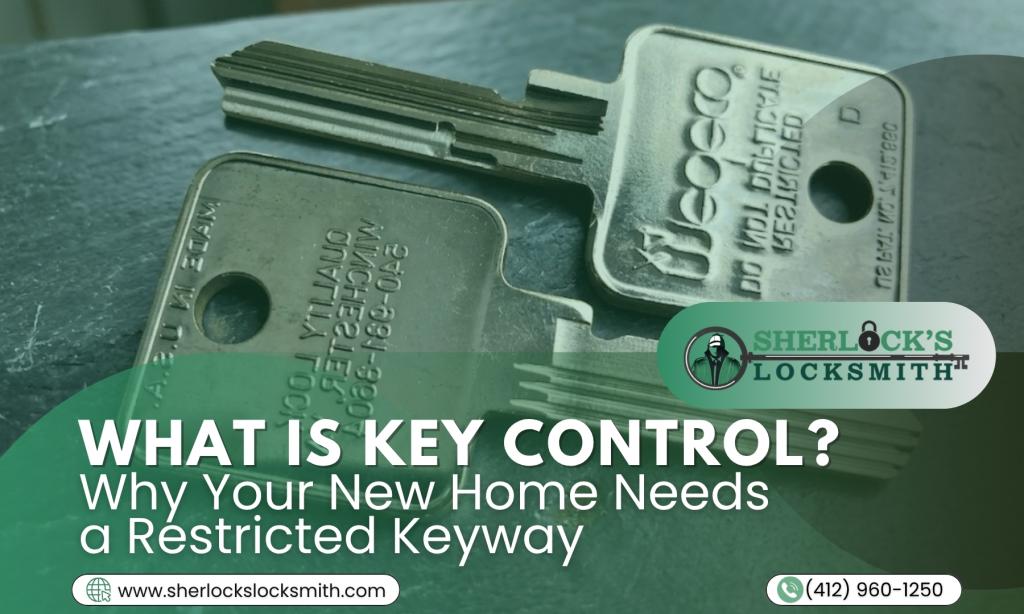
You hand a spare key to the pet sitter. She copies it at a kiosk for $3. That copy can make more copies. Did you know anyone with your house key can do that in 30 seconds? And how do you know how many copies the last owner made? That is why smart new owners think about key control before they unpack.
Moving into a new home should feel exciting, not uncertain. Yet many homeowners in Pittsburgh ask the same question: Who else might still have a copy of my key? Previous owners, contractors, cleaners—keys can travel far beyond your control. This is where key control becomes essential. Without it, you never truly know who can access your home.
If you’ve just moved in, you may also wonder: Is changing the locks enough, or do I need a better system? Let’s break down how key control works and why it matters more than most people realize.
Why Key Control Matters More Than You Think
Key control means managing who has keys to your home and preventing unauthorized duplication. It sounds simple, yet many standard locks offer very little control.
In most homes, anyone can copy a key at a hardware store without your knowledge. That creates a long-term risk, especially in older neighborhoods like Squirrel Hill or Mount Lebanon, where homes often pass through many owners.
Here’s the issue:
- You don’t know how many keys exist
- There’s no way to track who made copies
- You lose control over access over time
Certainly, strong key control solves this by limiting duplication and giving homeowners full authority over access.
Now that you understand the risk, let’s look at how restricted keyways provide a real solution.
Key Control and Restricted Keyways Explained
A restricted keyway is a lock system designed to prevent unauthorized key duplication. Only approved locksmiths can create copies, and they require proof of ownership.
This is where key control becomes powerful. You decide who gets a key, and no one else can make copies without your approval.
Quick Comparison: Standard vs Restricted Keys
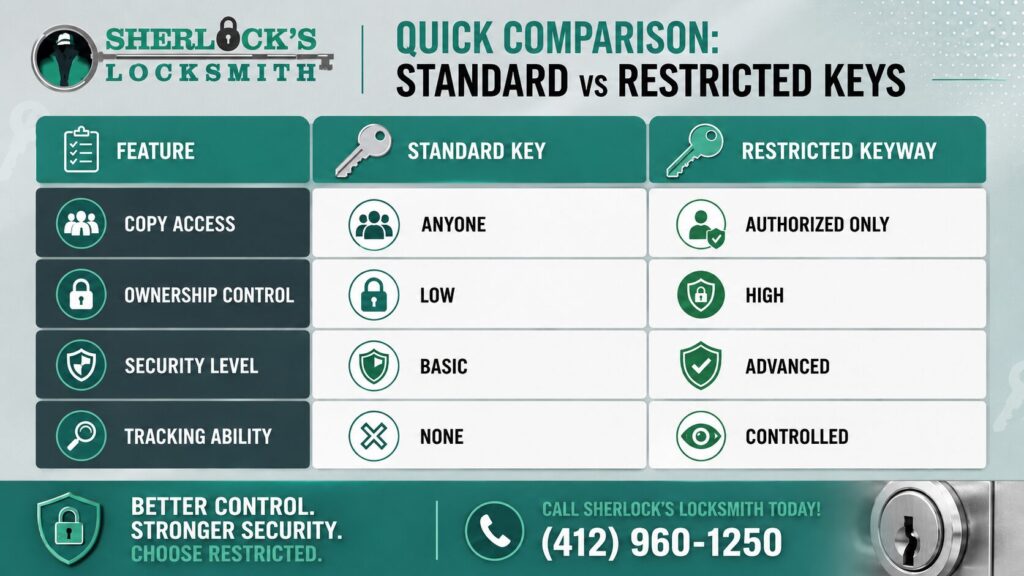
With a restricted system, your home security becomes proactive instead of reactive.
This leads to a common question homeowners ask after moving in.
Key Control vs Rekeying: What’s the Difference?
Many homeowners start with rekeying, which changes the internal pins of a lock so old keys stop working. It’s a smart first step.
If you haven’t done this yet, read our guide on whether you should rekey or replace your locks after moving.
However, rekeying alone does not guarantee long-term key control.
So here’s the difference:
- Rekeying resets access
- Key control protects access over time
While you can rekey your locks, someone could still copy your new key later. That is why many homeowners combine both steps for stronger protection.
Once you understand this difference, the next step is knowing when you actually need a restricted system.
Signs You Need Better Key Control at Home
Not every home needs advanced systems, but many do without realizing it. Key control becomes important when access starts to feel uncertain.
Warning Signs Checklist
- You bought a pre-owned home.
- Contractors or service workers had access.
- You lost track of spare keys.
- You rent out part of your property.
- Your home needs tighter access control.
If any of these apply, your current setup may not be enough.
In Pittsburgh, homes near busy areas like Lawrenceville or South Side often see more foot traffic and service visits. That increases the need for controlled access.
At this point, many homeowners ask if modern solutions like digital locks can replace traditional key control.
Key Control and Keyless Entry: Do You Need Both?
Some homeowners consider keyless entry systems as a replacement. These systems remove physical keys altogether, which sounds ideal.
However, they do not fully replace key control.
Keyless systems:
- Work well for convenience
- Allow code changes
- Reduce physical key use
However, they still require backups and proper setup. So keep in mind that a restricted keyway can act as a secure backup if technology fails.
Thus, many homeowners choose a hybrid setup: digital entry for daily use and controlled physical keys for backup access.
Now that we’ve covered systems, let’s talk about choosing the right professional.
Key Control Starts With the Right Locksmith
Indeed, choosing the right expert makes a big difference in your security. A trusted residential locksmith will guide you through options and help you avoid weak setups.
So look for a:
- Licensed and insured professionals
- Local experience in Pittsburgh homes
- Clear explanation of key systems
- Ability to install restricted keyways
A reliable locksmith Pittsburgh PA homeowners trust will also help during urgent situations like a house lockout or when you need a full lock change.
With the right help, your system becomes simple, secure, and easy to manage.
Key Control Setup: Simple Homeowner Checklist
Before you move forward, here’s a quick planning guide you can follow.
Key Control Setup Checklist
- Rekey or replace existing locks
- Choose a restricted keyway system
- Limit the number of key holders
- Track who has access
- Store spare keys securely
- Plan backup access (digital or physical)
This checklist helps you build a system that protects your home long after move-in day.
With everything in place, let’s answer a few questions homeowners often ask.
Pittsburgh Homeowners Ask About Keys and Security
1. Will my old keys still work after I switch to a restricted system?
No. We remove the old cylinders so only the new registered keys work from that moment on.
2. What if I lose my authorization card?
Call us with photo ID. Then, we’ll verify you in our log and issue a new card. No one else can do it, even with your old key in hand.
3. Can you make my front, back, and garage door use one key?
Yes, we key them alike on the same restricted blank during the same visit, so one key opens all.
4. Can I use a restricted keyway with a smart lock?
Yes. Many families use a smart lock on the front and restricted cylinders on other doors. You get codes plus a secure backup key at the same time.
5. I rent my basement on the South Side. Can I still use this?
Absolutely; you give tenants a registered key and log it. When they move, you know how many are out, and you decide to rekey or not.
You Bought the House. Now Own the Keys.
You already signed the deed. Key control gives you ownership of the keys, too. Without it, any $3 copy can undo your new deadbolt. With it, you know who has keys, how many exist, and that no kiosk can make more behind your back.
At Sherlock’s Locksmith, we set up Pittsburgh families every week from Point Breeze to the North Hills. We show you the blank, the card, and the log before we leave, so you see the protection yourself.
Secure Your Home With Sherlock’s Locksmith
Do you know how many keys are out there for your home? Are you confident no one else can make a copy without your approval? Sherlock’s Locksmith helps homeowners across Pittsburgh, PA take control of their security with trusted key control solutions and restricted keyway systems. We provide expert guidance, fast service, and real peace of mind.
Call us today at (412) 960-1250 or fill out our online request form to get your free estimate. Whether you need an upgrade, help from an emergency locksmith, or advice on better security, we’re ready to help you protect what matters most.