


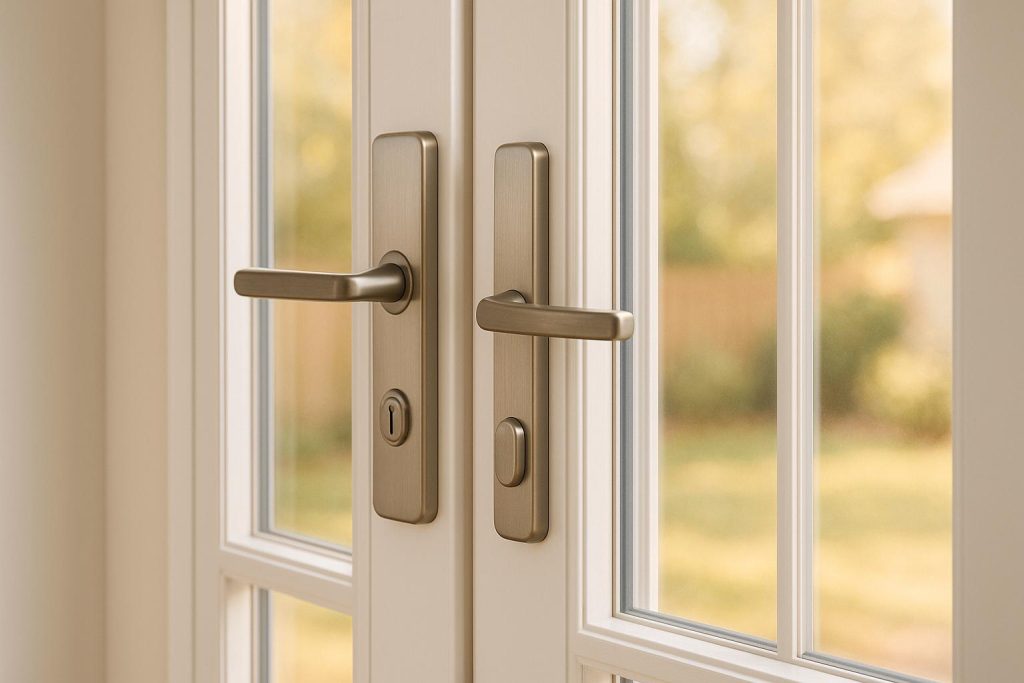
French doors are elegant but can be a weak point for home security. Choosing the right locks involves balancing security, usability, and style. For exterior French doors, prioritize strong deadbolts, multi-point locking systems, and reinforced hardware to prevent break-ins. Interior French doors, on the other hand, focus on privacy and ease of use.
Key Tips for Choosing Locks:
- Exterior Doors: Use single-cylinder deadbolts, multi-point locks, and reinforced strike plates. Avoid double-cylinder deadbolts unless necessary, as they may pose safety risks during emergencies.
- Interior Doors: Opt for privacy locks, keyed knobs, or dummy handles depending on the door’s purpose.
- Materials Matter: Match locks to the door material (wood, fiberglass, steel, or uPVC) for compatibility and durability.
- Glass Panels: Reinforce glass with security film or grilles and ensure locks are out of reach from broken glass.
- Measurements: Ensure proper fit by measuring door thickness, backset, and borehole spacing.
For long-term security, maintain locks with regular lubrication and hardware checks. If you’re unsure about installation or upgrades, consult a professional locksmith for guidance.
Rosie’s Three-Minute Tips: Securing Double French Doors
Assess Your French Doors and Security Requirements
Take a closer look at your French doors and how you use them daily to figure out the best locking system. French doors come in various styles, are used in different locations, and serve specific purposes – all of which determine the type of lock you’ll need.
Identify Door Type and Location
Exterior French doors connect your home to outdoor areas like patios, decks, balconies, or backyards. These doors need locks that can withstand both forced entry and harsh weather. Both the active and inactive leaves of the door should have strong locking mechanisms.
The location of your exterior French doors matters, too. Doors at the back, side, or in hidden areas (like fenced yards or elevated decks) can give intruders more cover and time to attempt a break-in. Treat these doors with the same level of security as your front door, especially if trees, fences, or landscaping block the view from the street.
Interior French doors, on the other hand, are usually found inside the home, separating spaces like a home office from a hallway or a dining room from a living room. For these doors, the focus is more on privacy, noise reduction, and aesthetics than on security. Depending on their purpose, these doors might use privacy locks (like those in bedrooms or offices), decorative passage handles, or even dummy knobs for inactive leaves.
Think about how you use your doors. Heavily used exterior doors need sturdy locks that operate smoothly, while less-used side doors might prioritize maximum security. If you have young children, you might prefer locks that are hard for kids to open but still allow adults to exit quickly in case of emergencies.
Once you’ve considered the type and usage of your doors, it’s time to look at the materials to ensure the locks you choose will work properly.
Check Door Material and Hardware Compatibility
The material of your French doors plays a big role in determining which locks will work best. Here’s a quick breakdown:
- Wood doors: These are compatible with many lock types, including mortise locks, cylindrical deadbolts, and multi-point systems. However, they need reinforced strike plates with long screws to prevent warping.
- Fiberglass and composite doors: These materials resist warping and weather damage better than wood. They’re often prepped for multi-point locking systems or euro-cylinder locks, meaning you’ll usually need to match your lock to the existing setup.
- Steel doors: Known for their strength, steel doors typically use cylindrical or mortise locks. Reinforced strike plates are still necessary to guard against prying. Professional installation is recommended to avoid damaging the door or voiding warranties.
- uPVC and vinyl doors: These doors often come with key-operated multi-point locking systems and euro cylinders. The lock mechanism is integrated into a strip along the door edge, engaging multiple locking points at once. Upgrading security often involves replacing the euro cylinder with a higher-security version rather than overhauling the entire system.
Check the condition of your doors, too. Warped, cracked, or poorly maintained doors won’t hold locks securely, no matter how strong the hardware is. Fix alignment issues or damage before installing new locks.
Once you’ve matched the lock to the material, it’s time to measure your door and hardware setup to ensure everything fits.
Measure Existing Door Prep and Hardware
Accurate measurements of your door’s thickness, backset, borehole, and hardware layout are essential to avoid buying locks that don’t fit.
Start with the door thickness. Most exterior doors in the U.S. are about 1 3/4 inches thick, while interior French doors are usually around 1 3/8 inches thick. Locks and deadbolts are designed to fit specific thickness ranges.
Next, measure the backset – the distance from the door’s edge to the center of the main borehole. Common backset measurements are 2 3/8 inches or 2 3/4 inches. This ensures the latch or deadbolt aligns properly with the door edge and faceplate.
Check the borehole diameter (also called the cross bore). Standard cylindrical bores are typically 2 1/8 inches in diameter. If your door has multiple boreholes – for example, a deadbolt above a keyed lever – measure the vertical spacing between the holes to ensure compatibility with a new lockset.
Don’t forget the latch bore (the smaller hole on the door edge where the latch or bolt extends). Some doors also feature a mortise pocket, a rectangular cutout in the edge designed for mortise locks or multi-point gearboxes. Switching from a cylindrical lock to a mortise lock often requires professional modifications.
Finally, review the hardware layout on both the active and inactive leaves of your French doors. The active leaf usually houses the main latch or handleset, while the inactive leaf is often secured with flush bolts or surface bolts at the top and bottom. Check if these bolts are already installed and whether an astragal (a vertical strip that overlaps one door) is in place to improve sealing and security. On the doorframe, make sure strike plates are reinforced with long screws that anchor into the wall framing for added strength.
If you’re unsure about any measurements or details, consider calling in a professional. For expert advice and precise installation, reach out to Sherlock’s Locksmith, offering trusted locksmith services in Pittsburgh, PA.
Lock Options for French Doors
Once you’ve confirmed your door measurements, it’s time to explore lock options. The right lock for your French doors depends on their location, the level of security you need, and the type of hardware your doors can handle. Exterior French doors require sturdy locks to withstand forced entry and weather conditions, while interior doors focus more on privacy and style.
Primary Lock Types for Exterior French Doors
Single-cylinder deadbolts are the go-to choice for many U.S. homes with exterior French doors. These locks feature a keyhole on the outside and a thumbturn on the inside, ensuring quick exits during emergencies. Usually installed above a keyed knob or lever on the active door leaf, they’re effective if the glass panels are far enough from the thumbturn to prevent someone from breaking the glass and reaching in. U.S. fire and building codes often favor this type for its safety. Prices generally range from $20–$60 for a standard ANSI/BHMA Grade 2 model, while high-security Grade 1 versions with added drill and pick resistance cost $60–$150+.
Double-cylinder deadbolts require a key on both sides, eliminating the risk of an intruder unlocking the door by breaking the glass and turning a thumbturn. However, this design can be dangerous in emergencies since a key is needed to exit. Many fire codes discourage their use on occupied residential doors. If you opt for this lock, check local regulations and keep a key accessible near the door – but out of reach from the outside.
Multipoint locking systems are gaining popularity for French doors. These locks secure the door at multiple points – typically the top, center, and bottom – when you turn the key or lift the handle. This design not only strengthens security against prying but also helps keep taller or heavier doors aligned and weather-sealed. These systems are particularly effective for doors with large glass panels. Basic kits cost between $150–$400+, with advanced or auto-locking versions priced higher. Upgrading to a high-security euro cylinder can further enhance protection without replacing the entire system.
Mortise locks combine a latch and deadbolt in one unit, installed into a pocket cut into the door edge. They are commonly used on traditional or high-end wood French doors where aesthetics matter and the door stile is wide enough to accommodate the hardware. Operated by a key outside and a thumbturn or lever inside, mortise locks provide solid security when paired with a strong cylinder and reinforced strike plate. For added protection, consider combining them with flush bolts on the inactive leaf or a separate deadbolt. A 5-lever mortise deadlock that meets recognized security standards offers better security than basic mortise latches.
Additional Security Hardware
Your main lock is just one part of securing French doors. Supplemental hardware can address vulnerabilities that locks alone can’t cover.
- Flush bolts or surface bolts secure the inactive leaf to the head jamb and threshold, preventing it from flexing or being forced open. These bolts eliminate the gap between the door leaves, focusing security on the active door’s lock. They typically cost $10–$40 each, depending on size and quality.
- Reinforced strike plates strengthen the door frame against kick-ins and prying. Unlike standard plates, these use longer screws that anchor into the wall framing, significantly improving durability. Even the best deadbolt won’t work if the strike plate fails.
- Hinge security pins or non-removable hinge pins protect outward-opening doors from being lifted off their hinges. These pins interlock the hinge leaves, even if the hinge pin is removed.
- Central rail or interlocking catches secure the meeting stile where the two door leaves meet, limiting how far they can spread under pressure. These are especially useful for wide doors with large glass panels.
Lock Options for Interior French Doors
Interior French doors prioritize privacy and convenience more than heavy-duty security. They don’t face the same threats as exterior doors, so the focus shifts to functionality and design.
- Privacy locks (bed and bath locks) are perfect for bedrooms or offices. These locks can be engaged from the inside with a push button or turn, and they include an emergency release for unlocking from the outside.
- Keyed knobs or levers provide controlled access to areas with valuables. They require a key to unlock from the outside and often feature a thumbturn inside.
- Passage sets are simple latches with no locking function. They’re ideal for spaces like living or dining rooms, where you just need the door to stay closed.
- Dummy knobs or levers are decorative and don’t turn or latch. They’re often used on the inactive leaf of interior French doors, paired with flush bolts to keep the door secure.
For most interior setups, you might use a privacy lock on the active leaf and a dummy knob on the inactive one. This combination offers functionality while maintaining a balanced, elegant look.
If you’re unsure which lock suits your French doors best, or need help with installation, Sherlock’s Locksmith in Pittsburgh, PA, can assess your doors and recommend options that fit your security needs and budget.
sbb-itb-643e28e
How to Choose the Right Lock for Your French Doors
Picking the best lock for your French doors involves balancing security, safety, convenience, and budget. Here’s a step-by-step guide to help you find the perfect match for your needs.
Step 1: Assess Door Usage and Security Needs
Start by identifying whether your French doors are used for exterior or interior purposes. This distinction directly impacts the type of lock you’ll need. For frequently used doors, focus on durable and user-friendly locks. For doors that see less traffic, prioritize security features.
Consider who will need access. If only adults in the household will use the doors, traditional keyed locks may work fine. However, if children, guests, or service providers require entry, smart locks or keypads with shared codes might be more practical. Also, evaluate your neighborhood’s crime rates and the doors’ visibility – more exposed or secluded doors may need stronger options like multipoint locks, reinforced glass, or even alarms and sensors.
Once you have a clear understanding of your security needs, you can match them with the right lock type.
Step 2: Match Lock Type to Security Needs
Different lock types offer varying levels of security. Here’s a quick breakdown:
- Standard Deadbolt: Ideal for basic to moderate security on solid exterior French doors. Pair it with flush or surface bolts on the inactive leaf to secure the gap between doors. Look for ANSI Grade 1 or 2 deadbolts for better protection.
- Multipoint Lock: Best for taller or heavier doors, this lock secures the door at multiple points (top, middle, and bottom), making it harder to pry open. It’s a great option for modern patio doors or flexible door assemblies.
- Mortise Lock: A good choice for traditional wood doors where aesthetics matter. However, it’s less secure on its own compared to a deadbolt or multipoint system, so pairing it with additional hardware is recommended.
For uPVC or composite doors, multipoint locks are often pre-installed or recommended. Solid wood and fiberglass doors, on the other hand, are better suited for mortise or cylindrical deadbolt setups. Always check with your door manufacturer to ensure the lock type is compatible and won’t void any warranties.
Here’s a comparison table to help you decide:
| Lock Type | Security Level | Forced-Entry Resistance | Best For | Installation | Cost Range (USD) | Maintenance |
|---|---|---|---|---|---|---|
| Standard Deadbolt | Good | Strong at one point | Retrofit projects; wood or fiberglass doors | DIY-friendly; widely available | $20–$150+ | Low; occasional lubrication |
| Multipoint Lock | Excellent | High | Tall or glazed doors; modern patio doors | Factory-fitted; pro install advised | $150–$400+ | Moderate; periodic adjustment |
| Mortise Lock | Moderate (upgradable) | Good with extra hardware | Traditional wood doors; aesthetic focus | Pro install; precise mortising | $100–$300+ | Moderate; occasional cleaning |
Step 3: Consider Glass Panels and Safety
French doors often feature large glass panels, which can make thumbturn locks vulnerable to tampering. In such cases, some homeowners opt for double-cylinder deadbolts that require a key on both sides. However, these can pose safety risks during emergencies, as they may delay escape. U.S. fire and safety codes often discourage or restrict their use on primary exit doors.
To strike a balance between security and safety, use single-cylinder deadbolts with reinforced or laminated glass, security film, or decorative grilles. Smaller glass panels or those positioned farther from the lock can also reduce risks. For added protection, consider installing door sensors, cameras, or hardware like flush bolts, hinge-side security pins, and reinforced strike plates with long screws.
Step 4: Verify Measurements and Compatibility
Accurate measurements are key to ensuring your new lock fits properly. Here’s what you need to measure:
- Door Thickness: Most U.S. exterior doors are about 1¾ inches thick, but French doors can vary, with some as thin as 1⅜ inches. This affects lock compatibility.
- Backset: Measure the distance from the door’s edge to the center of the borehole. Common backsets in the U.S. are 2⅜ inches or 2¾ inches.
- Borehole Layout: Count the number of holes on the door and note their spacing. Check whether the door has a latch hole, a latch plus deadbolt, or a three-hole handleset. For inactive leaves, look for provisions for flush or surface bolts.
Document your measurements and compare them with manufacturer templates to avoid buying incompatible locks. If you’re uncertain, consider consulting a professional locksmith, such as Sherlock’s Locksmith in Pittsburgh, PA, to verify compatibility and ensure proper installation.
Step 5: Decide Between Mechanical and Smart Locks
Finally, choose between traditional mechanical locks and modern smart locks based on your preferences:
- Mechanical Locks: These are simple, battery-free, and budget-friendly. They’re easier to install and maintain, making them a reliable option for many households.
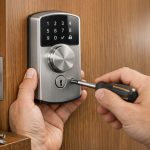
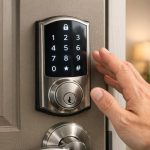
- Smart Locks: Offering keyless entry, app control, and integration with home automation systems, smart locks provide convenience and flexibility. For French doors, install the smart deadbolt on the active leaf and secure the inactive leaf with flush or surface bolts. Make sure the smart lock’s interior components don’t interfere with door operation or adjacent hardware.
Maintenance and Long-Term Security
Choosing the right lock is just the beginning. Keeping French doors secure over time means committing to regular maintenance and being ready to upgrade as your security needs evolve.
Keep Locks and Doors in Top Shape
To ensure your locks function smoothly, lubricate them every 6–12 months with a dry lubricant (skip oil-based products). Insert and remove the key several times to spread the lubricant evenly, then wipe away any excess. Hardware like handles, hinges, strike plates, and flush bolts should be tightened at least twice a year to prevent loosening or misalignment. Use 3-inch screws for hinges to ensure a secure hold.
Seasonal temperature changes can affect door alignment, so check for gaps between the door leaves and the frame a few times a year. The gaps, or "reveal", should be consistent from top to bottom. If you notice uneven gaps or tight spots, it’s likely a sign of misalignment. Test the deadbolt and handle with the door open; if they work fine but stick when the door is closed, alignment – not the lock – is the issue.
For minor fixes, tighten hinge screws or adjust the strike plate to ensure the latch and deadbolt fit smoothly. If you have a multipoint locking system, make sure all hooks and bolts engage properly by lifting the handle, locking the door, and checking for firm resistance at the top, middle, and bottom. Misaligned multipoint systems should be handled by a professional to maintain their security.
If locks or handles feel loose or keys become hard to insert despite regular upkeep, it might be time to upgrade. A sagging handle or one that feels "spongy" when engaging a multipoint lock often signals worn-out internal parts. Similarly, if the deadbolt doesn’t fully extend or retracts when you push or pull on the door, the lock or door prep may need replacement. Visible damage, such as cracked strike plates or rusted lock bodies, should prompt immediate action – especially for exterior doors with large glass panels.
Once you’ve ensured proper maintenance, plan for upgrades to keep up with changing security requirements.
Upgrade When Security Needs Change
Routine maintenance is essential, but certain situations call for lock upgrades. Consider upgrading when you move into a new home, lose a key, experience nearby burglaries, or implement other security measures like alarms or cameras.
Switch to high-security, anti-snap, anti-pick cylinders that meet standards like SS312 or TS007. These cylinders offer enhanced protection against common break-in techniques and are widely used in modern homes.
You can also improve your existing doors without replacing them entirely. Reinforce strike plates with long screws that reach the wall framing, and add heavy-duty flush or surface bolts to the top and bottom of the inactive door leaf to reduce flexing and potential pry points. Applying security film to the glass can make it more resistant to break-ins, slowing down intruders and deterring opportunistic attempts.
If your French doors rely only on a latch, adding a separate deadbolt or converting to a multipoint locking system significantly improves resistance to forced entry. Multipoint systems distribute pressure evenly across the door frame, helping to prevent warping and extending the door’s lifespan.
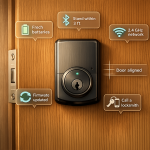
For those seeking convenience, smart or electronic deadbolts are a great option. These locks offer remote access, digital entry logs, temporary codes for visitors, and integration with smart home systems. Ensure that smart locks for French doors are rated for exterior use, resistant to weather, and compatible with your door’s existing design. Regular maintenance, such as changing batteries, updating firmware, and testing motorized bolts, is crucial for their reliability.
If you’re unsure which upgrades suit your doors and security needs, a local locksmith like Sherlock’s Locksmith in Pittsburgh, PA, can assess your current setup and recommend tailored solutions.
Combine Locks with a Layered Security System
Upgrading locks is important, but integrating them into a broader home security system offers even greater protection. Enhance your French doors with door and glass sensors, cameras, and smart deadbolts that sync with your alarm system. Exterior cameras or video doorbells can provide real-time alerts and record activity around your doors. Pairing cameras with motion-activated lights adds another layer of deterrence.
Make sure your alarm system includes French doors in both "away" and "stay" modes, especially if they’re located at the back of the house where they’re less visible. For added convenience, set routines like having all exterior smart locks automatically engage at a specific time each night. These small habits complement the physical security of your locks.
Professional locksmiths can identify weak points, such as outdated locks or poorly installed systems, and suggest upgrades that match your door material and local risks. They can also rekey locks so multiple doors work with a single key or set up master-key systems for larger homes. For advanced systems like multipoint locks or smart deadbolts, professional installation ensures everything functions correctly and securely.
In areas like Pittsburgh, PA, services like Sherlock’s Locksmith offer on-site evaluations, emergency repairs, and scheduled maintenance. These services can include lubrication, adjustments, and security reviews to keep your French doors secure for the long haul.
Conclusion
When it comes to securing your French doors, a few key considerations can guide your choices: the door’s location (exterior or interior), its material (wood, fiberglass, uPVC, or aluminum), the amount of glass involved, and your security needs. For exterior French doors, a sturdy deadbolt on the active leaf paired with reinforced flush bolts on the inactive leaf is essential. Multi-point locking systems are particularly effective for wide double doors, as they distribute force evenly and resist prying. Meanwhile, interior French doors typically require only privacy locks for rooms like bedrooms or offices, or simple passage hardware for shared spaces.
Getting accurate door measurements and choosing compatible locks is just as important as selecting high-quality hardware. A lock that doesn’t fit your door’s prep – or forcing hardware onto an unsuitable material – can lead to issues like stripped screws, misalignment, or weakened security. For doors with large glass panels, choose locks that prevent reach-in attacks while meeting local fire safety regulations. These precautions ensure your locks function as intended and provide reliable security.
Installation is another critical piece of the puzzle. French doors, with their dual panels and extra moving parts, require precise alignment to avoid common problems like sticking bolts or sagging handles. Professional locksmiths play a vital role here. They ensure proper alignment of the door leaves, reinforce strike plates, secure hinges with longer screws, and adjust weatherstripping for a snug fit. These measures not only enhance security but also reduce wear and tear on your locks over time.
If you’re in Pittsburgh, PA, Sherlock’s Locksmith offers tailored solutions to help secure your French doors. Their certified technicians assess your door’s hardware, material, frame condition, and exposure to recommend the best locks for your needs. Whether it’s deadbolts, multi-point systems, or smart locks, they ensure everything meets U.S. door standards. They also handle installation, rekeying, and integration with alarms or cameras to create a cohesive security system. Plus, with their 24/7 mobile service, they’re ready to assist with emergency lockouts, urgent repairs, or lock replacements after break-ins.
Whether you’re upgrading your hardware or securing a new home, working with a trusted local locksmith ensures the job is done right. With the right locks, precise installation, and regular maintenance, your French doors can stay secure and function smoothly for years to come.
FAQs
What’s the difference between single-cylinder and double-cylinder deadbolts for French doors, and how do you decide which to use?
The difference between single-cylinder and double-cylinder deadbolts boils down to how they function. A single-cylinder deadbolt features a keyhole on the outside and a thumb-turn on the inside. This design makes it easy to lock and unlock the door from the inside, offering convenience for daily use. On the flip side, a double-cylinder deadbolt requires a key to operate from both the inside and outside, prioritizing security over convenience.
Single-cylinder deadbolts work well for French doors in areas with minimal security concerns or situations where quick exits are necessary – think homes with kids or elderly family members. Double-cylinder deadbolts, however, shine in scenarios where added protection is crucial, like doors with glass panels. They prevent intruders from breaking the glass and simply reaching in to unlock the door. When deciding, weigh your security preferences alongside local fire safety regulations to ensure the best choice for your needs.
How do I choose locks that fit the material and thickness of my French doors?
To find locks that work well with your French doors, begin by identifying the door’s material – whether it’s wood, metal, or fiberglass – and measuring its thickness. Most lock manufacturers include details about which materials and thicknesses their locks are suited for, so this step is crucial.
Take precise measurements of your door’s thickness and match them with the lock’s specifications to ensure a proper fit. If you’re unsure or want extra reassurance, reaching out to a professional locksmith can help you confirm the lock’s compatibility with your door and meet your security requirements.
What are the best ways to secure French doors with large glass panels against break-ins?
To improve the security of French doors with large glass panels, think about using reinforced glass or applying a shatter-resistant window film. These options make the glass much tougher to break. Pair this with high-quality multi-point locking systems, which secure the door at several points along the frame, adding an extra layer of protection.
For even more security, consider placing security bars or door braces behind the doors to block forced entry. Adding flush bolts at the top and bottom of the inactive door is another effective way to keep it firmly in place. When these steps are combined with locks installed by a professional locksmith, your French doors will be far more secure.