




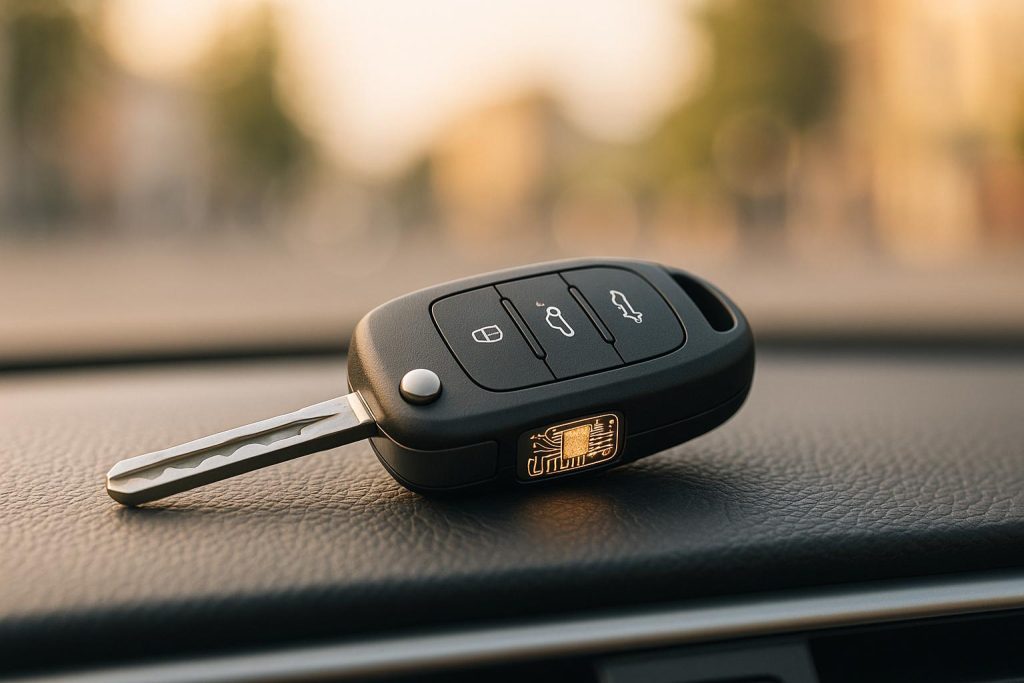
Losing or damaging your car key can be a frustrating and expensive problem. Mobile car key replacement services provide a convenient solution by coming directly to your location – whether at home, work, or stranded on the road. Here’s a quick breakdown of what you need to know:
- Costs vary by key type and vehicle:
- Basic mechanical keys: $10–$100
- Transponder keys: $100–$250
- Smart keys/keyless fobs: $200–$600+
- Luxury brands often cost $400+ due to proprietary systems.
- Mobile locksmiths vs. dealerships:
- Mobile locksmiths are often faster and cheaper, especially for non-luxury vehicles.
- Dealerships may be required for some newer or luxury models.
- Factors affecting costs:
- Vehicle make/model, key technology, programming complexity.
- Timing and location can add fees (e.g., after-hours or remote areas).
- Tips to save money:
- Keep a spare key to avoid emergencies.
- Compare quotes from locksmiths and dealerships.
- Consider aftermarket keys for older or non-luxury vehicles.
Mobile locksmiths offer convenience and can typically handle most key replacements on-site within 30–90 minutes. Be prepared with your car’s details (year, make, model, VIN) and proof of ownership to streamline the process.
For a smoother experience, always confirm costs upfront, ask about warranties, and ensure the locksmith can program keys for your specific vehicle.
What Mobile Car Key Replacement Services Include
Mobile Car Key Replacement Defined
Mobile car key replacement is a service where a locksmith comes directly to you – whether you’re at home, work, or stuck on the side of the road. Equipped with all the tools needed, these technicians can cut, program, or repair car keys on the spot. Unlike traditional locksmith shops or dealerships, which require you to bring your car to them, mobile services bring the workshop to your location.
The process starts with a phone call or online booking. You’ll need to provide details like your car’s year, make, model, VIN, and proof of ownership. Once that’s done, you’ll get an estimate and a technician will typically arrive within 30–90 minutes. When they show up, their van is stocked with everything needed to handle the job, whether it’s unlocking your car, cutting a new key, programming a transponder or smart key, or testing features like remote locks and engine start.
Here’s what they can do:
- Key Cutting: They can create mechanical keys, transponder keys, laser-cut keys, and some smart keys using portable cutting machines.
- Key Programming: Using specialized tools, they program keys to work with your car’s immobilizer and control systems.
- Remote Key Fob Pairing: They sync key fobs for locking, unlocking, trunk release, alarms, and sometimes remote start.
- Lockout Services: If you’re locked out, they can unlock your car without causing damage.
- Ignition and Lock Repairs: They can fix or replace worn-out ignition cylinders or locks.
- Erasing Lost Keys: To improve security, they can delete old keys from your car’s memory so they can’t be used anymore.
Many mobile locksmiths also provide a spare key on the spot, giving you a backup for future emergencies. Their vans are equipped with portable key-cutting machines, OBD-II diagnostic tools, and advanced programming devices. The cost of this equipment, along with regular updates and training, is factored into their pricing.
For example, in Pittsburgh, PA, companies like Sherlock’s Locksmith offer 24/7 mobile car key services, sending certified technicians equipped with the latest tools. These services often outshine traditional options in speed and convenience.
Mobile Services vs. Dealerships and Shop-Based Locksmiths
Mobile car key replacement services stand out for their quick response times and availability. Many operate 24/7, meaning you can get help even in the middle of the night or on holidays – times when dealerships are usually closed. In urban and suburban areas, a technician can often reach you within 30 to 60 minutes. In rural areas, the wait might be longer, but it’s still faster than waiting days for a dealership appointment.
Convenience is another major advantage. Mobile locksmiths come to you, whether you’re stranded in a parking lot or at home. There’s no need to arrange transportation, sit in a waiting room, or tow your car. While shop-based locksmiths might offer slightly lower prices since they don’t charge travel fees, they require you to bring the car or key to them – something that’s not possible during a lockout.
Cost is another factor to consider. Mobile locksmiths typically charge a dispatch fee, key cost (OEM or aftermarket), and programming fees. There may be extra charges for nights, weekends, or complex key systems. Even so, for most non-luxury vehicles, mobile services are often cheaper than dealerships. Dealerships tend to charge premium rates for OEM keys and proprietary programming, and when you add towing fees (often $50 to $100 or more), the total cost can easily exceed what a mobile locksmith charges.
Warranty and compatibility also play a role. Dealerships guarantee OEM parts and programming, which is important for newer cars under warranty. However, many mobile locksmiths use high-quality aftermarket keys and have the expertise to program them correctly. For luxury vehicles or cars with unique key systems, you may need to stick with a dealership, but it’s always worth checking if your mobile locksmith can handle your specific make and model.
Mobile services shine in real-world scenarios. Take a driver who loses the only key to a 2014 Honda Civic in a grocery store parking lot. A mobile locksmith could arrive in about 45 minutes, unlock the car, cut and program a new transponder key, and erase the lost key from the car’s memory – all within an hour. Similarly, if the owner of a 2020 Toyota Camry with push-button start loses their smart key, a technician can come to their driveway and program a new one while disabling the lost key, usually within 60 to 90 minutes.
When you compare the speed, convenience, and cost of mobile locksmiths to dealerships, it’s clear why they’re a go-to option for many drivers – especially in emergencies.
What’s the Cheapest Way To Replace a Lost Vehicle Key Fob?
Car Key Types and Replacement Costs
Knowing your car’s key type is crucial when figuring out replacement costs. The technology behind your key directly impacts how complex – and expensive – the replacement process will be. Below, we’ll break down the main types of car keys, explaining their unique features, replacement processes, and costs.
Basic Mechanical Keys
Basic mechanical keys are as simple as it gets. These are the traditional all-metal keys you insert and turn to start your car. Since they don’t include any electronic components, replacing them is pretty straightforward. A locksmith or even a hardware store can cut a new key from a blank. The cost? Anywhere from $10 to $100, depending on whether you get it done at a store or need a mobile locksmith to come to you. If you’re just duplicating an existing key at a hardware store, it might cost less than $10.
Mechanical keys are mostly found in older cars, especially those made before the late 1990s. While their simplicity keeps replacement costs low, they also offer less security compared to modern keys. If additional technology is integrated, like a chip, the price can increase.
Transponder Keys and Laser-Cut Keys
Transponder keys take the basic mechanical key up a notch by adding an electronic chip. This chip communicates with your car’s immobilizer system. When you insert the key and turn it, the car verifies the chip’s signal before starting. Replacing a transponder key isn’t just about cutting the key; it also requires programming the chip. Costs for these keys usually range between $100 and $250. If you need a mobile locksmith, expect to pay closer to $150 to $250.
Laser-cut keys, also called sidewinder or high-security keys, are a step further in complexity. They have a thicker blade with a unique center-cut groove. This design requires specialized cutting tools, and like transponder keys, they often need programming. Replacing a laser-cut key typically costs between $150 and $250. For instance, if you drive a mid-range SUV from 2016 or later, it likely uses a laser-cut key. A mobile locksmith with the right equipment can often handle the job on-site for around $200.
Smart Keys and Keyless Entry Fobs
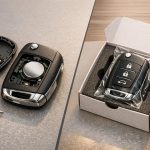
Smart keys and keyless entry fobs are the most advanced options – and the priciest. These keys use proximity sensors and radio-frequency technology, enabling features like keyless entry and push-button start. Many also come with extras, such as remote start or trunk release. The technology inside a smart key is far more intricate, involving onboard computers, encryption, and multiple communication systems. Replacing one requires specialized diagnostic tools and software tailored to your car’s make and model.
In the U.S., replacing a smart key can cost anywhere from $200 to $500 or more. For luxury brands, OEM smart fobs – when you factor in programming and labor – can hit $600. On the other hand, aftermarket options might cost between $150 and $350 plus programming. For example, losing a smart key for a 2020 crossover with push-button start could set you back around $300 to $400 if you go with a mobile locksmith using an aftermarket fob, which is often a more budget-friendly choice. Mobile technicians are equipped to handle these advanced systems quickly and conveniently.
Smart keys have become standard on most cars made after 2015, particularly mid-range and luxury models. If your car starts with a push-button and doesn’t require inserting a key, you’re likely using one of these advanced systems.
Understanding your car’s key type not only helps you plan for replacement costs but also ensures you choose the right service provider. Mobile locksmiths, like Sherlock’s Locksmith in Pittsburgh, PA, can handle everything from basic key cuts to advanced programming, saving you time and hassle.
What Affects Mobile Car Key Replacement Costs
Several factors play a role in determining how much you’ll pay to replace your car key. Let’s break down the main elements that influence the cost so you can better understand what to expect and avoid any surprises.
Vehicle Make and Model
The make and model of your car is one of the biggest factors affecting replacement costs. For more common brands like Honda, Toyota, or Ford, replacement keys tend to be more affordable. These vehicles often use key systems that are widely supported, with costs ranging from $100 to $300 for transponder keys and $200 to $500 for smart keys, depending on the year and model.
On the other hand, luxury brands like BMW, Mercedes-Benz, Audi, or Lexus come with a heftier price tag. These vehicles use advanced key systems with features like encrypted rolling codes and high-security transponders, which require specialized tools and expertise. For example, replacing a smart key for a 2020 Toyota Camry might cost about $320, while a replacement for a 2023 BMW 3 Series key fob could easily run $400 to $500 or more, especially when programming is included.
Why the difference? Luxury brands often require proprietary equipment and software for key programming. Systems like BMW’s CAS (Car Access System) or Mercedes’ encrypted transponders demand high-end diagnostic tools, such as Autel or Xtool scanners, which are expensive and often come with subscription fees. Mobile locksmiths who service these brands invest heavily in equipment and training, and those costs are passed on to the customer.
Beyond the brand, the type of technology in your key also plays a significant role in pricing.
Programming and Equipment Needs
The complexity of your car key’s technology directly impacts programming costs. Basic mechanical keys are the simplest and cheapest to replace since they only need to be cut – no programming required. These typically cost between $10 and $50.
Transponder keys, which include a chip that communicates with your car’s immobilizer system, require programming to work with your vehicle’s ECU. Programming fees for these keys can range from $50 to $150, often making up 30% to 50% of the total replacement cost. For instance, a 2015 Honda Civic transponder key might cost $100 to $200 in total, with programming accounting for a good portion of that.
Laser-cut keys, commonly found in high-security vehicles, are more expensive because they require specialized cutting machines and programming. Programming fees for these keys typically range from $100 to $150, with total costs falling between $200 and $300, as seen with vehicles like a 2018 BMW 3 Series.
Smart keys and keyless entry fobs, which feature advanced wireless communication systems such as proximity sensors or Bluetooth, are the most expensive. Programming these keys often requires specialized diagnostic tools. For models like a 2022 Toyota RAV4 or a Ford F-150, programming fees can run between $100 and $200, contributing to a total replacement cost of $300 to $600. In some cases, particularly with luxury vehicles or complex systems requiring multiple keys to be reprogrammed, programming alone can cost $150 to $250.
Finally, timing and location can add another layer of cost.
Service Time and Location
When and where you need the service can have a big impact on the final bill. Emergency or after-hours calls – such as evenings, weekends, or holidays – often come with a surcharge of 25% to 50%, or a flat fee of $50 to $100. Additionally, mobile locksmiths may charge $25 to $100 for travel if you’re outside their usual service area.
For example, a transponder key replacement during regular daytime hours in a city might cost $150 to $200. However, the same service at 10 PM in a remote suburb could spike to $250 to $350 due to after-hours and travel fees.
In urban areas like downtown Pittsburgh, where locksmiths like Sherlock’s Locksmith operate, travel fees are often lower, and competition helps keep pricing more consistent. A transponder key replacement during regular business hours might cost $120 to $180. In rural or remote areas, however, travel fees can range from $30 to $100 or more. For instance, in Daytona Beach, Florida, car key replacement costs typically range from $130 to $188, with an overall range of $43 to $310, depending on the type of key, vehicle, and service specifics.
To avoid higher fees, consider scheduling non-urgent service during regular business hours at a convenient location, such as your home or workplace. This can help you save on emergency or off-hours surcharges.
Benefits of Using Mobile Locksmith Services
Dealing with a lost or broken car key can be stressful, but mobile locksmith services offer a practical and cost-effective solution compared to traditional dealerships. Here’s how they make the process easier and more efficient.
Convenience and Time Saved
The standout advantage of mobile locksmiths is their ability to come to you. Whether you’re stuck at home, at work, or stranded in a parking lot, a mobile technician arrives equipped with the tools needed to cut and program a replacement key on-site. No need to worry about arranging transportation to a dealership or shop, especially when you don’t have a working key.
A trip to the dealership often involves towing fees (usually $75–$150+), scheduling delays, and transporting your vehicle for in-person programming. Mobile locksmiths eliminate these hassles. Instead of juggling multiple visits for ordering, cutting, and programming, you get everything done in one go. Many providers even offer same-day service or can arrive within an hour – a huge advantage over the often-lengthy wait times at dealerships, especially in busy cities.
The savings add up beyond just avoiding towing fees. You sidestep indirect costs like rideshare fares, rental car fees, or even lost wages from missing work. When you factor in these hidden expenses, mobile locksmith services often prove to be the more economical choice, even if the base cost of the key is similar.
For example, Pittsburgh residents can rely on Sherlock’s Locksmith, which provides mobile services across the region. Their technicians handle everything from crafting duplicate keys to programming fobs and repairing ignitions – all at your location, saving you time and effort.
And the convenience doesn’t stop there – mobile locksmiths are ready to assist whenever you need them.
24/7 Emergency Access
Unlike dealership service departments that operate during standard business hours, mobile locksmiths are often available around the clock. This means if you lose your keys on a Saturday night or lock yourself out after 6 PM on a weekday, you’re not stuck waiting until the next business day.
Take Sherlock’s Locksmith in Pittsburgh, PA, for instance. They offer 24/7 emergency mobile service, so whether it’s late at night, a weekend, or even a holiday, a technician can come to your location to resolve the issue. This is especially valuable in urgent situations – like being stranded in bad weather or locked out with kids or pets in tow.
While emergency service typically includes an additional fee (ranging from $25–$100), it’s still far less than the combined costs of towing, rideshares, or overnight parking. Plus, the ability to resolve the problem immediately – often within 15 to 30 minutes in urban areas – saves you from the stress of figuring out where to leave your car or how to get to work the next morning.
Beyond their availability, mobile locksmiths bring another key advantage: on-the-spot diagnostics.
Immediate Diagnostics and Repairs
Mobile locksmith vans are equipped with advanced diagnostic tools and key programming equipment, allowing technicians to quickly identify and fix problems on-site. Sometimes, the issue is as simple as a dead fob battery, a minor programming glitch, or a worn ignition part – all of which can be addressed at a fraction of the cost of a full replacement.
This ability to diagnose and repair on the spot means fewer appointments and lower labor charges. For instance, if your key fob only needs a battery replacement or quick reprogramming, the cost typically ranges from $30 to $100, compared to the $200 to $600 you’d pay for a full smart key replacement. Even if a new key is required, the technician can cut and program it during the same visit, ensuring you leave with a working key in hand.
Mobile locksmiths often match or beat dealership pricing because their overhead costs are lower, and they compete on speed and convenience. Full-service providers like Sherlock’s Locksmith also handle additional repairs on-site, such as fixing a damaged ignition cylinder or replacing compromised door locks after a break-in attempt. By bundling these services into a single visit, they save you the trouble of scheduling separate appointments with a mechanic or dealer – all while improving your vehicle’s security on the spot.
In short, mobile locksmiths deliver dealership-level expertise without the wait times and at a lower overall cost when you consider towing and time savings.
sbb-itb-643e28e
How to Lower Mobile Car Key Replacement Costs
If you’re looking to save money on mobile car key replacement, a few smart strategies can make a big difference. Whether you’re planning ahead or dealing with an unexpected key issue, these tips can help you manage costs effectively.
Keep a Spare Key
One of the easiest ways to avoid expensive emergency replacements is to have a spare key made before you actually need it. Basic keys typically cost $10–$50, while advanced keys range from $150–$250. By getting a spare key during regular business hours, you can sidestep after-hours fees and emergency surcharges.
Spare keys not only save money but also spare you the stress of being locked out. Emergency replacement costs can quickly add up with rush charges or diagnostic fees, especially outside normal working hours. If you’ve purchased a used car that came with just one key, or if your current fob shows signs of wear – like a weak signal or sticky buttons – it’s a good idea to get a duplicate right away. High-tech keys, in particular, are more expensive to replace, so making a backup should be a priority.
Keep your spare key in a secure but accessible spot, like at home or with a trusted family member. This simple step can save you from unexpected towing costs, rideshare expenses, or the hassle of being stranded in bad weather.
Beyond having a spare, shopping around for quotes is another effective way to cut costs.
Get Multiple Quotes
Mobile locksmith prices can vary a lot depending on factors like your location, the type of key, and the locksmith’s fees. Collecting at least three quotes can help you save up to 30% or more. To get accurate estimates, provide consistent details such as your car’s year, make, model, VIN, and the type of key you need.
Ask for an itemized breakdown of costs to avoid hidden charges. Once you’ve gathered quotes, mention lower offers to see if a locksmith will match or beat them – this works especially well during off-peak hours. Some locksmiths may also offer discounts for ordering two keys at once, which can lower the per-key cost for both programming and travel. Don’t forget to inquire about discounts for groups like military personnel, students, seniors, AAA members, or online bookings.
For example, Sherlock’s Locksmith in Pittsburgh, PA, is known for its competitive pricing and has a 4.9-star rating from 122 Google reviews. Customers like Katrina Christy and Matthew Kravits have praised the fair pricing, with comments such as:
"The price was also great as well."
"The price was very fair too."
These reviews show how comparing quotes can help you find a deal that suits your budget. If dealership quotes seem too high, aftermarket keys might be a better alternative.
Consider Aftermarket Keys
Aftermarket keys and fobs – third-party replacements compatible with your vehicle – can be a budget-friendly option. In the U.S., a standard aftermarket key fob usually costs $50–$150, compared to $150–$500 or more for an OEM (Original Equipment Manufacturer) key from a dealership. For smart or proximity fobs, dealership prices can climb to $250–$600. Pairing an aftermarket key with a mobile locksmith’s programming service can significantly lower your total cost.
Aftermarket keys are especially practical for older vehicles or those no longer under warranty. They’re a great choice for basic remote fobs and many transponder keys, as compatibility is generally well-established. They’re also a good option if you plan to sell your car soon or use it mainly for commuting, where minor cosmetic differences don’t matter as much.
However, aftermarket keys aren’t always the best fit. For newer or luxury vehicles like BMWs or Mercedes, advanced smart-key systems and proprietary encryption can make third-party parts less reliable. In these cases, OEM keys might be worth the higher price to maintain factory features, resale value, and any warranty requirements.
If you decide to buy aftermarket keys or fobs online, make sure to match the FCC ID, part number, or OEM reference of your current key. Check reviews and return policies to avoid compatibility issues, and confirm that your locksmith can cut and program customer-supplied keys. For example, you might spend $50–$150 on the hardware and $30–$100 for programming, which is far cheaper than the $200–$600 dealerships often charge for similar keys.
Additional Cost-Saving Habits
Adopting a few simple habits can help you avoid costly replacements altogether:
- Use a key finder or Bluetooth tracker to reduce the risk of losing your keys permanently.
- Store a spare key at home or with someone you trust.
- Protect your keys from water, extreme heat, and impacts, which can damage electronic components.
- If your key fob stops working, try replacing the battery first (typically $5–$25) before ordering a full replacement. Many key failures are caused by weak batteries.
These small steps can help you avoid pricey after-hours locksmith services and keep your replacement costs under control.
Replacement Costs by Vehicle Brand
The brand of your vehicle plays a big role in determining the cost of a mobile key replacement. For instance, replacing a transponder key for a Toyota Camry might cost between $150 and $220. On the other hand, a BMW 3 Series owner could face a bill ranging from $400 to $700 for a similar service. Knowing these differences can help you plan ahead and avoid surprises when it’s time to replace your car key.
Luxury Brands vs. Standard Brands
Standard brands, such as Toyota, Honda, Ford, Chevrolet, Nissan, Hyundai, and Kia, tend to have the most affordable key replacement options. Here’s a general breakdown of costs for these vehicles:
- Basic mechanical keys: $10–$50
- Transponder keys: $120–$250
- Smart keys or push-to-start fobs: $220–$400
Older models, particularly those from the 2000s or early 2010s, usually fall on the lower end of these price ranges. However, newer or high-trim versions with features like remote start or power liftgates can push costs toward the higher end.
Luxury brands, including BMW, Mercedes-Benz, Audi, and Lexus, come with much steeper price tags – often 2–3 times higher than standard brands for similar key types. For example:
- A BMW smart key typically costs $300–$500, with newer models sometimes reaching $500–$700 after programming.
- Mercedes-Benz owners can expect quotes ranging from $350–$600 or more, especially if module coding is required.
- Lexus smart keys usually cost $250–$450 through a mobile locksmith, though dealership prices can climb to $350–$600 depending on the model and trim.
- Audi and Volkswagen proximity keys often fall between $300–$600, particularly for late-model vehicles requiring online coding access.
According to J.D. Power, advanced keys with immobilizer chips and smart features can exceed $500, particularly for premium brands and complex fobs. A 2025 Chicago locksmith pricing guide echoes this, noting that smart key replacements for most vehicles range from $250–$450, with luxury brands frequently surpassing $500.
Mobile locksmiths generally offer savings of 20–40% compared to dealerships by eliminating towing costs and dealer overhead. However, some late-model European luxury vehicles still require dealership involvement due to manufacturer restrictions on independent access.
| Brand Category | Typical Key Types | Mobile Locksmith Cost Range | Why Costs Differ |
|---|---|---|---|
| Toyota, Honda, Nissan, Hyundai, Kia, Ford, Chevrolet | Transponder, remote key, smart/push-to-start | $120–$400 | Open programming protocols; widely available tools; strong aftermarket options |
| BMW, Mercedes-Benz, Audi, Volkswagen | Smart key, proximity fob, encrypted transponder | $300–$700+ | Proprietary systems; restricted key code access; dealer-grade tools required |
| Lexus, Acura, Infiniti | Smart key, advanced remote fob | $250–$500+ | More advanced than standard brands but less restrictive than European luxury |
How Proprietary Key Systems Affect Costs
The technology behind your car’s key system also plays a major role in replacement costs. Luxury brands, in particular, rely on proprietary systems that demand specialized tools, software, and security codes. Mobile locksmiths often need to invest in costly, brand-specific programming equipment and maintain subscriptions for secure access, which drives up their operating costs – and, by extension, the price you pay.
Features like rolling code technology and encrypted chips are common in late-model and luxury vehicles, further increasing costs. European luxury brands such as BMW, Mercedes-Benz, Audi, and Volkswagen often require dealer-grade tools or online access to manufacturer servers for key programming. As a result, replacing a smart key for these brands can cost anywhere from $400 to $800.
In some cases, losing all keys to a vehicle may trigger even higher expenses. For European luxury models, keys are often digitally paired to the car’s control modules, meaning a complete key loss might require module updates or replacements. This can push costs well beyond the price of a key and fob [8]. Additionally, some standard brands – like newer Ford or GM models – now use brand-locked modules, adding $50–$150 in labor and tool time compared to simpler systems.
For standard brands, you can often save money by opting for aftermarket keys and fobs, which typically cost 20–40% less than OEM parts while still working reliably when programmed by a skilled locksmith. However, luxury and late-model vehicles often require OEM-only keys due to encrypted chips and limited aftermarket support, keeping prices high.
A mobile locksmith service, like Sherlock’s Locksmith in Pittsburgh, PA, can often provide more competitive pricing than dealerships, particularly for mainstream brands. Equipped with advanced programming tools, they can handle many transponder and smart key systems on-site, saving you towing and diagnostic fees. For luxury brands, they can provide clear, upfront quotes and explain when dealership involvement is unavoidable. They may also suggest cost-saving strategies, like programming a spare key before all keys are lost.
To avoid the steep costs of replacing all keys, especially for high-end or European brands, it’s wise to keep at least one working spare key. Replacing a spare is generally much cheaper and less complicated than dealing with a no-key situation, which can lead to expensive module reprogramming [8].
Preparing for Your Mobile Locksmith Visit
Getting ready for a mobile locksmith visit can save you time, reduce stress, and help manage costs. By having the right details and documents on hand, you make the locksmith’s job easier, ensuring a smoother process and quicker results.
Information to Prepare
Before reaching out to a locksmith, gather key details about your vehicle. This includes the year, make, model, trim, and VIN (Vehicle Identification Number). Why? Because every vehicle has specific requirements for key blanks and programming. For instance, a 2018 Honda Civic with a smart key needs a completely different setup than a 2015 Ford F-150 with a standard transponder key.
The VIN is especially critical. You can usually find it on the dashboard near the windshield or inside the driver’s door jamb. Having this number ready allows the locksmith to access your car’s immobilizer system and generate the necessary key code, speeding up the process.
If you still have a working key, let the locksmith know. When all keys are lost, the process often involves more complex diagnostics and programming. Also, describe any issues you’ve been experiencing. For example:
- Does the key turn but the engine won’t start?
- Are the fob buttons unresponsive?
- Is there a flashing security or immobilizer light?
If your key was lost or stolen, mention that as well. The locksmith may need to reprogram the car’s system to disable the old key for security purposes.
You’ll also need to provide proof of ownership. Most locksmiths won’t proceed without it. Have your photo ID (like a driver’s license) and one of the following documents ready:
- Vehicle registration
- Title
- Insurance card showing your name and VIN
Lastly, confirm the exact location of your vehicle. Share whether it’s in a parking garage (and specify the level) or stranded on a highway. If the car is in a tricky spot, like a tight parking area, let the locksmith know so they can bring the right tools. Ensure the car is in a well-lit, accessible area with enough space for the technician to work safely.
Questions to Ask Your Locksmith
Before committing to a service, it’s smart to ask a few key questions to avoid surprises. Start by requesting a clear cost breakdown. For example, ask: “What’s the total cost, including parts, labor, and programming fees?” While a locksmith might quote $180 for a transponder key replacement, additional diagnostics or repairs could push the price up by $50–$100 if there’s an issue with the immobilizer system.
Verify whether the quote is a flat rate or subject to change after inspection. Also, ask: “Do you charge extra for after-hours, weekends, or holiday service?” Many mobile locksmiths add surcharges ranging from $50–$100 for emergency or late-night calls.
You’ll also want to know how long the job will take. Simple transponder programming might take 15–30 minutes, while programming a smart key for a luxury car could take over an hour. If you drive a high-end vehicle, confirm that the locksmith has experience with your brand – cars like BMW, Mercedes-Benz, and Audi often require specialized tools.
Another important question: “Will you use OEM (original equipment manufacturer) keys or aftermarket options?” Aftermarket keys usually cost 20–40% less and can work just as well when programmed by an experienced technician.
Finally, check if the locksmith can complete the job entirely on-site. Some situations might require towing, so it’s good to clarify upfront.
Warranty Coverage Explained
Once you’ve confirmed the costs and logistics, take a moment to understand the warranty for your new key. Most reputable locksmiths offer a 90-day warranty on key hardware and programming. Make sure you know what’s included. For example, if the fob’s buttons stop working due to a manufacturing defect, the warranty should cover a replacement.
Ask about any conditions that could void the warranty, such as physical damage, water exposure, or third-party reprogramming. It’s also a good idea to request the warranty terms in writing on your invoice. This documentation will come in handy if you need to make a claim later.
For instance, a service like Sherlock’s Locksmith in Pittsburgh, PA, ensures their technicians are certified and equipped with advanced tools to handle both transponder and smart key systems right on-site. They provide upfront quotes, clearly explain warranty details, and address all your concerns before arriving – giving you peace of mind about both the service and the cost.
Conclusion
Replacing a car key doesn’t have to be overwhelming if you’re prepared. The type of key – whether it’s a basic mechanical key, a transponder, or a smart fob – plays a major role in determining how much you’ll end up paying. Understanding your vehicle’s key type and its associated costs can help you set realistic expectations and budget more effectively.
As mentioned earlier, mobile locksmith services offer convenience and affordability. These professionals come directly to you, saving you from towing fees (which average about $109 in the U.S.) and long dealership waits. They often charge less for programming and labor, making them a practical option for key replacement. For example, in Pittsburgh, PA, Sherlock’s Locksmith provides 24/7 mobile service, handling everything from key cutting to programming and even emergency lockouts – all on-site, without the need for a dealership visit.
A little preparation can go a long way toward saving money. Keep a spare key handy, have your VIN and proof of ownership ready, and always compare quotes before committing to a service. Ask upfront about aftermarket options, warranty coverage, and potential fees for after-hours service or travel. These steps can help you avoid unnecessary expenses and delays.
While modern car keys are more expensive due to their advanced security features, being informed and working with trustworthy providers can make the process smoother and more predictable. By following the strategies outlined in this guide – knowing your key type, gathering the right information, comparing quotes, and choosing skilled mobile locksmiths – you can confidently handle key replacement and protect both your vehicle and your budget.
FAQs
What should I do if I’ve lost my only car key and can’t get into my vehicle?
If you’ve misplaced your only car key and find yourself locked out of your vehicle, take a deep breath – help is just a call away. Reach out to a reliable mobile locksmith service like Sherlock’s Locksmith for emergency lockout assistance. Their skilled technicians can swiftly get you back into your car and even create a replacement key, often right then and there.
To speed up the process, have some key details about your car ready, like the make, model, and year. Quick action can save you time and get you back on the road with minimal stress.
Are aftermarket keys just as reliable as OEM keys for modern car models?
Aftermarket keys can be a practical and budget-friendly option for many modern vehicles. Their performance, however, largely hinges on the quality of the key itself and how well it integrates with your car’s security system.
OEM (Original Equipment Manufacturer) keys are crafted by the car maker and are designed to deliver maximum compatibility and performance. That said, well-made aftermarket keys, when properly programmed by a skilled locksmith, can often perform just as effectively. The key to success lies in having the key cut and programmed by a qualified professional. For instance, the team at Sherlock’s Locksmith utilizes advanced tools and techniques to ensure your aftermarket key functions smoothly and reliably.
How can I find a reliable and qualified mobile locksmith?
When searching for a dependable mobile locksmith, prioritize professionals with the right certifications and a track record of experience. It’s a good idea to ensure they participate in regular training to stay updated on industry standards. Look for locksmiths who back their work with a warranty, giving you confidence in the quality of their services. Opt for companies that provide 24/7 availability and employ skilled technicians equipped with modern tools to address a wide range of locksmith needs. Lastly, take some time to read reviews or testimonials to gauge their reliability and professionalism.