


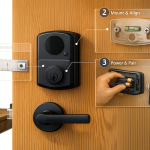
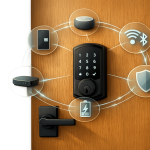
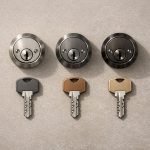
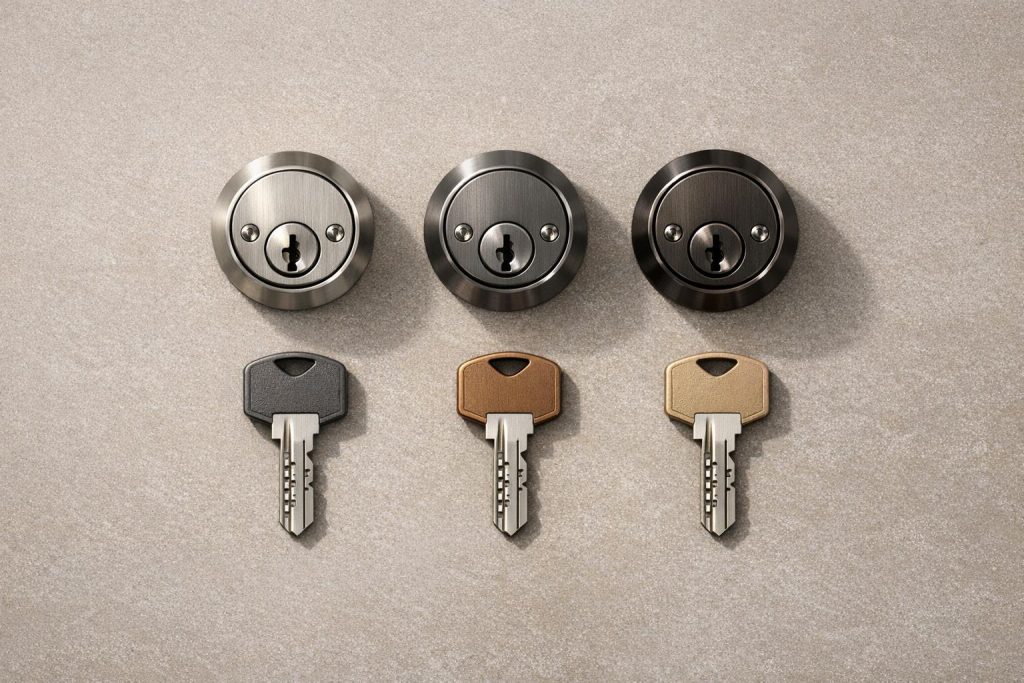
Unlike standard locks, these advanced systems include features like telescoping pins, sidebars, and hardened materials to resist picking, bumping, and drilling. They also use patented keyways to prevent unauthorized key copies. Leading brands like Mul-T-Lock, Schlage, and Medeco offer specialized solutions for homes, businesses, and critical facilities.
Key Takeaways:
- Mul-T-Lock: Known for its pin-in-pin mechanism and strong key control.
- Schlage: Offers durable locks with advanced side-bar technology.
- Medeco: Features rotating pins for high resistance to physical attacks.
- Certifications Matter: Look for ANSI/BHMA Grade 1 or UL 437 for top-tier security.
- Professional Installation: Ensures locks perform properly and last decades.
Choosing the right lock depends on your security needs, but proper deadbolt installation and maintenance are just as important. High-security locks provide peace of mind by protecting your property and assets from common threats.
Mr Locksmith’s Choice | Schlage High-Security Deadbolt
sbb-itb-643e28e
What Defines a High-Security Lock?
High-security locks stand out due to their advanced mechanics, patented keyways, and adherence to strict industry standards. These features are specifically designed to resist both covert methods like picking and bumping, as well as brute-force techniques such as drilling and prying.
Technical Features and Construction
The internal mechanics of high-security locks are built to counter common bypass techniques. Unlike standard pin tumblers, these locks often use advanced technologies like telescopic pins (pin-in-pin), sidebars with finger pins, or biaxial pins that require precise lifting and rotation to align. This added complexity drastically increases the number of key combinations available compared to typical residential locks.
To combat bumping, many high-security locks employ unique designs. For instance, disc-detainer locks, such as the Abloy Protec2, remove springs and pins altogether, making them naturally resistant to bumping. Other models include sidebars or blocking pins that do not respond to the kinetic energy transfer that bumping relies on.
Drilling protection is achieved through the use of hardened materials like steel rods, ball bearings, and anti-drill plates embedded within the lock. Some locks even feature free-spinning faceplates that rotate with a drill bit, preventing it from gaining traction and penetrating the cylinder.
Precision manufacturing also plays a critical role. High-security locks are built with extremely tight tolerances and paracentric keyway designs. These features reduce the space available for picking tools and make it harder to manipulate internal components during an attack.
Key Control and Restricted Keyways
Patented keyways offer a level of protection that simple "Do Not Duplicate" stamps cannot. While those stamps lack legal enforcement, patented keyways are protected under U.S. patent law, with violations carrying potential fines of up to $10,000. The Associated Locksmiths of America (ALOA) underscores this distinction:
"Orders for keys stamped ‘Do Not Duplicate’ or similar wording will be handled in the same manner as any unrestricted key."
True key control involves strict verification protocols. Duplication typically requires a security card, magnetic strip card, or an authorized signature. Each duplication is logged, creating an audit trail that tracks the number of keys in circulation and identifies who authorized their production. This system significantly reduces the risk of unauthorized duplication. Advanced designs, like the Medeco M4, even include moving components such as shuttle pins to prevent duplication through methods like 3D printing. The Abloy Protec2 system offers an impressive 1.97 billion key combinations, making it ideal for secure master key systems.
Industry Standards and Certifications
High-security locks are tested against rigorous standards to ensure their reliability. In North America, UL 437 is the primary benchmark for high-security cylinders, evaluating resistance to bypass, picking, impressioning, and destructive entry. Cameron Sharpe, CPP, explains:
"The most common high-security rating is UL437, which covers locks and cylinders. This category is tested for unauthorized opening from bypass, lock-picking, impressioning and destructive entry."
Another key standard, ANSI/BHMA A156.30, assesses high-security cylinders for key distribution, manipulation resistance, and electronic inputs. Additionally, the ANSI/BHMA grading system measures durability: Grade 1 locks must withstand up to 1,000,000 cycles, Grade 2 requires 400,000 cycles, and Grade 3 requires 200,000 cycles. For padlocks, ASTM F883 evaluates security on a scale from Grade 1 to 6, with Grades 4 and above classified as high-security. Specialized locks, such as those used in storm shelters, may also meet FEMA 320/361 standards, ensuring they can withstand wind speeds up to 250 mph and impacts from 15-pound projectiles traveling at 100 mph.
When choosing a high-security lock, it’s crucial to consider the entire door assembly. A lock is only as effective as the door and frame it’s installed in. Even the most advanced lock will offer limited protection if paired with a weak door or frame. These certifications and features form the backbone of the performance offered by the top brands discussed in the next section.
Leading High-Security Lock Brands
The high-security lock industry is dominated by a few manufacturers known for their rigorous testing and advanced technology. Among them, Mul-T-Lock, Schlage, and Medeco stand out, each offering distinct features tailored to different security needs.
Mul-T-Lock: Advanced Design and Key Control
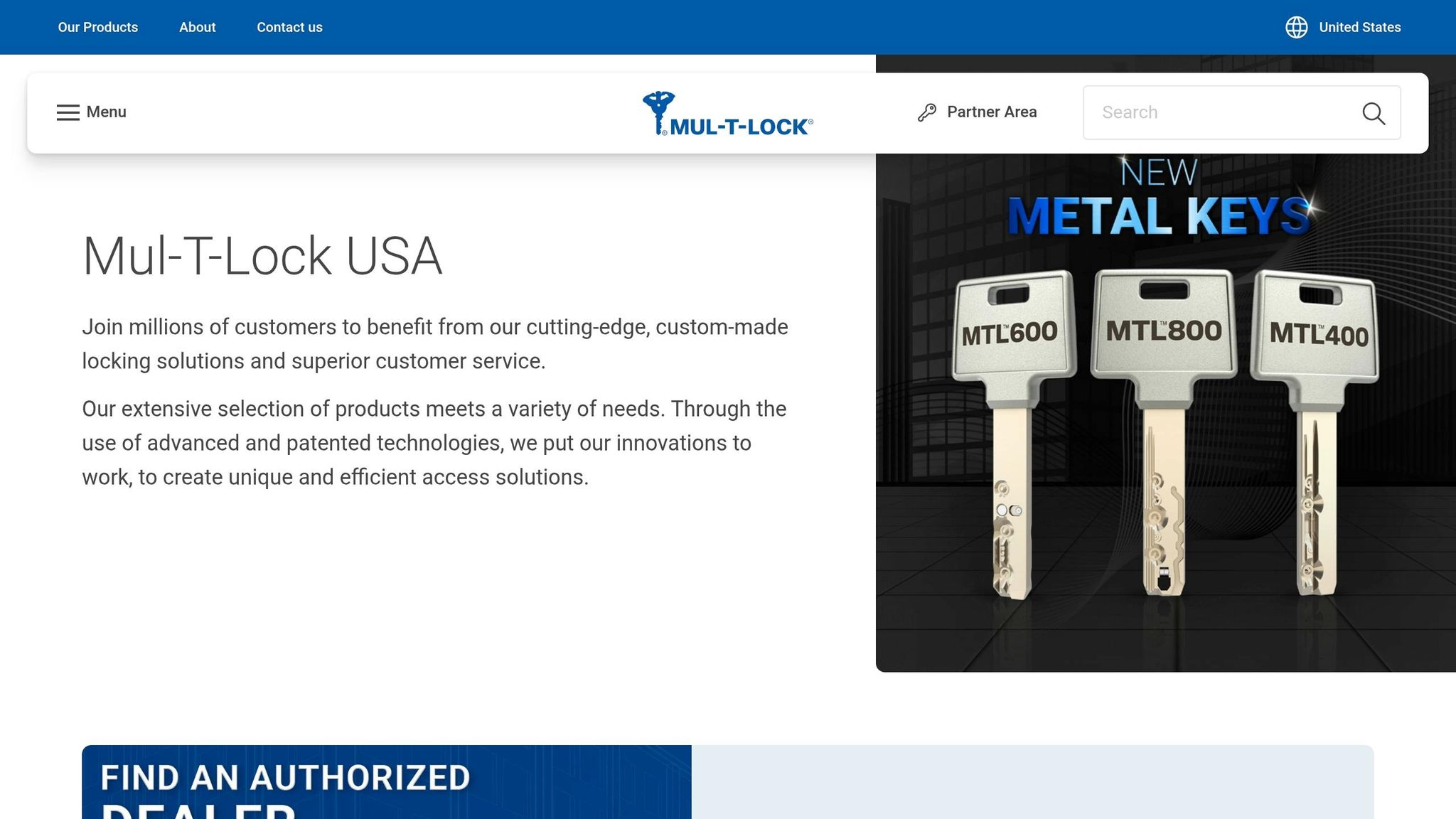
Mul-T-Lock has built its reputation on its patented telescopic pin tumbler mechanism and dimple key design, which make its locks highly resistant to picking and bumping. This unique pin-in-pin system significantly increases the number of possible key combinations, making unauthorized manipulation extremely difficult.
One of Mul-T-Lock’s standout features is its focus on key control. The company uses proprietary hardware and software to produce keys, ensuring that:
"Unauthorized copying of Mul-T-Lock keys is virtually impossible." – B&B Locksmith & Security, Inc.
This level of control makes Mul-T-Lock a strong choice for environments where preventing unauthorized duplication is critical. Additionally, the brand integrates electronic access through its eCLIQ system and maintains a global network of over 20,000 authorized dealers for secure distribution.
Schlage: Durable and Flexible Options
With over a century of experience, Schlage has earned a reputation for durability and innovation. Its Everest 29 and Primus lock lines incorporate side-bar technology and hardened steel pins, providing strong resistance to picking and bumping.
Schlage’s locks are known for their versatility and ability to meet stringent standards. For example, its Grade 1 mortise and cylindrical locks meet the highest ANSI/BHMA standards, making them ideal for commercial use. For areas prone to hurricanes, Schlage offers reinforced assemblies that meet FEMA 320/361 standards, capable of withstanding wind speeds up to 250 mph.
Schlage also prioritizes key control through geographically restricted keyways, ensuring only authorized dealers can produce keys. On the tech side, its AD-Series electronic locks support both wired and wireless setups, as well as Bluetooth and NFC credentials, offering modern access solutions.
Medeco and Assa Abloy: Premium Security Standards
Medeco has been a leader in high-security lock technology for over 50 years, particularly known for its dual-locking system. This system combines traditional pin-and-tumbler mechanics with rotating disks and biaxial pins, making the locks highly resistant to picking and drilling.
B&B Locksmith & Security, Inc. highlights:
"Medeco’s high-end lock lineup is noted for superior durability and resistance to kinetic attacks."
This makes Medeco a top choice for locations requiring robust protection, such as government facilities and industrial sites. Security expert Cameron Sharpe adds:
"Pick- and tamper-resistant cylinders are useful where detection risk is low and asset value is high."
Medeco also offers electronic options like its XT and CLIQ systems, which include features like audit trails and advanced access management. As part of the Assa Abloy group, Medeco benefits from an extensive research network. Other Assa Abloy brands cater to specialized needs, such as Sargent’s "Mogul" cylinders for detention facilities and Abloy’s disc-detainer locks for critical infrastructure like power plants and water treatment facilities.
| Brand | Primary Technology | Best Use Case | Key Strength |
|---|---|---|---|
| Mul-T-Lock | Telescopic pins & dimple keys | Retail chains, sensitive facilities | Key control & picking resistance |
| Schlage | Side-bar technology & hardened pins | Commercial spaces, storm shelters | Durability & weather resistance |
| Medeco | Rotating disks & biaxial pins | Government, industrial sites | Drill & brute force resistance |
Choosing the right lock depends on your specific needs. Mul-T-Lock is ideal for preventing unauthorized key duplication, Schlage offers durability and flexible access control, and Medeco delivers unmatched protection against physical attacks in high-value environments.
How to Select the Right Lock Brand
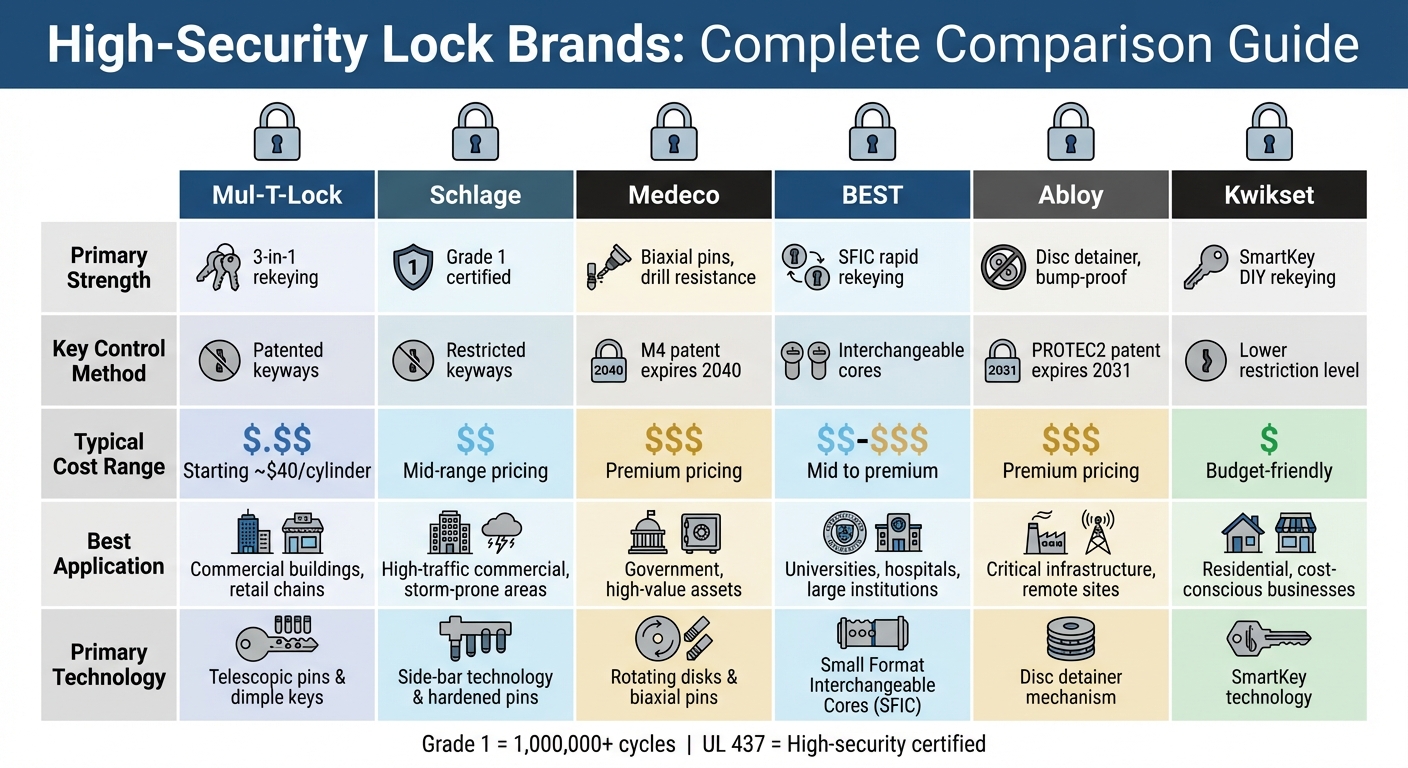
High-Security Lock Brands Comparison: Features, Pricing, and Best Applications
Key Selection Criteria
When choosing a high-security lock, start by checking for ANSI/BHMA Grade 1 certification. This ensures the lock can handle over 1,000,000 operating cycles, making it ideal for businesses with heavy daily use. For added protection, confirm the lock’s cylinder has a UL 437 listing, which guarantees resistance to tampering.
Another critical factor is key control. As Cameron Sharpe, CPP, points out:
Key control is possibly the most important issue with high-security locking systems.
To prevent unauthorized key duplication, look for locks with patented keyways. Beyond that, consider the total cost of ownership, which includes factors like material durability, ease of rekeying, and the advantages of Small Format Interchangeable Cores (SFIC). Modern security needs often extend to electronic features like audit trails and remote monitoring, which help businesses streamline access management while meeting compliance standards.
Recommendations by Industry
Different industries face unique security challenges, so it’s important to match the lock system to your specific needs:
- Retail and Commercial Spaces: Schlage and Kwikset offer keypad entry and master key options, which are great for managing frequent staff changes.
- Healthcare Facilities: Medeco and Securitech provide secure audit trails and restricted keyways, ensuring compliance with strict regulations.
- Educational Institutions: Schools often need large-scale rekeying solutions. BEST’s SFIC system allows quick core changes across campuses without replacing hardware.
- Government and Critical Infrastructure: For remote locations like power substations, Abloy’s disc detainer mechanisms and CyberLock’s electronic audit trails provide strong protection.
- Detention and Psychiatric Facilities: ASSA and SARGENT specialize in Mogul cylinders designed to withstand high-abuse environments.
Brand Comparison Table
Here’s a quick breakdown of top lock brands, their strengths, and where they excel:
| Brand | Primary Strength | Key Control Method | Typical Cost Range | Best Application |
|---|---|---|---|---|
| Mul-T-Lock | 3-in-1 rekeying | Patented keyways | Starting ~$40/cylinder | Commercial buildings, retail chains |
| Schlage | Grade 1 certified | Restricted keyways | Mid-range pricing | High-traffic commercial, storm-prone areas |
| Medeco | Biaxial pins, drill resistance | M4 patent expires 2040 | Premium pricing | Government, high-value assets |
| BEST | SFIC rapid rekeying | Interchangeable cores | Mid to premium | Universities, hospitals, large institutions |
| Abloy | Disc detainer, bump-proof | PROTEC2 patent expires 2031 | Premium pricing | Critical infrastructure, remote sites |
| Kwikset | SmartKey DIY rekeying | Lower restriction level | Budget-friendly | Residential, cost-conscious businesses |
When selecting a brand, start by evaluating your risk level. High-risk areas like pharmacies or remote facilities need locks with advanced tamper resistance. Also, ensure the lock is compatible with your existing doors and hardware to avoid installation issues. For businesses with frequent employee turnover, prioritize locks with simple rekeying options – this can save significant time and money in the long run.
Why Professional Locksmith Services Matter
When it comes to high-security locks, advanced features alone aren’t enough. Proper installation and professional maintenance play a key role in ensuring these locks perform at their best.
Installation and Maintenance
High-security locks are built with intricate mechanisms – like sidebars, telescoping pins, and restricted keyways – that require precise installation. Even the smallest misalignment, such as 1/16", can undermine the entire lock system. Cameron Sharpe, CPP, puts it succinctly:
"Lock and door assemblies take the grade of the lowest graded component, including ungraded pieces. This means your installation is only as good as the weakest link."
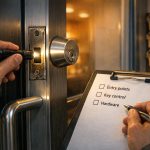
Certified locksmiths don’t just focus on the lock itself; they inspect the entire door assembly, including frames, hinges, and strike plates, to ensure every component meets standards like UL 437 and ANSI/BHMA. DIY installations, on the other hand, can void warranties, while professional services typically include both parts and labor warranties. With routine maintenance – such as applying graphite lubricant every 6 to 12 months – high-security locks can last 25 to 30 years or more, far outlasting the 10 to 15 years typical of standard locks. This attention to detail ensures that emergency services, when needed, can be handled seamlessly.
Emergency and Rekeying Services
Unexpected situations like security breaches, lost keys, or staff changes call for immediate action. Sherlock’s Locksmith, based in Pittsburgh, PA, is known for its 24/7 mobile emergency services, handling everything from lockouts to broken key extractions and urgent rekeying. With a 4.9/5 rating from 122 Google reviews, customers frequently praise the company’s promptness and expertise, even with complex tasks like programming faulty key fobs or repairing ignitions.
Rekeying is often a budget-friendly alternative to replacing an entire lock. Many high-security cylinders can be adjusted internally, allowing businesses to maintain their existing hardware while implementing new key control protocols. Certified locksmiths also handle restricted keyways and authorization systems, making it nearly impossible for unauthorized duplicates to be created. This approach complements the advanced security features of high-security locks.
Advanced Security Systems
Security today goes far beyond traditional mechanical locks. Sherlock’s Locksmith offers cutting-edge solutions like biometric locks, keyless entry systems, and access control options that use proximity cards and key fobs. These systems often include features like audit trails and remote monitoring, helping businesses meet compliance requirements while enhancing security.
The company also provides tailored master key systems and telephone entry solutions for businesses, supported by thorough security assessments to identify potential vulnerabilities. As Sherlock’s Locksmith explains:
"Our licensed, insured locksmiths adhere to strict industry regulations and standards."
To keep up with the latest advancements, their technicians undergo continuous training, ensuring they’re equipped to handle new technologies and maintain the effectiveness of your security setup for years to come. These advanced solutions underscore the importance of professional installation and ongoing technical support to protect your investment.
Conclusion
High-security locks create multiple layers of defense, safeguarding both physical assets and sensitive data. Adding a deadbolt alone can cut the risk of break-ins by over 50%. Combine that with patented key control systems and UL437-certified cylinders, and you have a security setup that can withstand lock picking, drilling, and other destructive attacks.
Choosing the right brand depends on your specific security requirements. Medeco dominates the U.S. residential market with its advanced rotating pins. Mul-T-Lock, with its telescopic pin technology, performs exceptionally well in busy commercial environments. For critical infrastructure exposed to extreme conditions, Abloy’s disc detainer mechanism offers near-impenetrable protection. Regardless of the choice, professional installation is essential to ensure the lock functions as intended.
As Cameron Sharpe, CPP, wisely points out:
Lock and door assemblies take the grade of the lowest graded component, including ungraded pieces.
Patented key control and UL437-certified designs are engineered to resist tampering. Certified locksmiths play a critical role in aligning all components, verifying ANSI/BHMA Grade 1 standards, and incorporating modern features like biometric access and audit trails.
For those in the Pittsburgh area, Sherlock’s Locksmith exemplifies this comprehensive approach. Their 24/7 mobile service covers everything from emergency rekeying to advanced access control systems. Their certified technicians not only install state-of-the-art hardware but also perform security audits and manage restricted keyway systems, ensuring ongoing protection and maintenance.
When installed professionally, high-security locks offer more than just protection – they provide peace of mind. Every component, from the cylinder to the strike plate, works together seamlessly as part of a unified security system.
FAQs
Do I need to replace my door or frame for a high-security lock?
In most situations, installing a high-security lock doesn’t require replacing your door or frame. Many locks are specifically designed to fit onto your existing setup. That said, if your door or frame is damaged, lacks strength, or isn’t properly reinforced, it’s a good idea to upgrade them. This ensures the lock’s features – like reinforced strike plates and anti-drill plates – can perform effectively. For the best results, have a locksmith evaluate your current setup.
How do patented keyways stop unauthorized key copying?
Patented keyways are designed with unique, proprietary features that make unauthorized key copying nearly impossible. These designs are protected by patents, meaning only the original manufacturer or authorized locksmiths can produce duplicates. Key blanks for these systems aren’t available at general hardware stores, adding an extra layer of security.
On top of that, many of these systems include strict key control policies. For example, duplicating a key often requires proof of ownership, ensuring that even if someone has the physical key, they can’t easily make a copy. This approach significantly improves security by tightly controlling who can access and distribute keys.
Which certification should I prioritize: UL 437 or ANSI/BHMA Grade 1?
UL 437 emphasizes a lock’s ability to resist picking and manipulation. On the other hand, ANSI/BHMA Grade 1 takes a broader approach, assessing factors like durability, resistance to physical attacks, and long-term reliability. If your primary concern is protection against picking, UL 437 is a solid choice. However, for environments requiring both strong security and durability – such as high-traffic areas – ANSI/BHMA Grade 1 certification is the better option.