





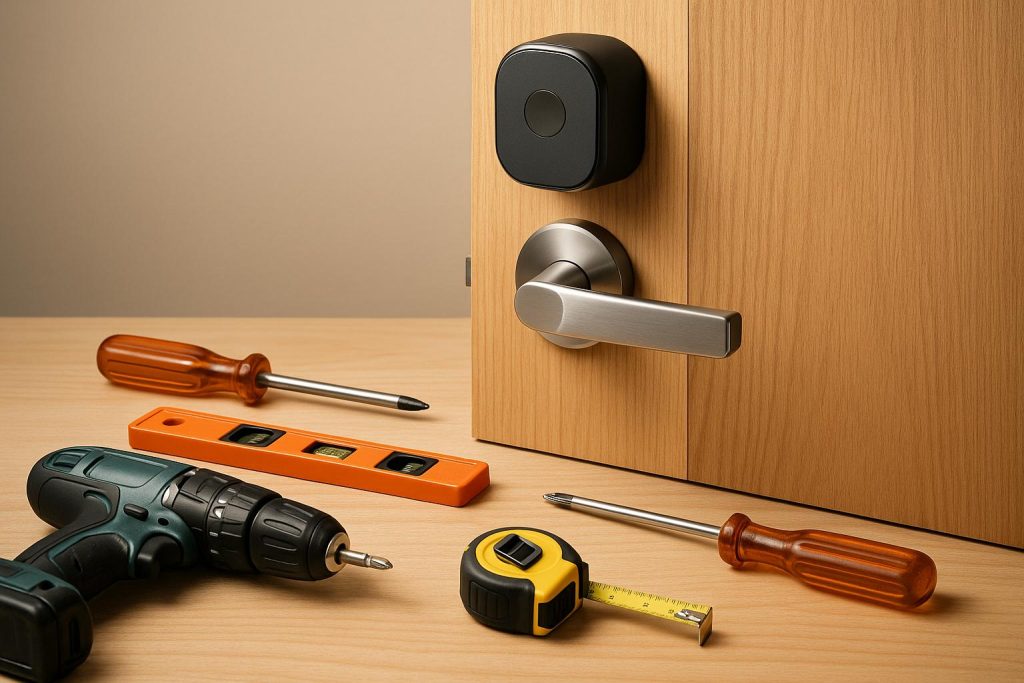
Smart lock installation requires precision, the right tools, and careful attention to detail. Using improper tools can lead to misaligned locks, reduced security, or warranty issues. Here are the seven essential tools you need to install a smart lock correctly:
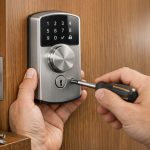
- Phillips Head Screwdriver: Essential for securing screws without stripping them. A magnetic tip and ergonomic handle make the job easier.
- Drill and Drill Bits: Necessary for creating precise holes. Use cordless drills for portability and hole saws for larger cuts.
- Door Lock Installation Kit: Includes templates, hole saws, and guides to ensure proper alignment and accurate drilling.
- Tape Measure and Ruler: Critical for accurate measurements like door thickness, lock height, and backset distance.
- Chisel and Hammer: Used to carve mortises for strike plates and deadlatches, ensuring a flush fit.
- Level Tool: Ensures horizontal and vertical alignment, preventing lock malfunctions and wear.
- Smartphone or Tablet: Required for setting up and testing the lock’s software, connecting it to your home network, and programming access codes.
Quick Comparison
| Tool | Purpose | Price Range | Skill Level |
|---|---|---|---|
| Phillips Head Screwdriver | Secures screws without stripping | $3–$40 | Low |
| Drill and Drill Bits | Drills precise holes for hardware | $50–$200 | Medium |
| Installation Kit | Provides templates and guides | $30–$100+ | Medium |
| Tape Measure and Ruler | Ensures accurate measurements | $5–$20 | Low |
| Chisel and Hammer | Prepares door for flush hardware fitting | $25–$60 | High |
| Level Tool | Ensures alignment to prevent malfunctions | $10–$50 | Low |
| Smartphone or Tablet | Configures and tests smart lock features | Varies | Low |
Using these tools ensures a secure, precise, and functional smart lock installation. Whether you’re a professional or a DIY enthusiast, having the right equipment is essential for success.
Irwin Door Lock Installation Kit with template and hole saws: is it any good? Tool test and review
1. Phillips Head Screwdriver
The Phillips head screwdriver is a must-have for installing smart locks. In fact, over 90% of U.S. smart lock models rely on Phillips screws for their assembly. Its cross-shaped tip is designed to grip screws securely, which helps prevent slippage and reduces the risk of stripping the screw head.
For most installations, a #2 Phillips head screwdriver is the go-to option. However, having a full set that includes #1, #2, and #3 sizes can be useful for tackling different hardware needs.
Using the right-sized screwdriver is key to ensuring a secure fit and reliable operation of the lock. Magnetic-tip screwdrivers can be especially handy, as they hold screws in place, making it easier to work in tight or awkward spaces. Additionally, ergonomic handles are a great feature for reducing hand fatigue, particularly during long or repetitive tasks.
| Feature | Benefit for Smart Lock Installation |
|---|---|
| Cross-shaped tip | Prevents screw stripping and ensures secure fastening |
| Magnetic tip | Helps hold screws in place during installation |
| Ergonomic handle | Minimizes hand fatigue during extended use |
Basic Phillips head screwdrivers are affordable, with prices ranging from $3 to $15. For those looking for professional-grade tools, complete sets typically cost between $20 and $40. Brands like Wiha, Klein Tools, and Craftsman are known for offering durable and precise options.
When Sherlock’s Locksmith technicians handle smart lock installations in Pittsburgh, they always come prepared with high-quality Phillips head screwdrivers. One pro tip: make sure the screwdriver tip is sharp and in good condition to maintain a secure grip and precise control.
Up next, we’ll dive into drills and drill bits, which are essential for more advanced smart lock installations.
2. Drill and Drill Bits
A reliable drill and the right bits are essential for creating precise holes during smart lock installations. For this task, two types of drills are commonly used: cordless drill-drivers and corded drills. Cordless drill-drivers are portable and convenient, making them a go-to choice for residential installations. They’re favored by both homeowners and locksmiths for their ease of use, especially in tight spaces or when moving between locations. On the other hand, corded drills provide consistent power, making them better suited for heavy-duty or extended projects.
Cordless drill-drivers are particularly effective for smaller tasks, such as drilling holes for mounting plates, deadlatches, and other hardware. Their portability eliminates the hassle of managing extension cords, which is a huge advantage when working in confined areas. These tools help ensure clean and durable results.
The right drill bits are just as important as the drill itself. Smaller bits, typically ranging from 1/8" to 3/16", are used for pilot holes. These guide screws into place and reduce the risk of splitting wood when securing the deadlatch or strike plate. Medium-sized bits, around 1/4" to 3/8", are used for creating holes for the lock mechanism and cable passages. For the main bore hole – where the lock cylinder and internal components are installed – you’ll need larger bits or hole saws, usually between 1" and 2.125".
Understanding the difference between standard drill bits and hole saws is key. Twist drill bits are ideal for smaller, precise holes, such as those needed for screws or cable passages. Hole saws, however, are designed for larger, circular cuts. These cylindrical tools, with sharp teeth around the edge, produce cleaner, more accurate holes with minimal splintering. This precision is crucial for both the lock’s functionality and the installation’s overall appearance.
| Bit Type | Size Range | Primary Use |
|---|---|---|
| Twist bits | 1/8"–3/16" | Pilot holes and screw guides |
| Standard bits | 1/4"–3/8" | Lock mechanism and cable passages |
| Hole saws | 1"–2.125" | Main lock bore holes |
Proper technique is just as important as having the right tools. For wooden doors, using steady, controlled pressure prevents splintering and ensures a clean cut. Drilling through metal doors requires firm, consistent pressure and a slower speed to maintain control. Always adjust drill speed based on the material being worked on.
Safety should never be overlooked. Wear safety glasses and ensure the door is securely held in place before drilling. Start at a lower speed to maintain precision, especially when breaking through the door’s surface.
At Sherlock’s Locksmith in Pittsburgh, our technicians come fully equipped with cordless drills, a variety of drill bits, and everything needed for a professional installation. This preparation allows us to handle any smart lock installation with precision, regardless of the door material or lock design.
Most smart lock manufacturers include templates with exact measurements and hole placements. Following these templates with the right tools and techniques is what separates a professional installation from a DIY attempt. Attention to detail is key to ensuring the lock fits perfectly and functions flawlessly.
3. Door Lock Installation Kit
A door lock installation kit is a handy toolset designed to ensure accurate placement of smart locks. These kits come with pre-measured guides that show exactly where to drill and position hardware, helping you achieve perfect alignment without guesswork.
Most kits include essential tools like hole saws, drill bits, templates, strike locators, mounting plates, and screws. The templates are particularly useful, as they provide precise measurements for placing components like the deadlatch, keypad, and mounting plate. By following these guides, you can avoid the trial-and-error process that often leads to misaligned holes or door damage. This streamlined approach works well across various door types and ensures that your smart lock functions securely and effectively.
For professionals, high-quality kits like the LAB Strike Locator or Korect-a-Bore stand out. These kits are built for repeated use and can handle a range of door styles and thicknesses, making them a go-to choice for locksmiths and installers who handle multiple jobs.
Templates are a game-changer, especially for professionals. They significantly cut down on installation time and reduce the risk of damaging doors. Instead of constantly measuring and rechecking, you can rely on precise dimensions tailored to specific smart lock hardware.
| Kit Type | Ideal User | Key Features | Price Range |
|---|---|---|---|
| Basic Template (included) | Homeowners | Paper/plastic template, basic screws | Included with lock |
| Professional Kit | Locksmiths/Installers | Metal guides, hole saws, adapters | $30–$100+ |
Not all kits are created equal, and different smart lock models or door materials may require specific tools. For instance, a template designed for a 1.75" wooden door won’t necessarily work on a 2" metal door. Professional kits often include adjustable templates and various drill bit sizes to handle these differences, offering the durability and precision needed for more demanding installations.
At Sherlock’s Locksmith in Pittsburgh, technicians rely on advanced installation kits to ensure every smart lock installation is done right. Whether it’s for a residential or commercial property, these tools help deliver secure and functional results, no matter the door type or smart lock model.
When choosing a kit, professionals should prioritize features like adjustable templates, compatibility with multiple lock brands, high-quality drill bits, and durable construction. A flexible kit that works with different door types and thicknesses is essential for tackling a variety of installation challenges.
4. Tape Measure and Ruler
Getting accurate measurements is the foundation of a successful smart lock installation. Even with top-notch tools and templates, poor measurements can lead to misaligned locks and potential security issues. This is where a reliable tape measure and ruler come into play, ensuring every component is positioned exactly where it needs to be.
Start with a tape measure to handle the basics. Measure the door thickness (commonly between 1-3/8" and 1-3/4"), mark the lock height (typically 36" to 48"), and check the backset – the distance from the door edge to the center of the borehole. These measurements confirm that your smart lock will fit seamlessly.
A ruler is equally important for fine-tuning. Use it to mark drill points, verify the borehole diameter, or align the strike plate. Even minor misalignments – down to 1/16 of an inch – can cause issues like a deadbolt that doesn’t engage properly or leaves security gaps. According to industry data, small measurement errors are responsible for up to 30% of service callbacks related to misaligned locks or malfunctioning mechanisms.
Here’s a quick breakdown of key measurements and tools:
| Measurement Type | Tool | Typical Range | Critical For |
|---|---|---|---|
| Door Thickness | Tape Measure | 1-3/8" to 2" | Lock compatibility |
| Lock Height | Tape Measure | 36" to 48" | User accessibility |
| Backset Distance | Ruler | 2-3/8" or 2-3/4" | Proper alignment |
To avoid costly mistakes, measure twice before making any permanent changes. At Sherlock’s Locksmith in Pittsburgh, for example, technicians double-check all measurements to ensure the smart lock operates flawlessly once installed.
It’s also worth noting that different door materials can impact your approach. Wood doors may have slight warping, metal doors require extra precision due to their rigidity, and composite doors often have uneven surfaces. For composite doors, always measure on the flattest and most stable part of the surface.
sbb-itb-643e28e
5. Chisel and Hammer
Once you’ve taken precise measurements, the next step is preparing the door for a secure smart lock installation. If you’re retrofitting a smart lock onto a non-electronic door, a chisel and hammer become indispensable for creating a clean mortise and aligning the hardware. These tools let you carve out just the right amount of space for the lock body, strike plate, and other components, ensuring everything fits flush with the door.
A mortise is essentially a recess cut into the edge of the door to house the smart lock hardware. Getting this cut right is crucial – not just for the lock’s functionality, but also for maintaining security. A poorly cut mortise can lead to misalignment, leaving gaps that compromise both the lock’s performance and the door’s appearance.
Professional locksmiths typically use a sharp wood chisel (ranging from 1/2" to 1" wide) and a 16–24 oz. hammer for precision and control. The key is to work gradually, removing thin layers of wood rather than large chunks. Start by marking the mortise outline with a pencil for accuracy.
Here’s a general process professionals follow:
- Mark the outline of the strike plate on the door frame using a pencil or a utility knife.
- Score the outline with the knife to minimize splintering.
- Chisel out the wood within the marked area, working in shallow layers with the hammer and chisel.
- Test-fit the strike plate frequently to ensure it sits flush with the surface.
Using these tools with care can make a big difference. In fact, industry data reveals that over 60% of smart lock installation issues stem from improper door preparation – like poorly cut mortises or misaligned strike plates. A chisel and hammer, when used correctly, can speed up installation by about 25% compared to relying exclusively on power tools.
Locksmiths, such as those at Sherlock’s Locksmith, emphasize the importance of sharp, high-quality chisels and precise marking tools. Their methodical approach – removing wood carefully and checking hardware placement often – reduces the risk of damaging the door or frame.
For safety, always wear protective glasses, keep your hands out of the chisel’s path, and work on a stable surface. Maintaining a sharp chisel is equally important, as dull tools increase the risk of accidents.
If you’re shopping for tools, expect to spend $10–$30 on a good chisel and $15–$40 on a hammer. Professional sets range from $25–$60. For metal doors, you’ll need chisels made for tougher materials, but the same principles of controlled, precise cutting apply. Investing in the right tools ensures your smart lock fits perfectly while preserving the structural integrity of the door.
Up next, we’ll look at another tool that fine-tunes the installation process for even better results.
6. Level Tool
Once you’ve prepared the door and taken accurate measurements, the next step is using a level tool to ensure everything lines up perfectly. Even minor misalignment can lead to issues like a binding deadbolt, crooked keypads, or unnecessary wear on the lock mechanism. After all, precision measurements mean little if the installation isn’t perfectly aligned.
Proper alignment is critical for smart lock installations. Industry data reveals that 30% of installation problems stem from poor alignment. A misaligned lock forces its motor to work harder to operate the deadbolt, which can lead to faster wear and tear or even reduced battery life.
For this step, you can use either a spirit (bubble) level or a laser level. A 6- to 12-inch spirit level is sufficient for most residential installations, while laser levels are ideal for larger or more complex projects. Trusted brands like Stanley, Stabila, and Bosch are popular among professionals for their reliability and precision.
When using a level tool, check both the mounting plate and deadbolt for horizontal and vertical alignment. Place the level horizontally across the mounting plate to ensure it’s not leaning to one side, and then check vertically to confirm it’s not angled up or down. Even a slight tilt can disrupt the smooth operation of the deadbolt.
"We use reliable tools and techniques to ensure our locksmith services are performed to the highest standards. This attention to detail helps minimize potential damage to locks or doors during emergencies."
- Sherlock’s Locksmith
Professional locksmiths know the value of this step. Research shows that using a level tool reduces post-installation service calls by 25%. Skipping this step can lead to headaches down the road, which is why experienced installers never overlook it.
If the door is warped or damaged, the level tool becomes even more important. It helps pinpoint alignment issues early, giving you the chance to adjust the door frame or strike plate before securing the smart lock.
Before tightening the final screws, double-check the alignment and test the lock several times to ensure smooth operation. A properly leveled lock will engage and disengage effortlessly, providing reliable security and lasting peace of mind. Once you’re satisfied, you can move on to securing the final components of the installation.
7. Smartphone or Tablet
Once you’ve ensured everything is perfectly aligned with your level tool, the final piece of the puzzle for installing a smart lock is something you likely carry with you every day: a smartphone or tablet. This device acts as the command center for setting up your smart lock, and without it, the lock’s advanced features can’t be activated. Just as precision tools ensure the hardware is securely installed, your mobile device ensures the lock’s software is ready to go.
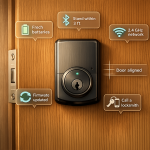
Smart locks rely on a mobile device for their digital setup. This process typically involves downloading the manufacturer’s app, creating user accounts, connecting via Bluetooth or WiFi, programming access codes, and linking the lock to your smart home system. Your smartphone or tablet serves as the bridge between the lock and your home network, managing the technical setup that enables remote access. Most smart locks use Bluetooth Low Energy (BLE) for pairing, while some require a steady WiFi connection to function seamlessly.
Brands like August, Yale, and Schlage each offer their own apps, each with its own design and features. However, they all share a common purpose: guiding you through the setup process. These apps allow you to create and manage user codes, set access schedules, and even monitor usage logs. Whether you’re granting temporary access to a guest, scheduling a service provider, or quickly revoking access, your mobile device makes it easy.
Professional locksmiths have embraced smartphones and tablets to simplify installations. These devices provide step-by-step setup instructions and allow locksmiths to demonstrate features to clients in real time. They’re also invaluable for troubleshooting any connectivity issues on the spot.
"Sherlock’s Locksmith equips their certified technicians with advanced mobile devices to handle smart lock setup, programming, and connectivity testing on-site. This ensures efficient installation, immediate troubleshooting, and seamless integration with clients’ smart home systems, providing a comprehensive and professional locksmith service."
Throughout the installation process, your smartphone or tablet is essential for testing connectivity and functionality. After the physical installation is complete, you’ll use your device to confirm the lock responds to remote commands, test its mechanism from various distances, and ensure all programmed codes work properly. This immediate feedback helps catch any issues before wrapping up the job.
For professional installations, having a fully charged device with the latest iOS or Android operating system is a must. The device should support Bluetooth Low Energy and have reliable WiFi capabilities. Many locksmiths prefer tablets for their larger screens, which make app navigation and client demonstrations even easier.
All the automation features that make smart locks so convenient – like auto-lock timers, location-based rules, and integration with other smart home devices – are configured through your mobile device. Once the digital setup is complete, you’ll have a fully functional smart lock ready to enhance your home’s security and convenience.
Tool Comparison Chart
Here’s a quick summary of how different tools stack up when it comes to installing smart locks. This chart breaks down each tool’s precision, versatility, and the level of skill needed to use them effectively:
| Tool | Precision | Versatility | Skill Needed |
|---|---|---|---|
| Phillips Head Screwdriver | 3/5 | 5/5 | 1/5 |
| Drill and Drill Bits | 4/5 | 5/5 | 2/5 |
| Door Lock Installation Kit | 5/5 | 3/5 | 3/5 |
| Tape Measure and Ruler | 4/5 | 5/5 | 1/5 |
| Chisel and Hammer | 4/5 | 4/5 | 4/5 |
| Level Tool | 5/5 | 3/5 | 1/5 |
| Smartphone or Tablet | 3/5 | 5/5 | 2/5 |
Key Takeaways
- Basic Tools: Tools like the Phillips head screwdriver and tape measure stand out for their versatility and ease of use, making them ideal for beginners. They’re affordable, straightforward, and can handle a variety of tasks.
- Precision Tools: If accuracy is your priority, the door lock installation kit and level tool are your go-to choices. The installation kit often includes templates and guides, ensuring a snug fit and proper alignment. Meanwhile, the level tool helps achieve a perfectly horizontal installation – a must for reliable performance and security.
- Specialized vs. Basic: While basic tools are budget-friendly and versatile, specialized tools like chisels and hammers demand more skill but deliver better precision when used correctly. However, misuse of tools like chisels can lead to uneven cuts or damage, making them less forgiving for beginners.
- Multi-Purpose Use: Many of these tools, such as drills or tape measures, are not limited to smart lock installations. They’re valuable for a range of other tasks, adding to their overall usefulness.
For beginners, comprehensive installation kits simplify the process, helping achieve accurate alignment with less effort. Professionals, on the other hand, often lean toward specialized tools that speed up the job and deliver precise results. Ultimately, your choice of tools depends on striking the right balance between accuracy, versatility, and your skill level.
Conclusion
The tools you use can make or break the security of your smart lock installation. Each tool plays a specific role – whether it’s the precision of a Phillips head screwdriver or the accuracy of a level – and skipping even one can lead to costly mistakes. Improper installation is a major cause of smart lock issues, with up to 35% of problems linked to incorrect mounting or alignment, according to Consumer Reports (2023). Using the wrong tools can lead to stripped screws, misaligned locks, or even damaged door frames – problems that not only require expensive repairs but could also void your warranty.
Take this real-world example: in January 2024, Sherlock’s Locksmith in Pittsburgh, PA, installed WiFi-enabled smart locks for a local business. By using precise measurements and a professional installation kit, they reduced lockout incidents by 40% (Sherlock’s Locksmith Service Records, 2024) and improved access control for the business. This case highlights how the right tools and expertise can deliver measurable results.
Sherlock’s Locksmith is a prime example of how professional-grade tools and skilled technicians can ensure high-quality installations. Their 4.9-star rating on Google, based on 122 reviews, speaks to their commitment to excellence and customer satisfaction.
When it comes to securing your home or business, the right tools don’t just ensure a proper installation – they provide peace of mind. If you’re in Pittsburgh, Sherlock’s Locksmith offers 24/7 mobile services, equipped with advanced tools and the expertise needed to make sure your smart lock performs reliably for years to come.
FAQs
What are some common mistakes to avoid when installing a smart lock, and how can the right tools make the process easier?
Installing a smart lock might seem simple, but a few missteps can lead to problems with how it works or even compromise its security. One frequent issue is misaligning the lock, which can make it jam or hard to turn. Another common mistake is using the wrong tools – like ill-fitting screwdrivers – that can damage the lock or the door. Skipping the crucial step of measuring and marking everything correctly can also throw off the entire installation.
To avoid these pitfalls, make sure you have the right tools on hand. A power drill, a full screwdriver set, a level, and a tape measure can make the job easier and ensure everything is aligned and securely installed. For those who’d rather leave it to the pros, locksmith services like Sherlock’s Locksmith offer expert installation. They use advanced tools and techniques to ensure your smart lock is installed perfectly.
Should I use a cordless or corded drill for installing a smart lock, and what are the advantages of each?
When deciding between a cordless and a corded drill for installing a smart lock, it all comes down to what suits your specific situation.
A cordless drill is all about portability and ease of use. Since it runs on a battery, you can take it anywhere, making it a great option for quick tasks or when working in tight spots without nearby outlets. Just keep in mind – you’ll need to have the battery fully charged before you get started.
In contrast, a corded drill provides steady, uninterrupted power, which is perfect for longer or more demanding projects. While you’ll need to stay near an outlet, corded drills often pack more power, making them a reliable choice for heavier-duty work.
Think about where you’ll be working and how complex the installation is to figure out which drill fits your needs best.
What should I keep in mind when setting up a smart lock’s software using my smartphone or tablet?
When setting up the software for a smart lock on your smartphone or tablet, the first step is to confirm that your device is compatible with the lock’s app and operating system. Most smart locks require a specific app, so double-check that it’s available for your device, whether you’re using iOS or Android.
Once you’ve downloaded the app, follow the step-by-step instructions to connect the lock to your phone. This is typically done via Bluetooth or Wi-Fi. During the setup, ensure your phone or tablet has a stable internet connection to avoid interruptions. For added security, create a strong, unique password for your account.
If you run into any problems, refer to the troubleshooting guide provided by the manufacturer. And if the issue persists, consider reaching out to professional locksmith services for expert help.