


Protecting your home starts with choosing the right locks for your exterior doors. The wrong lock or poor installation can leave your home vulnerable to break-ins. Here’s how to make the best choice:
- Evaluate security needs: Research local crime rates and inspect your home for weak points.
- Match locks to door type: Wood, steel, fiberglass, and uPVC doors require different locks and installation techniques.
- Understand lock grades: ANSI/BHMA Grades 1, 2, and 3 determine a lock’s strength and durability.
- Choose the right lock type: Deadbolts (single or double-cylinder), keyed entry sets, and smart locks each have unique benefits.
- Reinforce doors and frames: Use strong strike plates, long screws, and reinforced frames for added protection.
- Consider usability: Select locks that balance security and ease of use, especially for families or emergencies.
Pro Tip: For main doors, opt for Grade 1 deadbolts paired with reinforced strike plates. For secondary doors, Grade 2 locks may suffice. If unsure, consult a locksmith to assess your home’s vulnerabilities and ensure proper installation.
Keep reading for a detailed breakdown of lock types, door compatibility, and security features.
Assess Your Security Requirements
Before buying locks, take a moment to evaluate your home’s specific security needs. Factors like your neighborhood’s safety, the placement of your doors, and your daily habits all play a role in deciding which locks will work best. Skipping this step could mean spending too much on unnecessary features or, worse, leaving your home vulnerable to break-ins.
Determine Your Required Security Level
Start by researching local crime statistics. Police department websites or FBI data are great resources. On average, there are about 1.5 burglaries per 1,000 households nationwide. If your area has a higher rate, it’s worth considering higher-grade locks and additional security measures.
For areas with low crime rates, basic deadbolts or knob locks might be enough, especially for secondary doors like those in vacation homes or less-frequented entryways. Medium-security locks are suitable for most homes in average neighborhoods. Look for Grade 2 ANSI/BHMA-rated deadbolts or multi-point locking systems to deter opportunistic burglars. In high-crime areas or for properties with valuable items, high-security locks are a must. These include Grade 1 ANSI/BHMA-rated locks, mortise locks with reinforced deadbolts, or multi-point systems equipped with anti-snap cylinders, drill-resistant components, and reinforced strike plates.
Beyond crime stats, take a walk around your property to identify potential weak spots. Doors that are hidden from view or near windows are especially risky since burglars can work unnoticed. Also, consider who lives in your home – whether it’s just you or a family – as this impacts both security needs and emergency exit plans.
If you’re unsure about your home’s vulnerabilities, Sherlock’s Locksmith in Pittsburgh, PA offers Security Assessments and Consulting services. Their team can pinpoint weak entry points and recommend solutions tailored to your property and local crime trends.
Once you’ve determined your security needs, the next step is to evaluate your exterior doors and choose locks that are a good match.
Assess Your Door Type
Different exterior doors face different security challenges. The location and how often a door is used should influence your lock choices.
Front entry doors are the most common target for burglars, so they need the strongest locks. A combination of deadbolts and knob locks or smart locks works well here. The visibility of front doors to neighbors and passersby also adds a layer of deterrence.
Side and back doors, though often overlooked, can be weak points in your home’s security. These doors are usually less visible, giving intruders more time to break in unnoticed. Back doors, especially those opening to secluded areas like fenced yards or alleys, require equal attention. Multi-point locking systems are a great choice for these doors, as they secure the top, middle, and bottom with a single turn, making forced entry much harder.
For doors that see heavy use, durability is key. Mortise locks are particularly sturdy and distribute wear better than standard locks. Smart locks can be convenient for frequently used doors, but keep in mind they’ll need regular battery replacements.
Rarely used doors – like emergency exits or seasonal entrances – face different challenges. Inactivity can cause locks to stiffen or corrode. While these doors don’t endure much wear, they still need reliable security and occasional maintenance to ensure they work when needed.
Don’t overlook the importance of your door frame and strike plate. Even the best lock won’t perform well if the frame is weak. Inspect for cracks, splintering, or gaps between the frame and door. The strike plate should be firmly secured with screws at least 2.5 inches long that reach the structural wood of the frame, not just the surface trim. Standard strike plates often use shorter screws, making them easier to force open. For better protection, opt for reinforced strike plates with longer screws and a larger surface area.
If you notice your door frame is weak or the door itself is hollow-core instead of solid, address these issues before installing new locks. A professional locksmith can assess your door’s condition and recommend reinforcements to ensure your locks provide the security you’re aiming for.
Lastly, think about usability. If you live with elderly family members, children, or individuals with mobility concerns, prioritize locks that balance security with ease of use. For example, double-cylinder deadbolts offer excellent security but require a key on both sides, which could slow down an emergency exit. Single-cylinder deadbolts with an interior thumb-turn are a safer option. Smart locks or keyless systems can also eliminate the need for keys entirely, though they do require regular maintenance and may not suit everyone’s comfort with technology. Make sure at least one exterior door allows for quick and easy access in case of emergencies.
Match Locks to Your Door Material
The type of material your door is made from plays a huge role in determining which locks will work best. Factors like thickness, core construction, and edge reinforcement all come into play, so knowing your door type can save you from installation headaches and potential security issues.
Locks for Wooden Doors
Wooden exterior doors, often around 1‑3⁄4 inches thick, are highly versatile when it comes to lock installation. Their solid construction makes them easy to work with, allowing for the installation of deadbolts, knob or lever locksets, and even mortise locks.
For most wooden doors, pairing a Grade 1 or 2 deadbolt with a keyed entry knob or lever set provides a solid mix of security and convenience. Plus, wood’s natural workability makes it simple to upgrade to reinforced strike plates and use 3‑inch screws that anchor into the wall framing, making the door much harder to kick in.
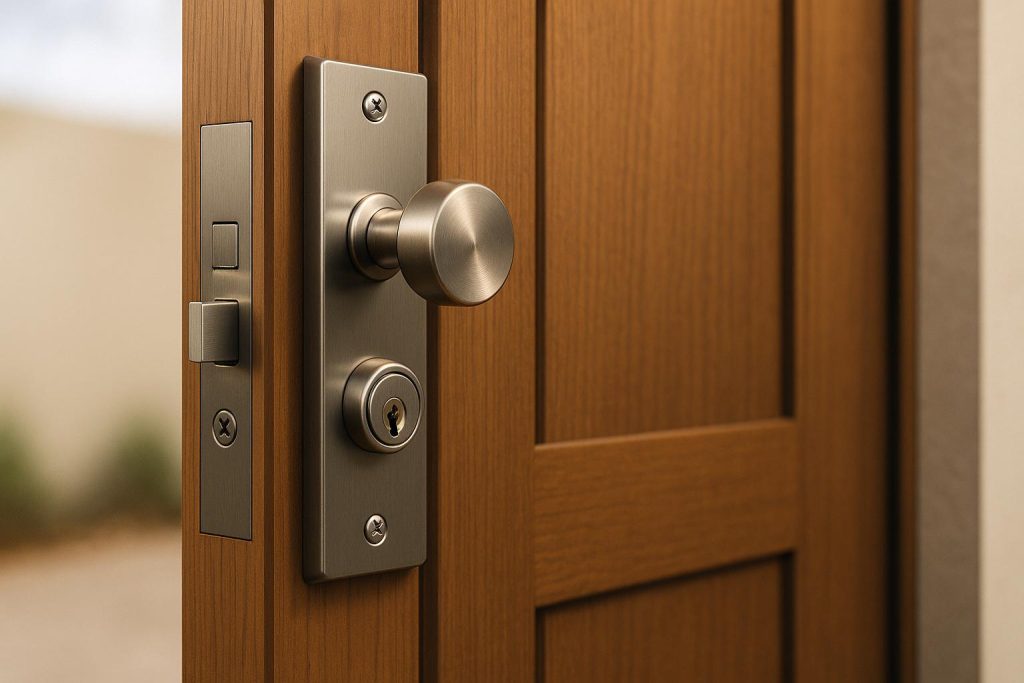
Mortise locks are another great option, especially for older homes or high‑traffic doors. These locks combine a latch and deadbolt into a single, sturdy mechanism that distributes wear evenly. However, installing a mortise lock requires precision – if the pocket is cut incorrectly, it can weaken the door. This is why many people opt for professional locksmiths to ensure proper installation and alignment.
When upgrading locks on a wooden door, double-check that the door’s thickness and backset match the hardware requirements. If the door or frame shows signs of cracking or splintering, reinforce it before installing new locks. Even the strongest deadbolt won’t do much good if the frame itself is weak.
Locks for Steel and Fiberglass Doors
Steel and fiberglass doors are known for their durability and energy efficiency. These doors typically feature a metal or fiberglass outer layer with an insulated core and reinforced lock areas. Most come pre‑bored with standard U.S. dimensions, like a 2‑1⁄8‑inch face bore and either a 2‑3⁄8‑ or 2‑3⁄4‑inch backset, making them compatible with tubular deadbolts and keyed entry sets.
When installing locks on steel or fiberglass doors, it’s critical to use fasteners designed for metal. Swap out wood screws for through‑bolts or other manufacturer-recommended hardware. Many modern steel and fiberglass doors also support smart deadbolts, as long as the bore sizes and door thickness meet the specifications.
If modifications are needed – like enlarging holes – special tools such as metal-specific hole saws are required. Care must be taken to avoid warping or cracking the door’s surface, and the edge reinforcement may limit how much you can alter. Stick to hardware designed to fit the factory-prepped openings to avoid complications.
For taller or weather-sensitive steel and fiberglass doors, multi‑point locking systems are an excellent solution. These systems secure the door at multiple points (top, middle, and bottom), evenly distributing force and improving both security and weather sealing. They’re particularly useful in extreme climates where doors might warp or bow.
When installing locks on these doors, always use reinforced metal strike plates secured with long screws that anchor into the door jamb and wall framing for added stability.
Locks for Composite or uPVC Doors
Composite and uPVC doors are a common choice in modern homes, especially for patios or back entrances. These doors often come with pre‑installed multi‑point locking systems, which secure the door at several points along the frame. This design helps prevent warping and enhances security.
Most composite and uPVC doors use a Euro cylinder to operate their multi‑point systems. These cylinders are easy to replace or upgrade without altering the entire locking mechanism, making them convenient for rekeying or improving security. However, standard Euro cylinders can be vulnerable to lock snapping, where intruders break the cylinder to disengage the lock. To counter this, it’s best to use high-security Euro cylinders with anti-snap, anti-drill, and anti-pick features.
When choosing a Euro cylinder, measure carefully to ensure the cylinder sits nearly flush with the hardware. A protruding cylinder is easier to snap, so look for models meeting industry standards like TS007 3‑star or SS312 Diamond ratings for added protection.
It’s also essential that the new cylinder is compatible with the existing multi‑point lock mechanism and handle set. The cylinder’s cam (the rotating part inside) must engage properly to ensure smooth operation. If you’re considering smart access, opt for products designed to work with the existing multi‑point system rather than replacing it with less secure hardware.
According to the Master Locksmiths Association, "the ‘best’ front door lock depends heavily on door type: wooden doors typically use a mortise lock plus night latch or deadbolt, while uPVC/composite doors typically use a multi‑point system with a Euro cylinder."
Avoid downgrading composite or uPVC doors to a single latch or simple deadbolt, as this compromises both security and structural integrity. Stick with the factory-installed multi‑point system and upgrade the cylinder if necessary. If you’re unsure about compatibility, Sherlock’s Locksmith in Pittsburgh offers professional installation and servicing for all door types, ensuring your locks meet today’s security standards.
No matter the material of your door, always ensure the lock’s latch or bolt throw and backset align with the existing bore or mortise. Using manufacturer-recommended hardware kits for steel, fiberglass, and composite doors helps maintain the door’s strength and warranty.
Once you’ve matched your locks to your door material, you can focus on assessing the security features and standards of each option.
Compare Common Exterior Door Lock Types
Once you’ve confirmed your door’s compatibility, the next step is understanding the different types of locks available. Each lock type has its own purpose, strengths, and limitations, helping you create a secure and functional setup for your exterior doors.
Deadbolts
Deadbolts are the go-to choice for securing exterior doors in U.S. homes. They feature a solid metal bolt that extends deep into the door frame, making them highly resistant to forced entry through kicking or prying.
- Single-cylinder deadbolts are the most common type, using a key on the outside and a thumb-turn on the inside. This design offers reliable security while allowing for quick exits in emergencies. They’re ideal for doors without nearby glass panels that could be broken to access the thumb-turn.
- Double-cylinder deadbolts require a key on both sides, eliminating the thumb-turn. This adds extra protection for doors with glass panels or sidelights, as it prevents burglars from reaching in to unlock the door. However, they can pose safety risks during emergencies if keys aren’t readily available, and some areas have restrictions on their use.
- Vertical deadbolts engage vertically into the door frame instead of horizontally, making them harder to pry open. These are especially useful for older wooden doors or weak frames, as they can be surface-mounted on the interior without major modifications.
For most homes, a Grade 1 or Grade 2 single-cylinder deadbolt is a strong choice. Look for a bolt that extends at least 1 inch into the frame and pair it with a reinforced metal strike plate secured by 3-inch screws anchored into a wall stud. This setup greatly improves resistance to forced entry.
Keyed Entry Locksets
Keyed entry locksets combine a latch mechanism with a key cylinder, typically built into a knob or lever. You can operate the latch by turning the knob or lever, while locking or unlocking the door with a key from the outside and a thumb-turn or button on the inside.
These locks are convenient for daily use since they latch automatically when the door closes. Lever-style locksets are particularly helpful for households with accessibility needs, as they are easier to operate than traditional knobs.
However, because the latch is spring-loaded and housed within the knob or lever, it is less secure than a high-quality deadbolt. For optimal security, use a keyed entry lockset in combination with a deadbolt. The deadbolt serves as the primary defense, while the lockset offers everyday convenience.
Smart Locks
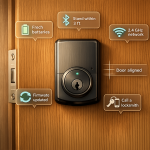
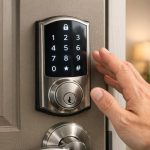
Smart locks incorporate electronic controls and connectivity features into traditional lock designs. They can operate a deadbolt or latch using keypads, Bluetooth, Wi-Fi, or other wireless technologies, allowing for keyless entry and remote access.
Features often include time-limited codes, activity tracking, and integration with smart home systems like Alexa or Google Assistant. Some models retrofit over existing deadbolts, making installation easier while maintaining the security of mechanical components.
The effectiveness of a smart lock still depends on its underlying hardware, such as the deadbolt or strike plate. Choose models with high ANSI/BHMA ratings, and ensure strong passwords, regular firmware updates, and secure Wi-Fi with two-factor authentication. Since they typically run on batteries, monitor battery levels and ensure you have a mechanical key backup.
Consumer Reports has highlighted security vulnerabilities in some budget smart locks, such as susceptibility to picking, drilling, or forced entry. Opt for well-reviewed models from trusted brands to avoid these issues.
Cost Considerations
- Basic residential deadbolts or keyed entry locksets: $20–$30
- Higher-security Grade 1 or Grade 2 deadbolts: $40–$80+
- Keyed entry knob or lever locksets: $25–$60
- Advanced smart deadbolts: $150–$300
- Professional installation: $75–$150 per door, depending on labor rates and modifications.
For budget-friendly security, experts recommend starting with a high-quality deadbolt and reinforced strike plate. Pair this with a durable keyed entry set, and consider adding a smart lock later or choosing one that works with your existing hardware.
If you’re in the Pittsburgh area and need guidance on selecting the right lock – or want to upgrade to smart locks – consulting a professional service like Sherlock’s Locksmith can ensure proper installation and compatibility.
sbb-itb-643e28e
Evaluate Security Features and Standards
Once you’ve decided on the type of door and lock style, it’s time to dig into the security features and standards that ensure your lock can handle real-world threats. These features and industry benchmarks are what separate a lock that merely looks good from one that actually protects your home.
ANSI/BHMA Grade Ratings
In the U.S., lock quality and durability are primarily measured by ANSI/BHMA grades. These grades – Grade 1, Grade 2, and Grade 3 – indicate how well a lock performs in tests for endurance, impact resistance, and overall strength.
- Grade 1: The highest level of security, often used for commercial doors or high-security residential setups. These locks endure over 250,000 cycles and rigorous force tests, making them the toughest option out there. They’re built with premium components to resist heavy force.
- Grade 2: A solid choice for most residential exterior doors. While not as robust as Grade 1, these locks still provide dependable security for everyday home use.
- Grade 3: The minimum standard, typically suited for interior doors or low-risk areas. These locks undergo fewer cycles and are less resistant to force, so they’re not recommended for primary exterior doors.
For main entry points like your front and back doors, experts suggest a Grade 1 deadbolt for maximum protection. If budget is tight, a Grade 2 deadbolt can still offer reliable security. Pairing a high-grade deadbolt with a reinforced door frame and strike plate creates an affordable but effective barrier against break-ins. Always check the product packaging or specs for the ANSI/BHMA grade, and avoid ungraded locks for exterior doors.
Anti-Tampering Features
Modern locks come equipped with advanced features to counter common break-in methods:
- Anti-drill protection: Hardened steel inserts and pins that dull drill bits, safeguarding the lock’s internal components.
- Anti-pick designs: Locks with security pins (like spool or serrated pins) and complex keyways make traditional lock-picking tools far less effective.
- Anti-bump mechanisms: These locks resist "bump keys", which are used to manipulate pins into place. They achieve this with specially shaped key pins, additional locking elements, or restricted keyways.
If your home has uPVC, composite, or certain metal doors with euro-style cylinders, anti-snap protection is essential. Standard euro cylinders are vulnerable to a method where the cylinder is snapped and then turned with pliers. Anti-snap cylinders are designed to break away in a controlled manner, leaving the internal mechanism intact. Look for models that meet TS007 3-Star or SS312 Diamond standards for robust protection against snapping, drilling, and picking.
Consumer Reports has shown that not all locks handle these attacks equally. Some popular brands fail under pressure, while higher-quality locks from established manufacturers hold up significantly better.
Reinforcement and Strike Plates
A strong lock is only as good as the hardware supporting it. Weak door frames or strike plates often fail before the lock itself. Reinforcing these elements is a critical step in securing your home.
- Reinforced strike plates: These distribute force from kicks or hits across a larger area of the door frame. Many standard strike plates are made from thin metal and secured with short screws, which can fail under repeated force. Upgrading to a heavy-duty strike plate with 3-inch screws ensures the frame is anchored into the wall studs, not just the trim.
- Door reinforcement kits: These often include wrap-around shields, hinge reinforcements, and extended jamb reinforcements. For doors with glass panels or sidelights, consider double-cylinder deadbolts (where allowed by local codes), interior security devices, or laminated glass to limit access to the interior thumb-turn.
Even the hinge side of the door can be a vulnerability. Many homes use short hinge screws that only grip the doorjamb trim. Replacing these with 3-inch or longer screws that secure into the wall studs and adding hinge-side reinforcement plates can significantly strengthen this weak point.
A layered approach works best: combine a solid-core or metal-clad door with a Grade 1 deadbolt, anti-drill and anti-pick cylinders, a reinforced strike plate, and additional hinge and jamb reinforcements. This setup increases the time, effort, and noise required for a forced entry, making your home a much less attractive target.
If you’re feeling unsure about grades or how to install high-security cylinders, consulting a professional locksmith can save you time and stress. For example, in Pittsburgh, Sherlock’s Locksmith offers services like lock installation, rekeying, and high-security upgrades to help you create a thorough security system for your home.
Make Your Final Decision and Plan Installation
Finalize your lock choice by considering security, convenience, style, and cost.
Balance Security, Appearance, and Budget
Choosing the right exterior door lock isn’t about picking the priciest option or the one with the most features. It’s about finding a lock that meets your needs for security, daily use, style, and budget. Start by prioritizing what matters most for each door. For instance, a front door in a high-crime area might need a Grade 1 deadbolt, a reinforced strike plate, and long screws for maximum security, even if the design is simple. On the other hand, a side door in a low-crime suburb might do fine with a Grade 2 deadbolt and a basic keyed lever. If convenience is key – like managing frequent guests, kids who lose keys, or a short-term rental – a smart or keyless deadbolt with auto-lock and user codes could be a smart choice, as long as it passes independent security tests.
Here’s a quick look at typical U.S. price ranges:
- Mechanical deadbolts: $40–$60 for quality options
- Premium Grade 1 locks: $80–$150+
- Smart locks: $150–$350
- Professional installation: $75–$150 per door
If your budget is tight, focus on installing Grade 1 locks on main entry doors, use Grade 2 locks for secondary doors, and consider adding smart features to just one primary door to start.
You don’t have to sacrifice style for security. Many high-security deadbolts and smart locks come in finishes like satin nickel or brushed chrome for a modern look, oil-rubbed bronze for rustic homes, and polished brass for traditional designs. Matching finishes across handlesets, deadbolts, and keypads creates a cohesive look while enhancing your home’s curb appeal. Plus, solid hardware can act as a visual deterrent to intruders.
Steps to finalize your decision:
- Check compatibility: Measure your door’s thickness (usually 1‑3/8" or 1‑3/4") and backset (2‑3/8" or 2‑3/4"), and ensure existing bore holes match your chosen lock.
- Pick the right lock type: Deadbolts paired with keyed levers work well for wood or steel doors, while composite or uPVC doors may need multi-point or Euro-cylinder systems.
- Choose the security grade: Use ANSI/BHMA Grade 1 for main entry doors and Grade 2 for secondary doors.
- Decide on functionality: Determine whether a traditional mechanical lock or a smart lock with keypad or app access fits your lifestyle.
- Match the finish: Select a style that complements your home’s hardware.
- Compare models: Look at independent tests and reviews. For example, Consumer Reports’ 2025 tests highlighted strong performance from smart locks by Eufy, Kwikset, and Yale, while noting some weaker models.
- Plan installation: Decide whether to install the lock yourself or hire a professional.
Once you’ve made your choice, you’ll need to decide whether to handle the installation yourself or bring in an expert.
When to Hire a Professional Locksmith
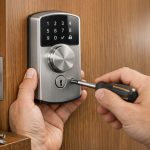
Sometimes, hiring a professional locksmith is the best way to ensure your locks are installed securely and correctly. While DIY installation can save money – especially for standard deadbolts when existing holes align with the new hardware – mistakes like misaligned strike plates or improperly anchored screws can weaken your security. Professional help is especially useful when dealing with metal, fiberglass, or composite/uPVC doors, or when upgrading to more complex lock systems.
Here’s when hiring a locksmith makes sense:
- Installing locks on doors that require specialized tools or adjustments, like metal or composite doors.
- Upgrading to advanced systems, such as mortise, multi-point, or smart locks.
- Coordinating multiple door upgrades, like setting up a keyed-alike or master key system.
- Repairing damaged doors that may need reinforced frames or strike plates.
- Navigating local building or fire codes, particularly for double-cylinder deadbolts.
Beyond installation, locksmiths can assess your home’s overall security, recommend improvements, and configure systems like keyed-alike locks or smart lock features (e.g., user codes, auto-lock schedules, or integration with cameras). They can also handle maintenance tasks like rekeying after a move or fixing misaligned doors.
For example, in Pittsburgh, PA, Sherlock’s Locksmith offers expert installation of deadbolts, smart locks, and multi-point systems, along with in-home security consultations. Their 24/7 mobile service supports residential, commercial, and emergency needs.
When planning your installation, aim for daylight hours for better visibility and easier access to tools or locksmith support. If you’re installing a smart lock, check the Wi-Fi or Bluetooth signal strength at the door and plan for battery replacements or low-voltage power options. If you hire a professional, allow time for a thorough walkthrough and testing of all locks before the job is done.
After installation, test each lock to ensure smooth operation. Check that doors close and latch easily, deadbolts fully extend and retract, and all keys and codes work properly. These simple checks will give you peace of mind that your new locks are secure and functional.
Conclusion
Selecting the right exterior lock isn’t a universal decision – it depends on a few key factors to ensure maximum security. Start by investing in a durable deadbolt. For main entry doors, go for ANSI/BHMA Grade 1 deadbolts, and for secondary doors, Grade 2 usually suffices. Be sure to pair the lock type with the specific material of your door. For instance, mortise or cylindrical deadbolts are ideal for wooden doors, while steel, fiberglass, or composite doors often need multi-point or euro-cylinder systems tailored to those materials.
Once you’ve secured a strong mechanical lock, think about incorporating smart features to enhance convenience without sacrificing security. When choosing a smart lock, prioritize models that complement the strength of your mechanical setup. Take a moment to assess your current locks – ensure you have proper deadbolts installed and verify the security grade of your hardware. If you notice any vulnerabilities, list the doors requiring upgrades and set a budget to address them.
For more intricate installations or advanced security needs, consider hiring a professional locksmith. For example, homeowners in Pittsburgh, PA, can turn to Sherlock’s Locksmith for expert services like residential lock installation, rekeying, smart lock setup, and 24/7 emergency assistance. Their team underscores the importance of quality, stating, "We understand how important security is. That is why we only use the best equipment and products – ensuring you get the most reliable protection possible."
Choosing the right lock, tailored to your door and installed properly, not only provides immediate security but also long-term peace of mind. By ensuring your exterior doors are equipped with reliable, highly rated hardware, you significantly reduce the risk of common break-in methods. Whether you’re upgrading a deadbolt yourself or bringing in a professional for a thorough security upgrade, taking action today helps safeguard what matters most.
FAQs
How can I choose the best lock grade for my home’s exterior doors?
Choosing the right lock for your home’s exterior doors is all about balancing your security needs and personal preferences. Locks are categorized by the American National Standards Institute (ANSI) into three grades: Grade 1, Grade 2, and Grade 3.
- Grade 1 locks provide the highest level of security and durability. They’re a solid pick for front doors or any entry points where maximum protection is essential.
- Grade 2 locks strike a balance between security and cost, making them a practical option for many homeowners.
- Grade 3 locks are designed for areas with lower security requirements, offering basic protection.
When deciding on a lock, think about the type of door, how much use it will see, and your budget. If you’re unsure or need professional help, Sherlock’s Locksmith in Pittsburgh, PA, offers expert advice and installation services to make sure your home stays secure with the right lock.
What are the pros and cons of smart locks versus traditional deadbolts for exterior doors?
When it comes to choosing between smart locks and traditional deadbolts, the decision really comes down to what you value most – modern convenience or tried-and-true reliability.
Smart locks bring a new level of ease to home security. With features like keyless entry, remote operation through a smartphone app, and even voice command compatibility, they’re perfect for anyone who loves integrating technology into their daily life. You can also share temporary access codes with guests or service providers, eliminating the need for physical keys. That said, smart locks often come with a higher price tag, rely on batteries or a power source, and, if not properly secured, could be susceptible to hacking.
Traditional deadbolts, meanwhile, have been a staple of home security for decades. They’re straightforward, dependable, and typically more budget-friendly. Maintenance is minimal, and they don’t rely on any tech to do their job. However, they do require physical keys, which can be lost or copied without your knowledge, and they lack the advanced features that smart locks offer.
For those who want the best of both worlds, combining a smart lock with a high-quality deadbolt might be the way to go. This setup can give you the convenience of modern technology while keeping the time-tested security of a traditional lock.
What’s the best way to ensure my lock is installed securely and works properly?
To make sure your lock is installed correctly and works as it should, it’s a smart move to hire a professional locksmith with expertise in installation. An experienced locksmith will align the lock properly, secure it firmly, and ensure it fits your specific door type.
For instance, trusted experts like Sherlock’s Locksmith use top-notch tools and materials to improve your home’s security. This approach not only guarantees the lock is installed right but also gives you confidence that your property is safe.