





Access control compliance in 2025 is more critical than ever, as businesses face rising cyber threats and stricter regulations like GDPR, HIPAA, and PCI DSS. Failure to comply can lead to severe financial penalties, reputational damage, and operational risks. This guide provides actionable steps to strengthen your access control policies, manage user permissions effectively, and prepare for audits.
Key Takeaways:
- Develop a Clear Policy: Define assets, assign roles, and schedule regular updates.
- Enforce Least Privilege: Limit access to only what’s necessary for each role.
- Conduct Regular Audits: Use automation to review access and ensure compliance.
- Offboard Properly: Revoke access for departing employees promptly.
- Maintain Documentation: Keep logs, policies, and training records organized for audits.
- Upgrade Systems: Adopt modern solutions like MFA, biometrics, and cloud-based platforms.
How to create an Access Control Policy in under 5 minutes
Access Control Policy Development Checklist
Building a solid access control policy is essential for maintaining compliance. This policy lays out the rules for accessing systems and locations, serving as a key part of the broader compliance strategy.
Define Access Control Scope
Start by identifying the assets that need protection. Create a detailed inventory that includes all digital and physical resources. This should cover systems, applications, servers, mobile devices, and physical locations, along with the type and sensitivity of data each asset holds.
Don’t overlook the connections between systems. Even low-risk applications can become weak points if they share credentials or network access with more sensitive systems. Consider these relationships carefully to avoid leaving security gaps.
Assign Roles and Responsibilities
A well-defined policy requires clear accountability. Every part of access control management needs an assigned owner who understands their role and has the authority to act when necessary.
- The access control administrator manages tasks like user provisioning, updating permissions, and maintaining systems.
- Data owners decide who can access specific information and participate in regular reviews of access permissions.
- Security officers oversee compliance, monitor access activities, and work with auditors to ensure everything aligns with regulations.
It’s also crucial to assign backup personnel for critical roles so that access control management continues without interruptions. Document these roles clearly, provide training, and keep everyone updated on their responsibilities.
Set Policy Review and Update Schedules
Access control policies must evolve to keep up with changing regulations, technological advancements, organizational shifts, and new security threats. A stagnant policy quickly becomes ineffective.
Implement a structured review process:
- Conduct annual comprehensive reviews to assess the entire policy.
- Schedule quarterly updates to address specific areas.
- Make immediate revisions when new regulations or incidents arise.
Track metrics like access requests, violations, and user feedback to gauge how well the policy works. Use these insights to make improvements and demonstrate progress to auditors and stakeholders. Regular reviews and updates ensure your policy remains relevant and effective.
User Access Management Best Practices
Managing user access effectively is critical for maintaining security and meeting compliance standards. How an organization handles permissions can directly influence its ability to protect sensitive data and adhere to regulations.
Grant Access Based on Least Privilege
The Principle of Least Privilege (PoLP) ensures users only have the access they need to perform their specific roles. This approach, recommended by CISA, minimizes security risks while keeping operations running smoothly.
Here’s why this matters: Nearly 90% of data breaches result from employee errors, and a 2021 Aberdeen Strategy and Research study revealed that 78% of insider breaches are accidental. These numbers underscore the importance of restricting access wherever possible.
To implement least privilege effectively:
- Audit all privileged accounts: This includes human, service, contractor, and vendor accounts. Remove unnecessary local administrator rights and reconfigure systems that grant admin access by default.
- Use Role-Based Access Control (RBAC): Assign permissions based on predefined roles tied to specific tasks or team responsibilities. Regularly review and update these roles to avoid privilege creep.
- Enable just-in-time access: Grant temporary, time-limited privileges for specific tasks. Use dynamic secrets or one-time credentials and revoke them as soon as the task is completed.
Routine reviews of these settings help maintain compliance and security over time.
Conduct Regular Access Reviews and Audits
Compliance trends for 2025 emphasize continuous monitoring rather than relying solely on periodic audits. A proactive approach, built into daily operations, provides real-time insights into access patterns and potential vulnerabilities.
To stay on top of access reviews:
- Adopt a risk-based schedule: Conduct quarterly reviews for most systems, semi-annual reviews for sensitive data, and additional checks during role changes or major events.
- Trigger reviews during key events: Onboarding, role changes, and employee departures are critical moments to reassess access and make necessary adjustments.
Regulatory requirements also shape review schedules. For instance, SOX mandates periodic certifications for financial systems, HIPAA enforces strict access controls for healthcare data, and GDPR requires continuous monitoring of personal data access.
Automation can make a huge difference here. Organizations using AI-driven tools report an average breach cost reduction of $3.05 million and up to 50% lower compliance costs. Automated access reviews can cut workloads by 70% and speed up breach responses by 74%.
As noted in Zluri‘s whitepaper, The State of Access Review, "68% of organizations with fully automated reviews have successfully enforced their access policies".
Companies with strong identity governance frameworks see 40% fewer security incidents, while those using RBAC report a 60% drop in insider threats.
Remove Access for Departing Employees
Revoking access for departing employees is a critical step in maintaining compliance and security. This process should begin before their final day to prevent unauthorized access to systems or data.
Steps to ensure proper offboarding include:
- Revoke digital and physical access immediately: Work with HR and IT to remove group memberships, disable shared credentials, and retrieve access items like key cards, laptops, and mobile devices.
- Address shared accounts and permissions: Remove the departing employee from all group memberships, update passwords for shared accounts, and change credentials for systems using generic logins.
- Monitor for unusual activity: Set up alerts for any attempts to use the former employee’s credentials and maintain detailed logs of access attempts.
Given that human error contributes to 82% of breaches, employee training plays a key role in maintaining access control compliance. Security awareness programs can reduce phishing success rates by as much as 70%. Regular training ensures employees understand their role in safeguarding sensitive information.
Technical and Physical Access Control Solutions
Regularly inspecting, testing, and documenting both physical and digital access control systems is crucial to ensure they function properly under all circumstances.
Maintain and Test Access Control Systems
Keep detailed records of all maintenance activities, including inspection dates, test results, and repairs. These logs not only support audits but also help identify areas that require attention, aiding in ongoing compliance and system improvement.
It’s equally important to perform regular backups of access control databases and configuration settings. Store these backups securely in a separate location to allow for quick recovery in case of system failures. Don’t just rely on having backups – test your backup and recovery procedures to ensure they work when it matters most.
Reviewing access logs regularly can uncover unusual activity or unauthorized access attempts. At the same time, implement efficient processes for issuing, tracking, and revoking access credentials. This helps avoid lingering access rights that could pose security risks.
Testing how access control systems respond to power outages is another key step. Verify that doors default to the correct secure or accessible state during emergencies or system malfunctions. This ensures the system performs as expected when faced with unexpected conditions.
For organizations lacking the necessary in-house expertise to handle all technical and physical maintenance tasks, bringing in external professionals is a smart move. For instance, Sherlock’s Locksmith in Pittsburgh, PA, provides 24/7 mobile support with certified technicians. They can handle routine maintenance and emergency repairs, helping ensure your systems remain compliant and operational at all times.
sbb-itb-643e28e
Compliance Documentation and Audit Preparation
Having well-organized documentation is crucial for passing compliance audits. Even the most advanced access control system can fall short if records are incomplete or disorganized. A solid documentation strategy with clear and consistent records not only simplifies audits but also strengthens your compliance posture.
Maintain Access Control Logs
Access control logs are the backbone of compliance documentation. These logs should capture every interaction with your systems, including successful and failed login attempts, changes in permissions, and administrative actions. Each log entry should include essential details like user ID, timestamp, location, and the specific action performed.
Automate logging in real time to reduce human error and ensure no event is missed. Store logs in a tamper-proof format to prevent unauthorized changes once they’re created.
Retention requirements for logs depend on your industry and regulations. While most frameworks suggest keeping logs for at least 12 months, industries like healthcare or finance may require records to be stored for 3-7 years. Always verify the specific retention rules that apply to your organization.
Additionally, back up log files in secure, separate locations. This precaution protects against potential data loss caused by system failures or security breaches.
Organize Policy and Training Records
Keep your access control policies well-documented, up-to-date, and easy to access. Include details like creation dates, revision history, and approval signatures. When policies are updated, retain older versions with clear timestamps to show when changes were implemented.
Training records are equally important. They demonstrate that employees are aware of their responsibilities regarding access control. Document who attended training sessions, the topics covered, and the dates of completion. Keep records of attendance and any certifications issued.
Regular evaluations of your access control program should also be documented. Maintain records of quarterly access reviews, annual policy assessments, and compliance gap analyses. Include details like the names of reviewers, findings, and any corrective actions taken.
Store all these records in a centralized system with proper access controls. Use consistent naming conventions and folder structures to make retrieval quick and straightforward. Document management software can help by tracking who accesses sensitive files and when.
Prepare for Regulatory Audits
Well-maintained documentation is the foundation of a smooth audit process. By staying organized, you can approach audits with confidence and efficiency.
Start with an audit checklist to simplify the process of gathering required materials. Assign specific team members to handle documentation for each compliance area.
Prepare evidence packages in advance. These should be organized by compliance requirement, with clear indexes to help auditors locate specific information. Include executive summaries that highlight key compliance efforts and any improvements made over time.
Conduct mock audits to identify potential gaps before the actual review. Internal teams or external consultants can simulate the audit process, using the same criteria auditors will apply. Address any weaknesses uncovered during these practice runs.
Assign a point of contact for each compliance area and establish clear procedures for providing documents. Set reasonable timelines to ensure materials are delivered accurately and on time.
Finally, keep digital copies of all audit-related materials stored securely. Ensure your backup systems are operational, so you’re prepared in case of technical issues with primary storage during the audit period. Providing auditors with secure, controlled access to digital files can further streamline the review process.
Professional Locksmith Services for Compliance
Staying compliant with access control standards in 2025 requires more than just having the right policies in place – it demands a reliable physical security setup. Professional locksmith services are essential to ensuring your security systems meet current requirements and function without fail. Certified technicians with expertise in both traditional locks and modern access control technologies can make all the difference when it comes to passing compliance audits.
Lock and Key System Upgrades
Traditional locks and card readers are no longer enough to meet modern security standards. Today’s systems often incorporate biometrics like fingerprints, facial recognition, iris scans, or voice authentication to deliver a higher level of identity verification compared to outdated cards or PINs.
"It’s no longer enough to just ‘keep the wrong people out.’ In 2025, access control is being redefined – not as a static security system, but as a dynamic strategy for smarter, more adaptive facilities." – PEAK Alarm
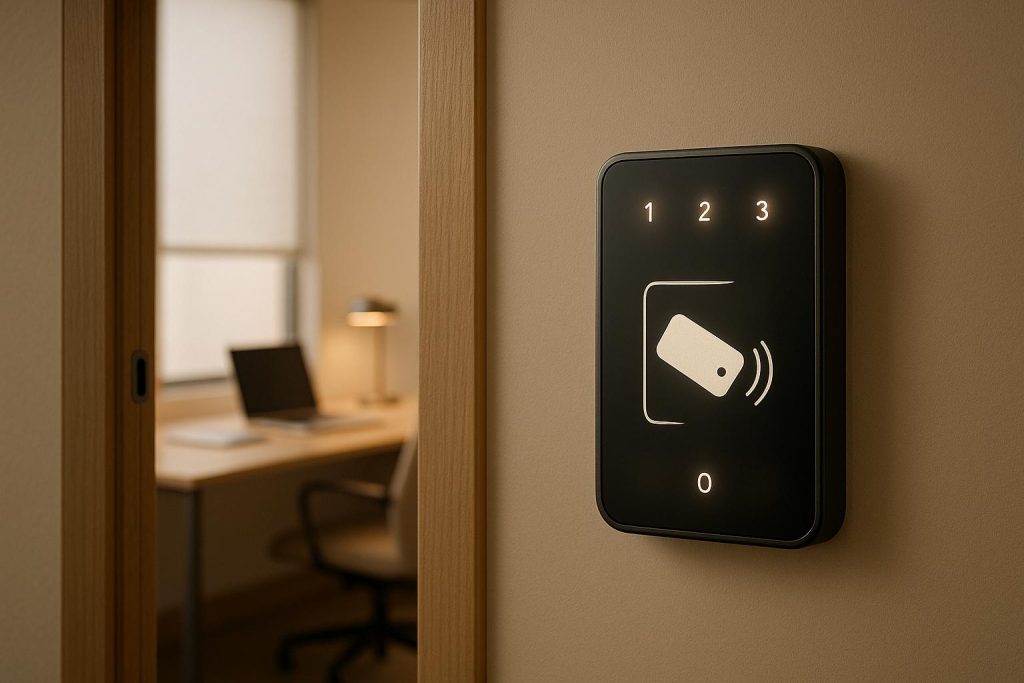
Mobile and contactless access systems, which use smartphones, wearables, or QR codes via Bluetooth and NFC, are becoming increasingly popular. These systems not only enhance security with features like encryption and biometric authentication but also allow for remote updates and deactivation when needed.
Cloud-based platforms are another game-changer, offering centralized management for real-time updates, remote access, and scalability to accommodate business growth. Adding multi-factor authentication (MFA) – such as combining a PIN, smartphone credentials, and biometric data – provides an extra layer of protection against unauthorized access.
The integration of IoT and smart devices connects access control to larger building systems like HVAC, lighting, and surveillance. This creates a seamless, responsive environment where access decisions can be adjusted dynamically. Touchless technologies, including motion sensors and mobile credentials, also improve hygiene while reducing hardware wear and tear.
These advanced systems provide a solid foundation for physical security, which is critical for compliance. When paired with emergency services and ongoing support, they ensure your facility is prepared for any challenge.
Emergency Lockout and Repair Services
Unexpected lock issues can jeopardize compliance in an instant. Whether it’s a system malfunction or a security breach, quick action is key to minimizing downtime and restoring functionality. Professional locksmiths provide the rapid response needed to address vulnerabilities before they escalate into compliance violations.
For example, Sherlock’s Locksmith offers 24/7 emergency services in Pittsburgh, PA. Their certified technicians are equipped to handle both traditional and modern systems, responding immediately to issues like system failures, broken keys, or lockouts. This quick turnaround is vital for maintaining compliance.
Additionally, rekeying locks after a key is lost or stolen prevents unauthorized access, safeguarding your security system’s integrity. Diagnosing and repairing electronic access control malfunctions also requires specialized expertise to ensure both mechanical and electronic components are functioning properly.
24/7 Support for Access Control Systems
Around-the-clock support is essential for keeping access control systems compliant, even outside regular business hours. Beyond emergency services, ongoing maintenance ensures your security infrastructure operates smoothly at all times. Sherlock’s Locksmith provides comprehensive mobile locksmith services, with technicians skilled in both traditional locks and advanced electronic systems – a must for managing hybrid setups.
Preventive maintenance, such as routine testing of electronic components and software updates, helps identify and fix potential issues before they escalate. Documenting these activities not only keeps your systems operational but also aligns with audit requirements. With a dependable locksmith partner, you can address any compliance risks promptly, keeping your access control systems secure and fully functional at all hours. This proactive approach ensures your facility remains compliant, no matter the time of day.
Achieving Access Control Compliance in 2025
Staying compliant with access control standards in 2025 isn’t a one-time effort – it’s an ongoing process that demands consistent attention and proactive strategies. With threats and regulations constantly evolving, businesses need to stay ahead of the curve instead of merely reacting to changes as they come.
A strong, well-defined policy forms the backbone of any compliance effort. Effective user access management plays a critical role here. Practices like enforcing the principle of least privilege and ensuring timely offboarding are essential for safeguarding sensitive data – especially in remote and hybrid work setups where vulnerabilities can multiply.
Technical safeguards and proper documentation are equally important. Multi-factor authentication, secure physical access points, and regular system testing ensure that your infrastructure not only operates smoothly but also meets compliance standards. Keeping detailed access control logs and maintaining organized records showcases your commitment to compliance while also highlighting areas that may need improvement.
Physical security is another key piece of the puzzle. Professional locksmith services can bridge the gap between your policies and real-world implementation. For example, Sherlock’s Locksmith (https://sherlockslocksmith.com) offers expert assistance with upgrading lock systems, handling emergencies, and providing ongoing maintenance. Their services help ensure your physical security measures align with compliance requirements, keeping your access control infrastructure secure 24/7.
FAQs
What steps should businesses take to create a compliant access control policy for 2025?
To craft an access control policy that meets 2025 compliance standards, businesses should start by defining clear user roles and assigning access levels based on specific job duties. Incorporating robust authentication methods, like multi-factor authentication or biometric verification, adds an extra layer of protection.
Regular audits of access controls are essential to keep up with changing regulations and standards. Following best practices, such as the principle of least privilege, ensures users only have access to the resources they need, reducing potential security risks. Aligning your policy with established frameworks like ISO 27001 can further enhance security and compliance.
For companies aiming to secure their facilities or upgrade outdated systems, Sherlock’s Locksmith provides professional lock installation and tailored security solutions designed to meet today’s compliance demands.
How do automation and AI tools help businesses improve access control compliance while cutting costs?
Automation and AI tools play a key role in improving access control compliance for businesses. They simplify tasks like user access reviews, spotting risky permissions, and eliminating unnecessary access. This not only cuts down on manual work but also reduces the chance of human error, ensuring systems stay secure.
These tools also make regulatory compliance easier by enabling real-time access monitoring, automating audit preparations, and ensuring standards are consistently met. By making processes more efficient and precise, companies can save on operational costs while maintaining strong security and compliance practices.
Why should I hire a professional locksmith to maintain my access control system?
Hiring a professional locksmith to look after your access control system means you’re getting expert-level care to keep everything running smoothly. These specialists have the skills to handle installation, maintenance, and troubleshooting, ensuring your system is set up correctly and stays in top shape. Plus, they can tailor solutions to meet your unique requirements, giving you confidence in your security setup while minimizing potential weak spots.
On top of that, locksmiths can seamlessly connect your access control system with your existing security setup. This not only boosts efficiency but also makes managing your system much easier. Their know-how helps keep things running without a hitch, saving you both time and the expense of dealing with avoidable mistakes down the road.