






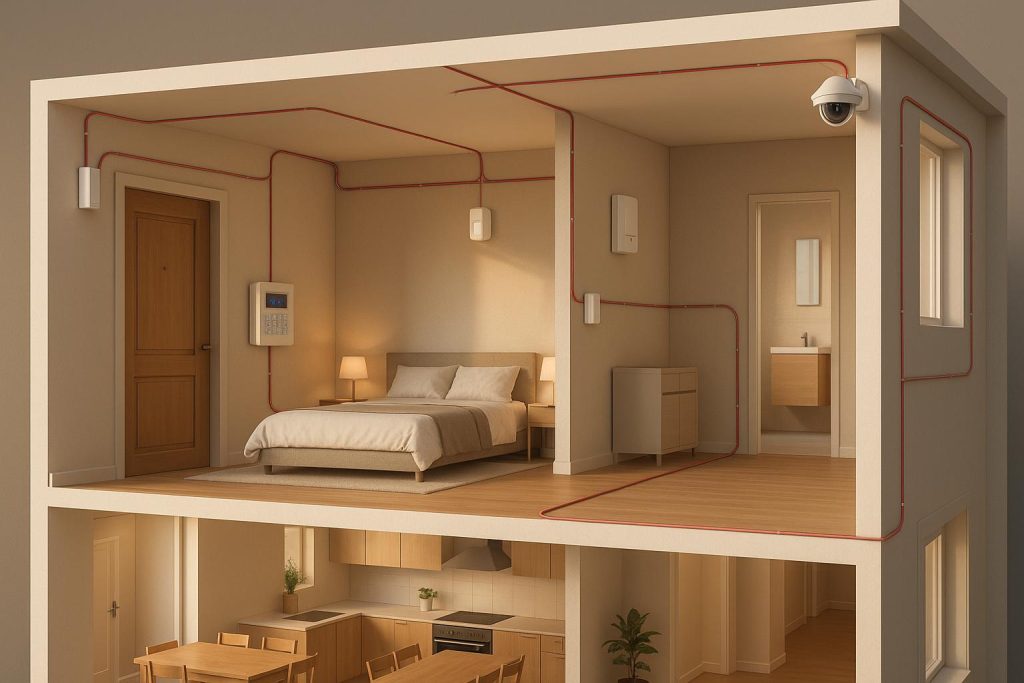
Wired alarm systems are a reliable choice for securing homes and businesses. They use physical cables to connect components like sensors, keypads, and sirens to a control panel, ensuring consistent communication without interference from Wi-Fi or radio signals. These systems are ideal for properties requiring long-term, stable security.
Key points:
- Main Components: Control panel, keypads, door/window sensors, motion detectors, sirens, and backup power supply.
- Installation: Best handled by professionals due to the complexity of running cables through walls and ceilings.
- Advantages: High reliability, minimal false alarms, and low maintenance since most components are powered directly by the system.
- Drawbacks: Higher upfront costs and more invasive installation, making them less suitable for renters or short-term setups.
- Best Use Cases: Large properties, new constructions, or high-security environments like banks or warehouses.
If you’re in the Pittsburgh area, Sherlock’s Locksmith offers expert installation and support for wired alarm systems, ensuring tailored solutions for your security needs.
How to Install a Wired Traditional Alarm System in a New Construction Home
How Wired Alarm Systems Work
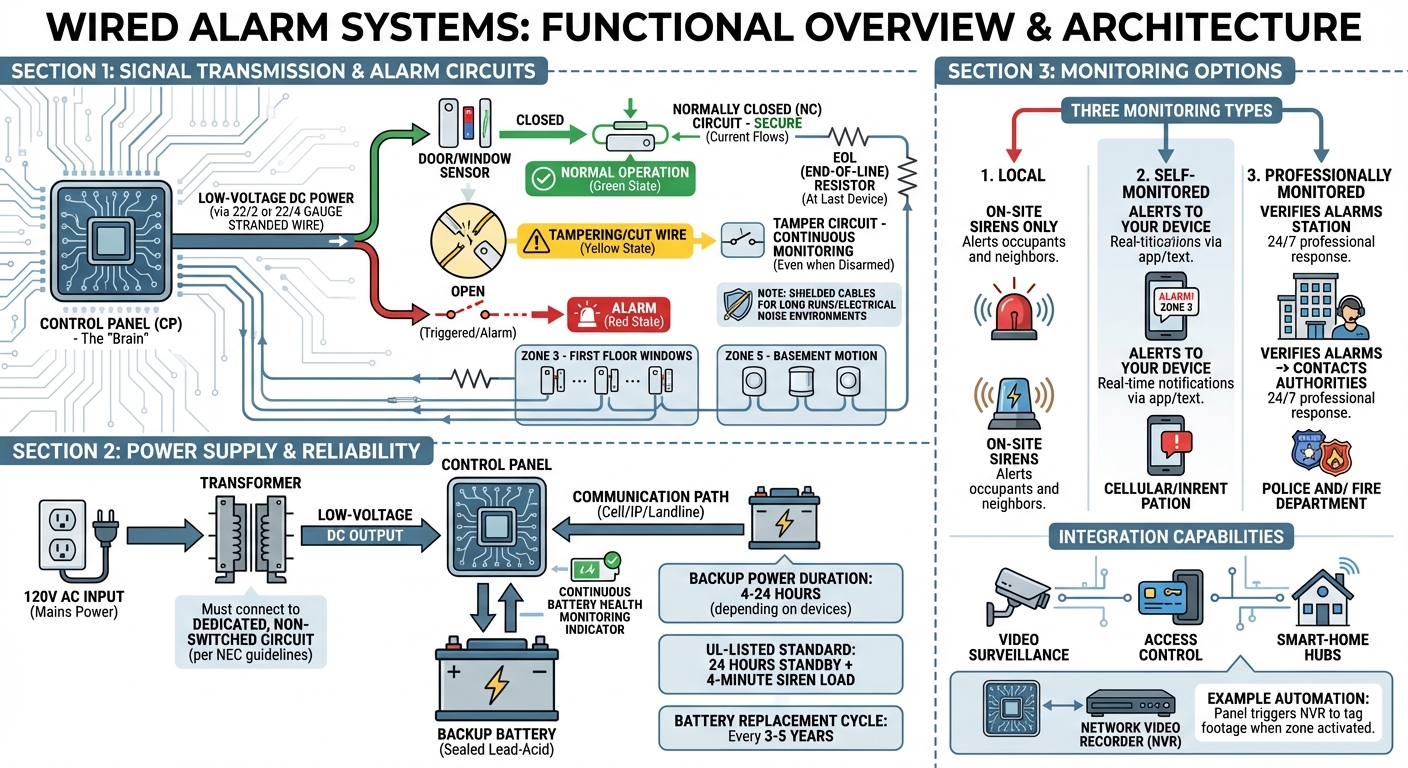
How Wired Alarm Systems Work: Signal Flow and Power Management
Signal Transmission and Alarm Circuits
In a wired alarm system, each sensor connects to the control panel using low-voltage cabling, typically 22/2 or 22/4 gauge stranded wire, which is standard in U.S. homes and businesses. The control panel sends out low-voltage DC power, and when a sensor – like a door contact – is triggered, the circuit opens. This immediately alerts the panel, signaling an alarm.
To streamline monitoring, installers group sensors into zones, which are logical sections such as "Zone 3 – First Floor Windows" or "Zone 5 – Basement Motion." Most systems rely on normally closed (NC) circuits for door and window sensors. In these setups, the circuit remains closed when everything is secure and opens if a door or window is breached. To further enhance monitoring, end-of-line (EOL) resistors are added to the last device in each zone. These resistors help the control panel differentiate between normal operation, an actual alarm, or potential tampering, like a cut wire.
Tamper circuits provide an additional layer of security. Many sensors and control panels include tamper switches that detect if someone opens a device cover, removes a detector, or cuts a cable. These circuits are monitored continuously, even when the system is disarmed. If interference is detected, the panel triggers a tamper or trouble alert. For longer cable runs or environments prone to electrical noise, shielded cables are often used to minimize interference. This careful signal management ensures the system remains reliable and responsive.
Power Supply and Reliability
Wired alarm panels are powered by 120 V AC, which is converted to low-voltage DC through a transformer. Installers in the U.S. adhere to National Electrical Code guidelines, connecting the panel to a dedicated, non-switched circuit and clearly labeling the breaker to avoid accidental shutoffs.
In case of a power outage, a sealed lead-acid backup battery keeps the system running for 4–24 hours, depending on the number of connected devices and whether sirens are actively sounding. UL-listed systems are designed to provide 24 hours of standby power, plus a 4-minute siren load. The system continuously monitors battery health and issues warnings when a replacement is needed, typically every 3–5 years.
Monitoring Options and Integration
Wired alarm systems support three types of monitoring: Local (where only on-site sirens are used), Self-monitored (alerts sent to your device via cellular or internet), and Professionally monitored (a connection to a UL-listed central station that verifies alarms and contacts authorities as needed).
Modern systems can also integrate with video surveillance and access control systems, as well as smart-home hubs. This allows for advanced features like app-based control and automation. For instance, the alarm panel can signal a network video recorder to tag specific footage when a zone is triggered, or a door controller can arm certain zones based on schedules or card-reader activity. As of 2025, Sherlock’s Locksmith in Pittsburgh, PA, provides services like alarm system installation, upgrades, and integration with access control, keyless entry, and electronic locks. This makes it possible to create a seamless and unified security setup for both homes and businesses.
Types and Components of Wired Alarm Systems
Main Types of Wired Alarm Systems
Wired alarm systems come in three primary categories, each designed for specific security needs and installation scenarios. A fully hard-wired system connects every sensor, keypad, and siren to the control panel using physical cables. This type is most commonly installed in new construction homes, large estates, or commercial buildings where wiring can be seamlessly incorporated during construction or major renovations. These systems are known for their reliability since they don’t rely on batteries or wireless signals.
A hybrid system blends a wired foundation with wireless components for areas that are difficult to access. The control panel and main zones are wired, while additional sensors are connected wirelessly in spaces where running cables would be too expensive or disruptive. Hybrid systems are a popular choice for retrofitting existing homes, light commercial spaces, or mixed-use buildings. They offer a balance between the dependability of fully wired systems and the flexibility of wireless additions.
When it comes to protection strategies, wired systems can be tailored to specific needs:
- Perimeter-only setups focus on securing entry points like doors, windows, and glass-break detectors. These are ideal for smaller homes, condos, or retail spaces that need cost-effective protection. Pet owners often prefer this setup to avoid false alarms from motion detectors while allowing pets to roam freely indoors.
- Interior-only setups rely on motion detectors placed in rooms and hallways. This approach is often used in rentals or offices where wiring every entry point isn’t practical.
- Combined perimeter and interior systems provide comprehensive coverage, with sensors at entry points and motion detectors inside. This configuration is commonly used in higher-risk properties like jewelry stores, inventory-heavy offices, or large suburban homes.
Component Breakdown
Each component of a wired alarm system plays a vital role in ensuring security. Here’s a closer look at the key elements:
- The control panel serves as the system’s brain, processing signals from sensors, logging events, and communicating with monitoring centers. It’s typically installed in a secure yet accessible location, like a basement, utility room, or locked office, near power and communication lines for easier wiring.
- Keypads are the user interface for arming or disarming the system, checking zone statuses, and entering codes. These low-voltage devices are usually installed near main entry and exit points, such as front doors or garage entries, at a convenient height for easy access.
- Door and window contacts are magnetic switches that detect when an entry point is opened. Installed on doors or windows, these contacts align closely with magnets on the frame to prevent false alarms. Basic models cost between $5 and $15 in the U.S., while heavy-duty versions are used for high-traffic or metal doors.
- Motion detectors, most commonly passive infrared (PIR) sensors, detect movement within protected areas. These are usually corner-mounted 6–8 feet above the floor and positioned to monitor likely intruder paths while avoiding HVAC vents or windows that could cause temperature fluctuations. Standard models range from $20 to $60, with specialized pet-immune or dual-technology options available at higher prices.
- Glass-break sensors are designed to recognize the sound or vibration of breaking glass, providing protection for large windows or doors without requiring a sensor on every pane. These are mounted on walls or ceilings within 20–25 feet of the windows they monitor.
- Sirens and sounders deliver loud alerts to deter intruders and notify occupants. Systems typically include at least one indoor siren, often placed centrally, and sometimes an exterior siren with a strobe to alert neighbors and guide first responders. Wired indoor sirens generally cost between $20 and $50, depending on their sound output and design.
Installers carefully route wiring through joists, studs, and conduits, avoiding interference from high-voltage lines and adhering to local electrical and fire codes. They also leave wire ties and service loops for easier maintenance and future upgrades.
Selecting the Right Components
Choosing the right components is essential for tailoring a wired alarm system to a property’s layout and risks. Professionals design zone layouts and select sensors to ensure maximum coverage while minimizing false alarms. For sirens, factors like decibel levels, indoor versus outdoor use, and local noise restrictions are considered. Exterior sirens with strobes are common in commercial settings, while many U.S. homes opt for a powerful indoor siren in a central location.
For keypads, usability features like backlit keys, clear labeling, and options for touchscreen or app integration are key considerations. Installers often separate entry points and motion detectors into different zones, enabling flexible arming modes like "stay" (for nighttime use) or "away" (when the property is vacant). In larger properties, systems may include partitions, allowing separate areas (e.g., an office and a warehouse) to be armed and disarmed independently, each with dedicated keypads and user codes.
Sherlock’s Locksmith, based in Pittsburgh, PA, specializes in security system installation and upgrades for residential and commercial properties. Their certified technicians assess factors like door and window types, existing wiring, and local crime trends to recommend the best combination of perimeter and interior devices. They also determine whether a hybrid system is the right fit.
"We understand how important security is. That is why we only use the best equipment and products – ensuring you get the most reliable protection possible."
The company handles everything from installation and testing to monitoring integration, offering 24/7 support for issues like damaged cables or faulty sensors. This ensures property owners receive a system tailored to their needs and budget.
sbb-itb-643e28e
Pros, Cons, and Best Use Cases for Wired Alarm Systems
Advantages of Wired Systems
Wired alarm systems are known for their reliability. They’re not affected by Wi‑Fi congestion, radio interference, or jamming, which makes them a stable option with minimal false alarms. This makes them a great choice for large U.S. properties like multi‑story homes, warehouses, or industrial sites. These systems can handle long cable runs and support numerous devices without issue. Plus, since most sensors are powered directly by the main panel instead of individual batteries, maintenance is minimal. The wiring is concealed, and the components are built to last, allowing for multiple panel upgrades over decades without needing to tear into walls again. While the upfront investment is higher, the long-term benefits often justify the cost. That said, wired systems do come with their own set of challenges.
Disadvantages and Limitations
The biggest downside to wired systems is the complexity of installation. Running low-voltage cables through finished walls, ceilings, and attics requires professional installation, which can be invasive and costly for completed homes. This can make the upfront costs significantly higher compared to wireless DIY kits. Expanding or relocating a wired system also involves running new cables, which can be disruptive. For renters or properties with landlord restrictions, these installation requirements are often a dealbreaker.
When to Choose Wired Systems
Wired systems shine in specific scenarios, such as large properties, new constructions, or high-security environments. Large buildings benefit from the reliable, long-distance communication that wired systems provide, avoiding the range and interference issues sometimes seen with wireless options. If you’re building a new home or renovating, installing cables before the walls are finished is both easier and more cost-effective. For businesses with strict security needs – like banks, data centers, or other sensitive facilities – wired systems are often the go-to choice. They’re resistant to RF jamming and offer dependable communication lines that meet insurance and regulatory standards. For property owners looking for a long-term, low-maintenance solution, the upfront cost of a wired system can pay off over time.
For expert advice and seamless installation, contact Sherlock’s Locksmith in Pittsburgh, PA. Their certified technicians specialize in integrating alarm systems with lock hardware and access control, delivering tailored security solutions for both residential and commercial properties.
Planning, Installation, and Maintenance
Planning a Wired Alarm System
Start by conducting a detailed site assessment to pinpoint critical entry points and any areas that might be vulnerable. Look for potential intruder paths and blind spots, then map out a zone layout. For example, you might assign one zone for the front door, another for the back door, one for first-floor windows, the garage, and another for basement motion detectors. This kind of zoning makes it easier to verify alarms and troubleshoot issues later on.
When designing the system, plan for efficient wiring routes. Use home-run wiring that connects back to the control panel. Choose a control panel location near a 120 V AC outlet and close to the main entry, but avoid placing it somewhere obvious or easily accessible to intruders. In the U.S., installations must comply with NFPA 70 and NFPA 72 standards, and you’ll need to secure the necessary permits and inspections for monitored systems. Careful planning at this stage is key to ensuring a smooth installation process, which we’ll cover next.
Installation Process Overview
With your detailed plan in hand, professional installation ensures all components are properly positioned and wired. The process typically begins with a walk-through of the property to mark device locations and cable routes. Technicians then run 18- or 22-AWG, 4-conductor shielded cables through walls, attics, basements, or conduits, making sure the cables are secure and protected. Devices like door and window contacts, motion detectors, glass-break sensors, keypads, sirens, and the control panel enclosure are mounted in locations that are secure yet accessible for maintenance.
Once the devices are mounted, the wiring is terminated and labeled at each device and at the control panel. Care is taken to ensure proper polarity and resistor placement. The control panel is programmed with zone types, entry/exit delays, user codes, and communication paths to a monitoring center, if applicable. Thorough testing follows, including walk tests, siren tests, power-loss simulations, and signal checks with the monitoring station to ensure everything is functioning as it should.
Running cables in finished homes or integrating with fire circuits and complex panels often requires a licensed professional. For example, Sherlock’s Locksmith in Pittsburgh, PA, provides 24/7 mobile technicians equipped with advanced tools to handle these challenges, ensuring a reliable and code-compliant installation.
Maintenance and Troubleshooting
After installation, regular maintenance is essential to keep your system running smoothly. Test the system monthly and verify monitored signals quarterly to ensure sensors, sirens, and communication paths are performing correctly. Annually, check terminal connections for tightness and corrosion, inspect cables for any damage or rodent interference, and clean sensor lenses and detector vents based on the manufacturer’s recommendations. The backup battery in the control panel should be replaced every three to five years or whenever a low battery warning appears.
Common problems include false alarms caused by misaligned door or window contacts, dirty motion detectors, or loose wiring. Start troubleshooting by confirming that all doors and windows are securely closed, checking that the AC transformer is plugged into a live outlet, and reviewing the keypad’s zone display to locate the issue. A structured maintenance routine will help maintain the system’s reliability. For more complex wiring faults or integration issues with door hardware and access control, it’s best to consult a professional. Sherlock’s Locksmith offers certified security experts who can quickly diagnose and fix problems, perform annual inspections, and provide ongoing support to ensure your wired alarm system remains dependable for years to come.
Conclusion
Wired alarm systems set the gold standard for reliability in both residential and commercial security. Thanks to their hardwired connections, they are immune to issues like wireless interference, signal jamming, or battery failures – offering uptime rates as high as 99.99% in professional installations. When designed thoughtfully and installed by experts, these systems can provide decades of dependable protection.
This level of reliability can be a deciding factor when choosing a security solution. If you’re planning to stay in your property long-term and need a stable, code-compliant system, a wired alarm system is an excellent choice. They are particularly well-suited for medium to large buildings, homes undergoing renovation, and situations where reliability and compliance are top priorities. On the other hand, if flexibility, minimal construction work, or the possibility of moving soon are concerns, wireless or hybrid systems might be a better option.
A properly installed wired alarm system offers enduring security. To ensure it performs as expected, thorough planning and professional installation are essential. Once in place, maintenance is relatively simple – requiring periodic testing, visual inspections, and timely replacement of the backup battery.
For property owners in the Pittsburgh area, Sherlock’s Locksmith provides expert security system installation and upgrades, along with services like lock installation, rekeying, and access control. Their 24/7 mobile technicians are certified and equipped with advanced tools to handle complex wiring, integrate with door hardware, and provide ongoing support – ensuring your wired alarm system remains reliable for years to come.
This guide has prepared you to make informed decisions when discussing options with installers or security consultants. Consider factors like property size, length of occupancy, construction needs, and reliability expectations as you weigh the pros and cons. Then, schedule a site evaluation with a qualified professional to develop a customized wired alarm system plan tailored to your specific needs.
FAQs
What are the key benefits of using a wired alarm system instead of a wireless one?
Wired alarm systems stand out for their strong dependability, as they are less vulnerable to signal disruptions or hacking attempts. Another advantage is their steady power source, which eliminates the hassle of changing batteries and ensures they keep functioning even during power outages.
These systems are also known for being sturdy and reliable, making them a solid option for those seeking long-term security for their home or business.
What happens to a wired alarm system during a power outage?
Wired alarm systems are built to remain functional even during power outages by automatically switching to a backup power source. Commonly, they rely on rechargeable batteries or an uninterruptible power supply (UPS) to maintain operation.
These backup systems are designed to deliver enough power to keep the alarm running until the electricity comes back, ensuring consistent security and peace of mind.
Can a wired alarm system work with smart home devices?
Yes, many wired alarm systems can work seamlessly with modern smart home devices. This integration usually happens through compatible control panels or automation hubs, which connect your alarm system to other smart gadgets in your home – like security cameras, smart locks, or lighting systems.
Connecting your wired alarm system to a smart home setup offers added convenience, such as the ability to monitor and control your system remotely through a smartphone app. Just make sure to confirm that your alarm system is compatible with your current smart home devices before moving forward with the installation.