




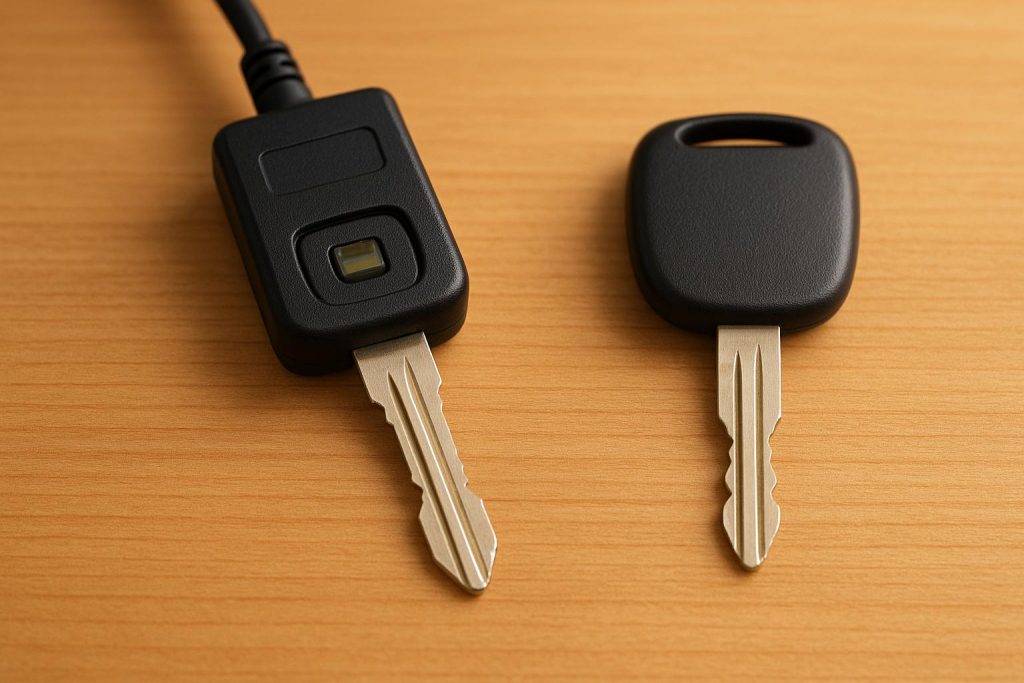
When dealing with transponder keys, understanding the difference between programming and duplication can save you time, money, and frustration. Here’s a quick breakdown:
- Programming: Needed when you lose all keys, add a new key, or if your car’s immobilizer system requires reprogramming. This process syncs a key’s microchip with your car’s system and is essential for modern vehicles with advanced security. It costs more, typically $95–$400, and takes 30–60 minutes.
- Duplication: Copies an existing key’s data onto a blank key. It’s faster (10–15 minutes) and cheaper ($50–$120) but requires a functional original key. Best for creating spare keys for older or simpler vehicle systems.
Key takeaway: If you’ve lost all keys or own a newer car, programming is your only option. Duplication works for spares if you have a working key and a compatible vehicle.
| Factor | Programming | Duplication |
|---|---|---|
| Cost | $95–$400 | $50–$120 |
| Time | 30–60 minutes | 10–15 minutes |
| Original Key | Not needed | Required |
| Best For | Lost keys, new keys | Spare keys |
| Vehicle Type | All transponder vehicles | Limited by complexity |
Pro tip: Local locksmiths often provide faster and more affordable services compared to dealerships, especially for emergencies or mobile assistance.
Transponder Key Programming: How It Works
The Programming Process
Programming a transponder key is all about syncing the microchip inside the key with your car’s immobilizer system. To do this, technicians rely on specialized diagnostic tools that can communicate directly with your vehicle’s engine control unit (ECU). The process starts by connecting this equipment to the car’s OBD port, where the technician inputs the vehicle’s VIN and security codes. From there, the programming tool generates an encrypted code that gets written to the transponder chip, ensuring it matches the immobilizer’s security protocols.
Typically, this process takes anywhere from 15 to 45 minutes, depending on the make, model, and year of your car. For newer vehicles with advanced security features, additional steps might be necessary, like accessing manufacturer databases or following multiple programming sequences. Once the programming is complete, the key is tested to ensure it communicates seamlessly with the immobilizer and can start the engine. This detailed process is essential in situations where key programming becomes unavoidable.
When You Need Programming
One of the most common reasons for transponder key programming is when all keys are lost. In this case, the immobilizer system has no existing transponder signals to reference, meaning a new key must be programmed from scratch using the car’s master security codes.
Programming is also required when adding a new key to your set. Each key has to be programmed individually, and most vehicles can only support between 2 and 8 keys at a time.
Sometimes, immobilizer system issues call for reprogramming existing keys. If your car’s ECU has been reset, replaced, or experienced a software problem, even previously functional keys might stop working. While the keys themselves remain intact, they need reprogramming to reestablish communication with the immobilizer. Similarly, aftermarket security systems can interfere with factory transponder programming, necessitating reprogramming to ensure compatibility with the modified setup. These scenarios highlight just how important proper key programming can be.
Programming Benefits
The biggest benefit of transponder key programming is the added layer of security it provides. A properly programmed key establishes a secure, encrypted connection between your car and the key, making it extremely difficult for thieves to duplicate or bypass. This is a major step up from older vehicles that rely solely on traditional metal keys.
Programming also ensures that your key works exactly as it should, which is especially important in emergencies. While programming does cost more than simple key duplication, it helps prevent key failures and the extra expenses that come with them. Over time, a well-programmed transponder key maintains reliable communication with your car’s immobilizer system, making it a practical and dependable choice for everyday use.
Transponder Key Duplication: Process and Limits
How Duplication Works
Duplicating a transponder key involves copying the encrypted data from your existing key’s microchip onto a blank transponder key. A locksmith uses specialized equipment to scan the original key’s chip, capturing its unique identification code. This code is then transferred to a new chip that matches your vehicle’s specifications. While straightforward, this process has its limitations.
One of the advantages of duplication is its speed – it usually takes about 10 to 15 minutes. The locksmith begins by scanning your original key with a reader, then uses a writer to transfer the data to a blank key. Once the process is complete, the new key works immediately, without needing additional programming or syncing with your car’s computer.
However, duplication requires a fully functional original key. The equipment cannot create a new code or establish a fresh connection with your vehicle’s immobilizer. It simply copies the existing data, meaning it’s only an option if your current key is in good working condition.
Duplication Restrictions
While duplication is fast and cost-effective, it has its limits – especially with modern vehicles that feature advanced security systems. Many newer cars use rolling codes or dynamic encryption, which makes it difficult for standard duplication tools to replicate the full security sequence.
Luxury vehicle brands often take this a step further, requiring direct access to their proprietary databases for key duplication. These systems are specifically designed to block unauthorized duplication, even if you have the original key in hand.
Some transponder keys also include multiple layers of security data. For example, a key might have separate chips for functions like the immobilizer, remote entry, or push-button start. Standard cloning tools can’t replicate all these layers at once, leaving gaps in functionality.
Additionally, the condition of your original key can impact the duplication process. A damaged or worn chip may produce weak signals or corrupted data, leading to a failed duplication or a key that works inconsistently.
When to Choose Duplication
Despite its limitations, duplication can be a practical choice in certain situations. It’s especially useful if you need a spare key for convenience and your vehicle doesn’t use advanced anti-duplication measures.
Older vehicles, particularly those manufactured before 2010, often rely on simpler transponder systems without rolling codes or complex encryption. Domestic brands like Ford, Chevrolet, and Chrysler from this era are typically compatible with standard cloning tools, making duplication a straightforward option.
Duplication is also a great choice when you need multiple spare keys quickly. With each key taking only 10–15 minutes to duplicate, you can leave with several spares in a single visit. This is particularly helpful for families with multiple drivers or businesses managing a fleet of vehicles.
While duplication is generally more affordable than programming, it’s best suited for situations where cost is a priority and your vehicle’s security system allows for it.
Cost Breakdown: Programming vs Duplication
Service Pricing
Programming a car key comes with a higher price tag compared to duplication. For standard keys, programming typically costs between $95 and $220, covering most domestic models and some foreign vehicles with basic transponder systems. However, if your key includes advanced features like proximity sensors, push-button start, or enhanced security for luxury vehicles, the price can climb to $250–$400 or more.
On the other hand, duplication is generally more affordable, ranging from $50 to $120 for most standard transponder keys. This lower cost reflects the simpler process – technicians are copying existing data rather than creating a new connection with your vehicle’s computer system.
Keep in mind that additional fees can apply to both services. Emergency or after-hours assistance often adds $50–$100, while mobile on-site services may add $25–$50. Planning ahead can help you avoid these extra charges.
What Affects the Price
Several factors influence the cost differences between programming and duplication:
- Make and Model: Your vehicle’s brand plays a major role. Luxury brands like BMW, Mercedes-Benz, and Audi often require specialized tools and expertise, increasing the cost. These vehicles often use advanced encryption systems, which demand more time and sophisticated equipment.
- Key Complexity: A basic transponder key with immobilizer functionality costs much less than a smart key. Smart keys, which can control features like remote start, trunk access, and multiple security layers, are more complex and can double or even triple the cost.
- Service Provider: Mobile locksmiths offer convenience but may charge higher rates for travel and on-site equipment setup. Dealerships, while reliable, often have higher prices due to overhead costs and manufacturer markups.
- Geographic Location: Prices can vary depending on where you live. Urban areas often have higher service costs compared to rural locations. For instance, in Pittsburgh, competitive pricing among local locksmiths tends to keep costs lower than in larger cities.
Side-by-Side Cost Comparison
Here’s a quick comparison of programming and duplication to help you weigh your options:
| Factor | Programming | Duplication |
|---|---|---|
| Typical Cost Range | $95–$400 | $50–$120 |
| Service Time | 30–60 minutes | 10–15 minutes |
| Equipment Required | Diagnostic tools, vehicle interface | Key reader/writer, blank key |
| Original Key Needed | No (can use VIN) | Yes (must be functional) |
| Best For | Lost keys, new or damaged keys | Spare keys, older vehicles |
| Vehicle Compatibility | All transponder-equipped vehicles | Limited by security complexity |
| Long-term Value | Higher cost, full functionality | Lower cost, potential limits |
While duplication is cheaper and faster, it’s not always an option – especially if you’ve lost your only key or own a vehicle with a complex security system. Programming, though more expensive, offers broader compatibility and works even without an existing key.
Choosing Between Programming and Duplication
What to Consider
When deciding between programming a new key or duplicating an existing one, it boils down to your specific needs: whether you’ve lost your keys, your budget, the age of your vehicle, how quickly you need a solution, and how many keys you require.
Programming tends to cost more upfront, but it ensures better functionality and long-term reliability. Duplication, on the other hand, is a more cost-effective option but may come with some limitations, especially for modern vehicles.
For newer vehicles equipped with advanced security systems, programming is often the only viable option. Older models, however, might work just fine with a duplicated key. If you’re in a rush, duplication is generally faster and can be a lifesaver in emergencies – provided you already have at least one working key.
The number of keys you need also plays a role. If you already have a functioning key and just need a spare, duplication is usually the cheaper route. But if you’re down to your last key, investing in a programmed key can be a smarter, more secure choice. Below are some common scenarios to help guide your decision.
Common Situations and Solutions
- Lost your only key? Programming is your only option. You’ll need your vehicle identification number (VIN) and proof of ownership to get started.
- Damaged chip? Go for programming instead of duplication to ensure the new key works seamlessly.
- Need a spare key? Duplication is a budget-friendly way to get extra copies.
- Looking to upgrade security or add features like remote start? Programming is the way to go, as it unlocks additional functionalities.
- Dealer replacements too pricey? If you have a working key, a locksmith can often duplicate it at a lower cost.
- Want peace of mind? Many car owners choose to have both a programmed key and a duplicated spare for added reliability.
- Driving an older vehicle? Cars with simpler transponder systems are often well-suited for duplication unless you lose all keys or want to enhance security.
sbb-itb-643e28e
Professional Locksmith Services in Pittsburgh, PA
Benefits of Local Locksmiths
Local locksmiths in Pittsburgh bring a combination of affordability, speed, and convenience when it comes to transponder key services. While dealerships often charge higher prices for programming and duplicating transponder keys – partly due to their overhead costs – local locksmiths typically provide a more budget-friendly alternative.
Another major perk is convenience. Many local locksmiths operate 24/7 and offer mobile services, meaning they’ll come to you – whether you’re at home, work, or stranded elsewhere in Pittsburgh. No need to waste time traveling to a dealership or waiting endlessly in their service department.
Local locksmiths also stand out with their faster service. Dealerships might require appointments or even special orders for certain key types, but locksmiths usually have the necessary tools and key blanks on hand, allowing them to complete the job on the spot.
What truly sets them apart is their specialized expertise. Locksmiths have a focused understanding of locks, keys, and security systems, enabling them to deliver reliable, efficient solutions tailored to your automotive security needs.
Sherlock’s Locksmith Transponder Services
Sherlock’s Locksmith builds on these local benefits by offering comprehensive transponder key services across Pittsburgh, PA. Their certified technicians are equipped to handle even the most modern vehicle security systems, ensuring quick and efficient programming and duplication.
With their 24/7 mobile locksmith services, Sherlock’s Locksmith is always ready to assist when you’ve lost or damaged your transponder key. Whether you’re in a quiet suburban neighborhood or downtown Pittsburgh late at night, their team will arrive promptly to help.
Their services cater to a wide variety of vehicles, from those with basic transponder chips to advanced models featuring proximity keys and push-button start systems. If you have at least one working key, they can create duplicates on-site, saving you the hassle and expense of dealership visits.
But their expertise doesn’t stop at keys. Sherlock’s Locksmith also offers ignition repair, lock repair, and broken key extraction. With fully stocked service vehicles carrying diagnostic tools, key blanks, and programming equipment, they’re prepared to handle multiple car security issues in one visit, making them a one-stop solution for automotive locksmith needs.
On the job – Replacing Lost Car Key – Decoded, Cut, & Programmed
Summary: Programming vs Duplication
The discussion above outlines the main differences between transponder key programming and duplication, offering a straightforward way to decide which service you might need. The choice ultimately depends on whether you have a functioning key. If you’ve lost all keys, programming is the way to go. This process creates a brand-new key and syncs it with your car’s security system using specialized diagnostic tools. Because of the complexity and equipment involved, programming tends to be more expensive. On the other hand, if you already have a working transponder key, duplication is a faster and more affordable option, ideal for creating backup keys.
Time is another important consideration. Programming can take longer, especially for newer vehicles with advanced security systems, and often requires specific equipment on-site. Duplication, by contrast, skips the need to connect with your car’s computer system, making it a much quicker process.
For those in Pittsburgh, local locksmiths like Sherlock’s Locksmith provide a convenient solution. Their mobile units are equipped to handle both programming and duplication on the spot, saving you the hassle and cost of visiting a dealership or arranging for towing. Whether you need an emergency replacement after losing your last key or simply want a spare, their 24/7 mobile services ensure you’re never left stranded.
FAQs
What should I do if my transponder key suddenly stops working?
If your transponder key stops working, the first thing to check is the battery in your car key fob. A dead battery is often the reason behind the issue. Simply replace it with a new one and test the key to see if it works.
If the problem continues, the transponder chip inside the key might be damaged or need reprogramming. In this situation, reaching out to a professional locksmith is your best option. They’ll be able to evaluate the issue, reprogram the key, or provide a replacement if needed. Make sure to choose a locksmith with the right tools and expertise to handle transponder key problems effectively.
How can I tell if my car key needs programming or just duplication?
If your car key includes electronic features like a chip or remote functions and your vehicle isn’t starting or the key doesn’t respond, it probably requires programming. However, if your key is just a basic metal key without any electronic parts, duplication should do the trick.
For cars with transponder keys, programming is necessary to ensure the key can communicate with your vehicle’s security system. On the other hand, duplication is a straightforward process for basic, non-electronic keys and usually costs less. If you’re not sure which option you need, reaching out to a professional locksmith can help you figure out the right solution for your situation.
Do certain car brands or models require more advanced key programming?
Vehicles from luxury brands like BMW, Audi, and Mercedes-Benz, as well as premium models from Toyota, Ford, and Honda, often come with more sophisticated key programming requirements. Why? These cars are equipped with advanced security systems designed to block unauthorized access and protect against theft.
Programming keys for these vehicles isn’t a simple task. It usually requires specialized tools and expertise to properly sync the transponder chip in the key with the car’s onboard computer. If your vehicle includes these enhanced security features, it’s crucial to rely on a professional locksmith who has the right equipment and knowledge to handle the programming process accurately.