







When securing your property, should you focus on design or rely on tools like cameras and locks? CPTED (Crime Prevention Through Environmental Design) and traditional security offer two distinct approaches. Here’s a quick overview:
- CPTED: Incorporates security into the design of a space to deter crime naturally. Key principles include visibility, guiding movement, and creating clear boundaries. It’s cost-efficient when applied early.
- Traditional Security: Adds measures like locks, alarms, cameras, and guards after construction. Focuses on detecting and responding to threats.
Both methods aim to protect people and property but work differently. The best results often come from combining CPTED’s design strategies with traditional security’s tools and systems.
Quick Comparison
| Feature | CPTED | Traditional Security |
|---|---|---|
| Focus | Preventing crime through design | Detecting and responding to threats |
| Approach | Built into the space layout | Added after construction |
| Cost | Lower upfront when planned early | Ongoing expenses for equipment and staffing |
| Examples | Lighting, clear sightlines, defined boundaries | Cameras, alarms, reinforced locks, security guards |
Crime Prevention Through Environmental Design (CPTED): Detailed Briefing for Security Professionals
Main Differences Between CPTED and Traditional Security
CPTED and traditional security differ in both timing and approach. One focuses on shaping the environment to prevent problems before they arise, while the other reacts to threats as they occur. Understanding these distinctions can help you determine which strategy best suits your property’s needs and budget. Let’s explore how these differences play out in terms of prevention, design integration, and costs.
Prevention vs. Detection and Response
CPTED takes a proactive stance, aiming to discourage crime before it even occurs. By improving design elements like lighting and sightlines, it increases visibility and makes potential offenders think twice about targeting a property. The idea is to reduce the chances of crime by creating an environment that feels secure and well-monitored.
On the other hand, traditional security focuses on identifying and addressing threats as they happen or afterward. This includes tools like cameras to monitor activity, alarms to signal breaches, and security personnel to intervene as needed. These measures are more about detecting and responding to incidents rather than preventing them outright.
For example, consider a parking lot. A CPTED approach might involve redesigning the space with better lighting and a layout that eliminates hidden corners, making the entire area visible and unappealing to potential offenders. In contrast, a traditional security setup might include surveillance cameras and routine patrols to catch any wrongdoing in progress. Other CPTED strategies include positioning windows to oversee entry points, trimming landscaping to eliminate hiding spots, and ensuring outdoor areas are well-lit at night.
Take a retail strip mall in a U.S. city as another example. A CPTED strategy might involve reshaping parking and storefront layouts to maximize visibility from the street, while a traditional security setup could rely on cameras, roll-down gates, and overnight guards to manage incidents.
Design Integration vs. Add-On Solutions
CPTED emphasizes integrating security into the very design of a space. Whether it’s a new construction project or a renovation, CPTED encourages incorporating security features from the start. This might include thoughtful placement of entrances, parking areas, landscaping, and lighting to enhance natural surveillance, control access, and establish clear boundaries. Architects, planners, law enforcement, and security professionals often collaborate to weave these elements into the design before construction begins.
In contrast, traditional security measures are typically added after a building is completed. These include cameras, alarms, reinforced locks, and barriers. For existing properties, retrofitting CPTED strategies can involve small but impactful changes like trimming trees to improve visibility, modifying fences to allow clearer sightlines, updating parking lot layouts, relocating dumpsters away from walls, or adding windows and lighting to eliminate blind spots. Traditional retrofits, on the other hand, focus on bolstering surveillance and access controls without altering the physical layout.
For instance, in a small office building, a CPTED retrofit might involve rearranging partitions to create open sightlines from the reception area to other parts of the building. A traditional security approach would likely focus on adding cameras or badge readers to existing doors without changing the structure.
Cost Considerations
The financial implications of CPTED and traditional security differ significantly. CPTED often requires upfront planning with architects or consultants to incorporate security into the design. However, many CPTED measures – like strategic lighting, clear sightlines, and thoughtful landscaping – can be cost-neutral when included from the beginning. Once implemented, these measures generally have low ongoing costs since they rely on passive elements rather than high-maintenance technology or staffing.
Traditional security, while requiring less initial design effort, often leads to ongoing expenses for equipment, monitoring, repairs, and personnel. When comparing costs, it’s helpful to evaluate the total investment over several years – typically five to ten – to weigh a one-time CPTED design expense against the recurring costs of cameras, alarms, and security staff.
Certain high-risk environments, such as financial institutions, data centers, or specific retail settings, may require robust traditional security to meet regulatory or insurance requirements. However, for many properties like schools, residential neighborhoods, office parks, and commercial centers, CPTED can serve as a strong foundation, reducing the need for expensive add-ons.
A practical approach for many U.S.-based property owners is to combine both strategies. Start with a CPTED-driven design featuring well-lit entrances and clear boundaries, then supplement with traditional measures like high-security locks, access control systems, alarms, and CCTV for critical areas. For example, in a small business or apartment complex, CPTED might guide the layout of parking areas, pathways, and lobbies, while a local provider like Sherlock’s Locksmith in Pittsburgh could handle the installation of deadbolts, master key systems, and electronic security. Together, these approaches create a layered defense – using environmental design to deter crime and traditional security to address any breaches that may occur.
Principles and Methods
When it comes to protecting property, two approaches stand out: CPTED (Crime Prevention Through Environmental Design) and traditional security methods. CPTED focuses on using design to influence behavior and discourage crime, while traditional security relies on technology and hardware to control access and detect threats. Both are valuable, and understanding their strengths lets you make smarter decisions about safeguarding your space. Below, we break down how each approach works and how they complement each other.
CPTED Principles
CPTED is built on a set of principles aimed at reducing crime by shaping the environment. These principles guide how spaces are designed, maintained, and used to deter criminal activity before it happens.
Natural surveillance is all about visibility. The idea is to make potential offenders feel exposed and at risk of being seen. This can be achieved by placing windows to overlook parking lots and entrances, using consistent exterior LED lighting to eliminate dark corners, and keeping landscaping low to avoid creating hiding spots. Studies show that improving natural surveillance can reduce robberies by as much as 84%.
Natural access control focuses on guiding people toward appropriate areas and away from restricted zones through the physical layout. Instead of just relying on locks or gates, this principle uses features like clearly marked entrances, designated pathways, low fencing, and landscaping that subtly discourages trespassing. By making the correct routes obvious, this strategy reduces the chances of someone wandering into vulnerable areas unnoticed.
Territorial reinforcement establishes clear boundaries that signal ownership and care. Examples include changes in pavement texture between public and private areas, decorative fencing, private parking signs, and well-maintained front yards. These features give residents and employees a sense of responsibility for their space, making them more likely to notice and address suspicious behavior.
Maintenance and image management ties into the "broken windows" theory, which suggests that visible neglect invites further disorder and crime. Keeping a property clean, repairing vandalism quickly, replacing burnt-out lights, mowing lawns, and removing graffiti all send a message that the area is well cared for and monitored. Neglected spaces, on the other hand, signal low guardianship, making them attractive to criminals.
Activity support encourages legitimate uses of spaces to increase natural surveillance and social control. Placing playgrounds, benches, outdoor café seating, or bus stops in visible areas brings people into the space, making it harder for offenders to act unnoticed. Community events, outdoor activities, and mixed-use developments also enhance this principle.
Target hardening combines design with mechanical measures to strengthen physical barriers. Reinforced doors and frames, secure window hardware, limited roof access, and controlled loading docks make forced entry more challenging. While this approach involves mechanical solutions, it’s most effective when integrated into the overall design rather than added as an afterthought.
Traditional Security Methods
Traditional security methods focus on controlling access, detecting intrusions, and enabling quick responses when incidents occur. These systems often rely on hardware, technology, and personnel to protect property.
Locks and reinforced hardware are the backbone of traditional security. Deadbolts, high-security lock cylinders, reinforced door frames, and strike plates all work to delay forced entry. Master key systems allow for different levels of access while maintaining overall control. Businesses in cities like Pittsburgh often turn to experts like Sherlock’s Locksmith for secure installations, repairs, and upgrades to mechanical systems.
Electronic access control systems are now standard in commercial and multi-family residential buildings. These systems use keycards, key fobs, keypads, or biometric readers to authenticate users. They offer several advantages over traditional keys, such as the ability to grant or revoke access remotely, log entries for auditing, and automate door locking schedules. These systems are especially useful for managing access to sensitive areas, parking garages, and building entrances.
Alarm systems are designed to detect unauthorized access and alert the appropriate parties. Intrusion alarms monitor doors, windows, and motion within a building, triggering sirens and notifying monitoring centers or law enforcement. Panic buttons and duress codes provide an additional layer of security during emergencies like robberies or threats.
Security cameras and video surveillance (CCTV) play a key role in detection and evidence collection. Cameras monitor high-risk areas like entrances, parking lots, and cash-handling zones. While their deterrent effect is limited, they excel at documenting incidents and aiding investigations. Modern systems with video analytics can even flag unusual behavior or movement patterns, adding an extra layer of monitoring.
On-site security personnel – such as guards, patrols, or concierge staff – provide active monitoring and immediate response capabilities. They can check IDs, monitor camera feeds, conduct rounds, and work with law enforcement during incidents. While effective, employing security personnel comes with higher costs for staffing and training.
How CPTED and Traditional Security Work Together
Here’s how CPTED principles align with traditional security measures to create a layered defense strategy:
| CPTED Principle | Practical Application | Supporting Traditional Security |
|---|---|---|
| Natural surveillance | LED lighting, windows overlooking streets, low landscaping | CCTV for blind spots, video analytics |
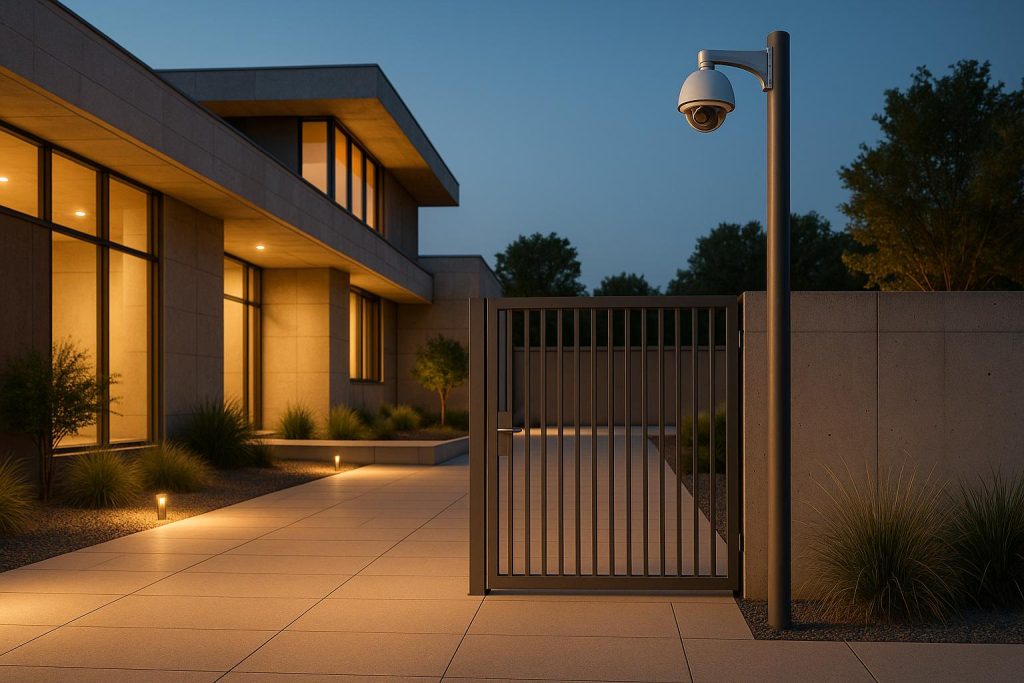
| Natural access control | Marked entrances, pathways, controlled gates, directional signs | Keypads, card readers, intercoms, mechanical locks |
| Territorial reinforcement | Fencing, property markers, branded signage, maintained yards | Alarm stickers, monitored gatehouses |
| Maintenance / image | Graffiti removal, fixing lights, mowing lawns, trash cleanup | Security patrols flagging issues, cameras spotting vandalism |
| Activity support | Playgrounds, seating, bus stops, retail in visible areas | Event security, temporary cameras, access control during events |
| Target hardening | Strong doors, secure windows, controlled loading docks | High-security locks, alarms, reinforced glazing, gates |
Traditional security methods are designed to deter, detect, delay, and respond to crime. They are most effective when layered together – locks slow down intrusions, alarms alert authorities, cameras document events, and guards provide immediate action. When combined with CPTED principles, these methods become even stronger. For example, a well-lit parking lot (CPTED) not only discourages crime but also improves the effectiveness of cameras and guards. Similarly, a clearly defined entrance (CPTED) is an ideal spot for access control systems and surveillance cameras. Together, these approaches work to reduce opportunities for crime and ensure a robust response when prevention isn’t enough.
sbb-itb-643e28e
How Each Approach Works in Practice
Looking at real-world applications helps clarify when to rely on CPTED, traditional security, or a combination of both. Each approach delivers distinct results, depending on the context.
CPTED Results
CPTED focuses on reshaping spaces to discourage criminal activity. Studies show it can lead to noticeable crime reductions. By improving natural surveillance, defining clear property boundaries, and maintaining spaces regularly, CPTED fosters safer environments without depending entirely on security equipment.
In residential areas, this might mean better outdoor lighting and trimming overgrown bushes to improve visibility. For commercial and retail settings, clear sightlines between parking lots, entrances, and interiors make it harder for offenders to act unnoticed while also creating a more welcoming environment for customers.
Public spaces and campuses benefit from CPTED’s emphasis on activity-friendly designs and upkeep. For instance, well-maintained parks with lit pathways and prompt graffiti removal encourage legitimate use, naturally discouraging criminal behavior. However, CPTED often requires upfront investments for environmental changes, and its effects may take time to become measurable since it works by influencing behavior over the long term.
Traditional Security Results
Traditional security measures excel in providing immediate detection and response. High-security locks and reinforced hardware can slow break-ins, giving residents or employees more time to react and allowing law enforcement to intervene. In cities like Pittsburgh, businesses and homeowners often turn to experts like Sherlock’s Locksmith to ensure proper installation and upkeep of mechanical security systems.
Electronic access control systems help regulate who can enter a property and when, while alarm systems and video surveillance detect unauthorized activity and provide evidence when needed. On-site security personnel add another layer of active monitoring and quick response, which is particularly important in high-risk locations like banks, schools, and other facilities with heightened security needs. However, traditional security primarily focuses on reacting to threats rather than addressing the conditions that make a location vulnerable. It also requires ongoing investments in equipment, maintenance, and staffing.
Using Both Approaches Together
For a well-rounded security plan, combining CPTED’s design principles with traditional security’s detection and response features is often the best approach. Measures like upgraded locks, motion-sensor lighting, and protective window films serve as a bridge between these two strategies. These physical upgrades not only make properties harder to breach but also reinforce the natural surveillance and territorial signals established by CPTED.
In residential neighborhoods, CPTED lays the groundwork with improved visibility and defined property lines, while traditional security adds layers like strong deadbolts and monitored alarm systems. Commercial properties benefit from a mix of CPTED strategies, such as clear sightlines and well-lit storefronts, paired with intrusion alarms, CCTV systems, and secure storage solutions. Public spaces and campuses see the most protection when CPTED designs are complemented by emergency phones, surveillance cameras, and trained security staff.
Starting with CPTED during the planning and design stages creates a strong foundation for crime prevention. Once these environmental features are in place, traditional security measures can be added as reinforcements – like using video cameras to monitor blind spots or installing keypads and mechanical locks for better access control. Together, these methods create a layered defense that combines the strengths of both approaches, offering a more comprehensive solution to safety and security challenges.
Conclusion
Key Points
CPTED (Crime Prevention Through Environmental Design) and traditional security methods each play essential yet complementary roles in safeguarding people and property. CPTED focuses on crime prevention through thoughtful design elements like natural surveillance, access control, territorial reinforcement, and consistent maintenance. On the other hand, traditional security relies on tools like locks, alarms, cameras, and trained personnel to detect and respond to immediate threats.
The most effective security strategies often combine these approaches. CPTED establishes a strong foundation by minimizing crime opportunities through design, while traditional security adds critical layers of detection and physical protection. Over time, CPTED can reduce costs by lowering reliance on expensive reactive measures and personnel. However, traditional security remains indispensable for addressing specific threats and ensuring a well-rounded plan.
Your security approach should balance proactive design with responsive measures tailored to the specific needs of your property. For new construction projects, incorporating CPTED principles early in the design phase is ideal, as adjustments at this stage are more cost-efficient. For existing properties, traditional security measures may need to take priority initially, with gradual CPTED improvements like better lighting, trimmed landscaping, and improved sightlines introduced over time.
To create a security plan that works for your property, expert guidance can make all the difference.
Getting Expert Help
Developing an integrated security plan often requires professional expertise. Consultants can assess risks and recommend strategies that effectively blend CPTED principles with traditional security measures. They can identify which design changes will have the greatest impact and where mechanical or electronic systems are essential.
In Pittsburgh, Sherlock’s Locksmith offers specialized services for both CPTED-based upgrades and traditional security systems. Their certified technicians provide everything from upgrading deadbolts and rekeying locks to installing advanced access control systems and electronic security solutions. Whether you’re enhancing natural access control points identified through CPTED or reinforcing an existing property with additional security layers, professional advice ensures your investments deliver maximum protection.
A comprehensive security assessment can help prioritize immediate vulnerabilities while laying the groundwork for long-term crime prevention through smart environmental design. Combining expert consultation with quality installation creates a security strategy that is both effective and sustainable.
FAQs
How can CPTED principles be applied to a property that wasn’t originally designed with security in mind?
CPTED, or Crime Prevention Through Environmental Design, can be applied to existing properties with a few strategic changes to the environment. Start with better lighting – brighten up dimly lit areas like pathways, parking lots, and entrances to improve visibility and discourage unwanted activity.
Next, take a closer look at your landscaping. Trim back overgrown bushes or trees, especially near windows and entry points, to eliminate potential hiding spots.
You should also think about access control. Adding secure locks, gates, or fences can clearly define boundaries and limit unauthorized access. To strengthen your approach, consider upgrading security systems with tools like surveillance cameras or alarms.
Need a hand? Sherlock’s Locksmith provides professional services, from lock installations to security system updates, to help keep your property safe and secure.
How much does it cost to combine CPTED strategies with traditional security, and how can property owners manage these expenses effectively?
The cost of blending Crime Prevention Through Environmental Design (CPTED) strategies with traditional security measures can vary significantly. Factors like the size of the property, specific security requirements, and the extent of the implementation all play a role. For instance, CPTED might focus on adjustments like better lighting or strategic landscaping, while traditional security often involves installing locks, cameras, or alarm systems.
To keep expenses manageable, property owners can tackle upgrades in stages, starting with cost-effective CPTED solutions. Simple steps like trimming overgrown bushes or adding motion-sensor lights can make a noticeable difference. Over time, you can invest in more advanced traditional measures, such as high-security locks or surveillance systems. Working with a reliable security provider, like a professional locksmith, can help you develop a customized, budget-friendly plan that suits your property’s specific needs.
Where is CPTED most effective, and when should traditional security methods be prioritized?
CPTED, or Crime Prevention Through Environmental Design, works best in spaces where the focus is on discouraging crime by shaping environments to encourage natural surveillance, control access, and establish a sense of ownership. Examples include residential neighborhoods, public parks, schools, and commercial areas – places where fostering safety and community connection is a priority.
On the other hand, traditional security measures like locks, alarms, and surveillance cameras are crucial for situations requiring immediate physical protection. These are especially important for high-risk properties, businesses managing valuable assets, or locations with a history of criminal incidents. By blending CPTED strategies with traditional security tools, you can create a well-rounded and effective protection plan.