







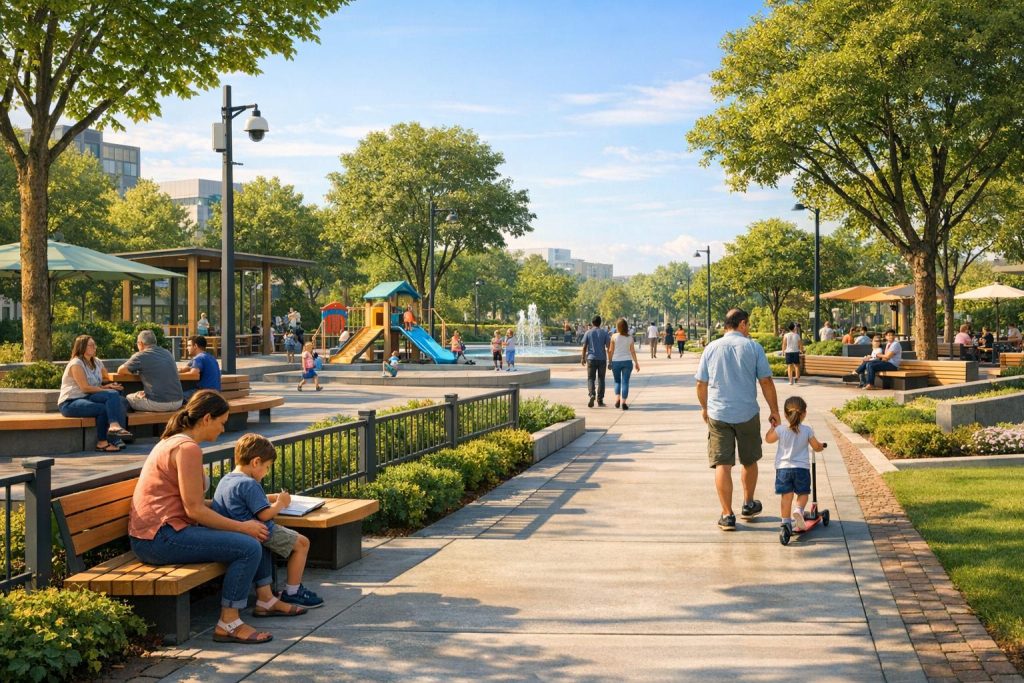
Crime Prevention Through Environmental Design (CPTED) transforms public spaces like parks and transit stations into safer, more inviting areas by using smart design to reduce crime. Instead of relying on guards or cameras, CPTED focuses on making spaces visible, accessible, and well-maintained to deter criminal behavior. Here’s a quick breakdown of its core principles:
- Natural Surveillance: Increase visibility to deter crime. Use clear sightlines, windows, and proper lighting.
- Access Control: Guide movement with clear pathways, barriers, and well-marked entrances.
- Territorial Reinforcement: Define ownership with boundaries like fences, landscaping, and signage.
- Maintenance: Keep spaces clean and functional to signal active management.
- Community Activation: Involve locals to build a sense of shared responsibility.
Real results show the impact: Bryant Park in NYC saw a 92% crime reduction after applying CPTED, while Denver’s transit updates led to a 65% drop in narcotics-related incidents.
Want to learn how to implement these principles step by step? Read on.
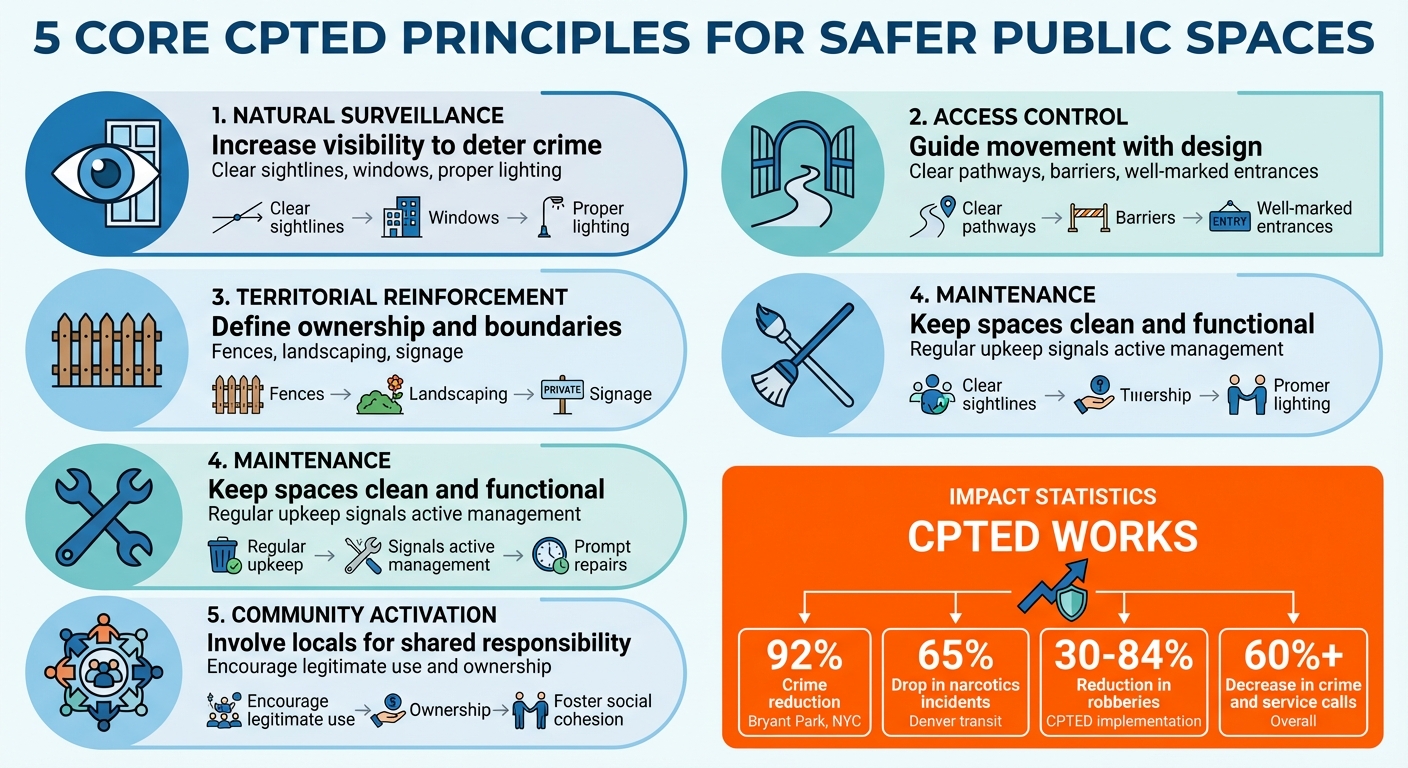
5 Core CPTED Principles for Safer Public Spaces
How Is CPTED Used In Public Spaces?
sbb-itb-643e28e
Natural Surveillance: Improving Visibility
Natural surveillance works as a deterrent to crime by increasing visibility, making it harder for offenders to act unnoticed. By designing public spaces with clear sightlines and open visibility, criminal activity becomes easier to spot and report. This approach turns everyday users of a space into informal observers, helping to discourage unwanted behavior.
"CPTED is essentially the premise that people with malevolent intent want to be clandestine and don’t want to be detected or observed. We can change the built environment to make them more observable, thereby creating fear that they’ll be caught." – Sean Ahrens, Security Market Group Leader, Affiliated Engineers
The main goal is to eliminate blind spots and create uninterrupted sightlines. When applied effectively, natural surveillance not only reduces crime but also fosters a sense of safety, encouraging more positive use of public spaces. This can be achieved through thoughtful placement of buildings and windows.
Building and Window Placement
Positioning buildings and windows strategically plays a big role in enhancing natural observation. High-traffic areas like reception desks, workstations, dining spaces, or cashier stations should be near windows that overlook streets, parking lots, or pathways. This setup allows for continuous, passive monitoring. Similarly, main entrances should be at least partially visible from the street to ensure arrivals and departures are naturally observed. To maintain clear sightlines, avoid covering windows with posters, tall plants, or signs.
For areas like parking lots, driveways, ATMs, or restrooms, place them where they can be easily viewed from nearby building windows. A CPTED audit conducted in Syracuse, NY, in February 2018 identified various blind spots that needed addressing.
Design vertical circulation with transparency in mind. Use transparent materials, such as glass or open railings, for stairways to eliminate hiding spots and allow visibility as people move. In parking garages or hallways with sharp turns, convex mirrors can help pedestrians see around corners, reducing opportunities for concealment.
Lighting Design
Proper lighting is critical for visibility and safety. Install security lights at a height of nine feet to provide even, glare-free illumination. Automated controls, like "Dusk to Dawn" lights or timers, combined with well-angled fixtures, ensure consistent lighting without blinding pedestrians. Motion-activated lights are especially useful for walkways and driveways, as they conserve energy while signaling movement.
Maintenance is just as important as installation. Broken or obstructed lights – whether due to overgrown plants or technical issues – can undo the benefits of a well-planned lighting system. Protect fixtures and wiring from moisture damage by using caulk or putty to seal them. For areas where traditional wiring isn’t feasible, solar-powered or battery-operated motion sensor lights offer alternative solutions, though they may require more frequent upkeep.
Research shows that applying CPTED principles, including improvements in lighting and visibility, can lead to a 30–84% reduction in robberies. Alongside lighting, thoughtful landscaping can further enhance visibility.
Landscaping for Clear Sightlines
The way vegetation is managed can either support or hinder natural surveillance. Following the "two-six" rule is key: keep shrubs trimmed to 2–3 feet and prune tree canopies to a height of 6–8 feet. This approach ensures a clear line of sight at eye level.
Avoid dense, wall-like plantings that block views. Instead, space plants so that entrances, parking lots, and pathways remain visible from multiple angles. Maintain a clearance of 10–16 feet along pathways and bike routes to prevent vegetation from obstructing visibility. Use a graduated planting approach, where shorter plants are closer to paths and taller ones are set back, to avoid creating immediate blind spots.
"Using low hedges and strategically placed trees allow for natural surveillance, where residents or passerby can easily observe the area, reducing opportunities for criminal behavior." – Michael White, CPP, Risk Assessment Consultant
Opt for low-maintenance plants that naturally stay within desired height limits. Coordinate landscaping with lighting by placing trees and shrubs in ways that don’t block light sources or create deep shadows. For boundaries, thorny plants like bougainvillea can act as natural deterrents without obstructing views, offering both security and visibility.
Natural Access Control: Managing Entry Points
Natural access control is all about guiding people to the right places while subtly discouraging entry where it’s not wanted. The idea is straightforward: use design features like sidewalks, landscaping, and barriers to create clear paths for legitimate users and steer others away from restricted areas using master key systems. These elements work together to maintain order and security in public spaces.
"There must be a clear demarcation between what is public space and what is private space. Public and private spaces cannot ooze into each other as they do typically in suburban settings or in projects." – Jane Jacobs, The Death and Life of Great American Cities
The aim here isn’t to build walls or create a fortress-like vibe. Instead, natural access control pairs well with natural surveillance – using features like open fences or low shrubs to mark boundaries while keeping visibility intact. This balance is critical, especially when you consider that property crimes occur roughly every 3 seconds in the U.S., though only about one-third of these are reported. Below are some practical strategies for designing secure and welcoming spaces.
Designing Clear Entry Points
Make entrances easy to find. Features like porches, overhangs, or textured pavements can signal entry points. Clear signage is also essential, helping visitors, residents, and delivery personnel find their way without confusion. This reduces the chances of unauthorized wandering.
For vulnerable areas like first-floor windows, planting thorny shrubs such as roses or barberry can act as a natural deterrent while also defining property lines. Avoid recessed doorways or dark corners near entrances – these can provide hiding spots.
Good lighting is key. Ensure entrances are well-lit so faces can be recognized from about 33 feet away. Place exterior doors where they’re visible from the street or nearby buildings, and use open railings to maintain visibility while subtly marking boundaries.
This same principle applies to pedestrian pathways – well-lit and observable routes naturally guide movement.
Placing Walkways in Visible Areas
Walkways should be positioned in open, central locations where they can be easily seen from windows or active spaces. This creates what’s called "positive guardianship", where the presence of legitimate users naturally deters unwanted activity.
Avoid secluded paths. Pathways hidden behind buildings or obscured by dense vegetation can become opportunities for concealment. Instead, design walkways that are visible from multiple angles, run alongside building edges, or are overlooked by windows. Use changes in pavement texture or color to differentiate public routes from private or restricted areas, providing subtle cues to guide people.
In multi-unit spaces, limit the number of units sharing a single entrance to no more than four. This fosters a sense of ownership and encourages residents to keep an eye on their surroundings.
Using Barriers for High-Risk Areas
Physical barriers are essential for securing sensitive zones and controlling both pedestrian and vehicle access. Crash-rated bollards, for example, are designed to stop heavy vehicles – even a 16,534-pound vehicle traveling at 50 mph. These are particularly effective in high-risk pedestrian areas, where they allow foot traffic while preventing vehicle-ramming attacks.
A notable example occurred in January 2025, when Bourbon Street faced a vehicle-ramming attack after permanent bollards had been removed. Following the incident, the city collaborated with security consultant William Bratton to implement a mix of permanent bollards and portable crash-rated barriers for high-risk periods.
Choose barriers based on your needs. Fixed bollards or reinforced street furniture provide long-term protection, while retractable bollards and automated gates allow for controlled access when necessary. For temporary events, mobile crash-rated barriers are a solid option. For instance, the Rose Parade in January 2025 used these barriers to secure the event and removed them afterward to restore normal traffic flow.
To maintain visibility and security, keep balcony railings and patio enclosures under 42 inches high. Open fence designs, like wrought iron or chain-link, are another good option – they control access without blocking sightlines. For a more welcoming look, consider reinforced planters or decorative bollards. These provide safety without making spaces feel overly fortified or uninviting.
Territorial Reinforcement: Creating Ownership
Territorial reinforcement builds on access control by encouraging a sense of ownership and responsibility among legitimate users of a space. When people feel connected to an area, they’re more likely to keep an eye on it and take action if something seems off. This psychological connection acts as a strong deterrent to crime. Properties without visible security measures or clear boundaries are 300% more likely to be burglarized. The key is to design spaces that convey care and oversight without making them look overly fortified.
Incorporating Crime Prevention Through Environmental Design (CPTED) principles, including territorial reinforcement, has been shown to reduce robberies by 30% to 84% and decrease crime and service calls by over 60%. Establishing clear boundaries and promoting legitimate activity are essential steps in fostering this sense of communal ownership.
Defining Boundaries
Clear boundaries help people distinguish between public, private, and semi-private spaces. Tools like low fences, bollards, planters, and landscaping can define these areas effectively while maintaining open sightlines and avoiding a hostile appearance. The aim is to create a "perceived sphere of influence", signaling that the space is cared for and monitored.
Use varied materials to subtly mark transitions. For example, switching from concrete sidewalks to brick pavers near an entrance can signal a shift from public to private space. These visual cues make boundaries clear to legitimate users while making it easier to spot intruders.
Maintain these boundaries. Neglected fences, overgrown landscaping, or faded signage can give the impression that no one is watching or cares for the area. Regular upkeep is critical to maintaining the psychological deterrent that territorial reinforcement provides.
Encouraging Legitimate Use
Spaces that encourage legitimate activities naturally become safer. Features like playgrounds, outdoor seating, and small-scale commercial areas draw people in, increasing natural surveillance and discouraging criminal behavior. When residents and business owners feel invested in a space, they’re more likely to report suspicious activity.
"Small scale neighborhood commercial uses located up to the sidewalk provide the most vigilant and alert security force available; owners and tenants have a vested interest in watching over their immediate surroundings." – Minneapolis 2040 Policy
Design spaces to support specific activities. For instance, placing benches near playgrounds allows parents to gather and keep an eye on their children, increasing the number of watchful eyes in the area. Avoid creating hidden corners or secluded seating areas that could invite loitering in unmonitored spots.
Architectural Features and Design
Architectural elements can play a big role in signaling ownership and creating a welcoming yet controlled environment. Features like awnings, columned gateways, porches, and decorative accents can mark the transition into a neighborhood or business district, subtly communicating that the area is actively managed.
Incorporate transitional spaces. Entryways, vestibules, and porches act as semi-private zones between public streets and private areas, giving residents a space to observe and monitor their surroundings. These areas foster a stronger sense of ownership and make it easier to identify outsiders.
Keep visibility high. Use open designs like wrought iron fencing, post-and-pillar structures, or open railings instead of solid walls. Balcony and patio enclosures should stay under 42 inches in height to maintain clear sightlines. For landscaping, keep shrubs trimmed to a maximum of 3 feet and prune trees so their canopies start at least 8 feet 6 inches above the ground. This balance ensures boundaries are defined without compromising natural surveillance, which is key to keeping spaces safe.
Maintenance: Keeping Spaces Safe
Even the most thoughtfully designed public space can lose its effectiveness if it isn’t well-maintained. Regular upkeep does more than just improve appearances – it sends a clear message that the area is actively managed. Neglect, on the other hand, can give the impression that no one is in charge, potentially inviting criminal behavior.
"Maintenance perhaps trumps the input of design in CPTED because failure to keep an area well-kept indicates neglect. If no one cares for a space, then people assume that no one owns it or is invested in it." – Herb Ubbens, CPP, PSP, President of Paratus Consulting Group
Issues like overgrown landscaping, broken lights, and graffiti can undermine security efforts. Effective maintenance starts with proactive landscaping and quick repairs.
Landscaping and Repairs
Keeping up with landscaping is essential for maintaining natural surveillance. Shrubs should be trimmed to 2–3 feet, and tree branches should be pruned to a height of at least 7–8 feet. This ensures clear sightlines and removes potential hiding spots. It’s also a good idea to maintain about 10 to 16 feet of cleared space along pathways, helping pedestrians feel visible and secure.
Regular upkeep should address seasonal growth and storm damage. Overgrown vegetation can block lighting or security cameras, so it’s crucial to handle these issues promptly.
Repairs should be made immediately, whether it’s replacing a burnt-out bulb, fixing a damaged fence, or upgrading to commercial electronic locks. The Broken Windows Theory highlights how visible signs of neglect – like litter, graffiti, or broken windows – can suggest a lack of oversight and encourage further criminal behavior. A tidy lawn, clean paths, and intact fixtures send a strong signal that the area is cared for and monitored.
Graffiti and litter need to be dealt with quickly. Placing garbage bins in strategic locations can help reduce litter, and having a system for prompt graffiti removal discourages further vandalism. Addressing these issues swiftly reinforces the idea that the space is under active management.
Monitoring and Rule Enforcement
Maintenance goes beyond physical repairs – active monitoring plays a key role in keeping spaces safe. Clear signage can define boundaries, outline acceptable activities, specify operating hours, and provide instructions for reporting issues. For instance, neighborhood watch markers can encourage a sense of community ownership and promote informal surveillance.
Assigning staff to perform regular site inspections and maintenance is another effective strategy. This proactive approach helps identify and address problems early. When informal guardians, such as regular users of the space, can’t uphold positive norms, formal guardians like security staff or park rangers are essential for maintaining order and deterring misconduct.
"Deteriorated structures, accumulated litter, graffiti, and abandoned property indicate less control by place managers and signals tolerance of disorder." – Seattle Police Department
Consistent enforcement of rules helps set and maintain positive behavioral standards. While good design can influence how people behave, active management is necessary to intervene when inappropriate behavior arises. Without this oversight, spaces can become vulnerable to issues like gang activity or territorial disputes. Regular monitoring ensures that CPTED strategies remain effective, keeping the space aligned with its intended purpose.
Applying CPTED Principles in Public Space Design
Incorporating CPTED principles into public space design starts early in the planning process to create areas that feel safer and more inviting. By focusing on aspects like natural surveillance, access control, and territorial reinforcement, planners can align design strategies with community needs.
Conducting Site Audits
A thorough site audit lays the groundwork for applying CPTED principles effectively. Ideally, this review happens at the 30% project planning stage, when there’s still room to adjust designs before construction begins. Starting early allows for meaningful adjustments without the extra cost of redesigns.
"The proper design and effective use of the built environment can lead to a reduction in the opportunity for crime and the fear of crime." – City of Tacoma
During the audit, identify any issues related to crime or disorder both on-site and in nearby areas. Walk through the space at various times of the day to pinpoint vulnerabilities. For example, ensure trees are trimmed to 6–7 feet, shrubs stay below 2 feet, and building entrances remain visible from the street.
Lighting is a critical factor. Good lighting should allow someone to recognize a face from about 33 feet (10 meters) away. LED systems are a great choice because they provide uniform light distribution, reducing shadows and glare where potential offenders might hide. Check if high-risk features like ATMs or public restrooms are located in active, visible areas.
Be on the lookout for "blind spots" – areas where natural design falls short. These might require technological fixes like cameras, motion-sensor lighting, or buzzer systems. To distinguish public from private property, use alternative paving materials, changes in grade, or clear signage. Importantly, all recommendations should comply with local building codes, zoning laws, and fire safety regulations.
Once vulnerabilities are identified, work with stakeholders to address them effectively.
Working with Stakeholders
CPTED strategies are most successful when the community is involved from the beginning. As mentioned earlier, engaging the people who use and care about a space boosts natural surveillance and reinforces territorial boundaries. Community members, local businesses, property managers, and security experts all bring valuable insights to the table.
"Community Activation recognizes that the involvement and support of the people who use and have connections to the place is essential to creating and maintaining safe spaces." – Seattle Police Department
Involve stakeholders during both the audit and planning phases. Residents and workers often act as "informal guardians", helping to establish positive norms and attract others to the area. When informal guardianship isn’t enough, "formal guardians" like police officers, security personnel, or park rangers can step in.
Encourage stakeholders to request professional audits, such as those offered by local Crime Prevention Coordinators. Many communities provide free security assessments based on CPTED principles. These reviews often highlight safety concerns, such as poor lighting or landscaping that creates hiding spots.
Collaborate with the community to plan "Activity Generators" – features or events like food truck gatherings, community gardens, or concerts that draw people into underused spaces. These activities increase natural surveillance and foster a sense of safety.
Clear boundary markers also play a role. Use features like alternative paving, short fences (under 36 inches), or signage to signal transitions between public and private areas. This helps establish ownership and clarifies the intended use of the space.
To address any remaining security gaps, complement these efforts with technology.
Using Technology for Safety
Technology can enhance safety in areas where natural design alone isn’t enough. Tools like surveillance cameras, smart lighting, and alarm systems can reinforce CPTED strategies.
Surveillance cameras are effective for covering blind spots, but regular maintenance is essential to prevent vegetation from blocking views. Cameras should supplement – not replace – natural surveillance provided by windows and foot traffic.
Smart lighting improves visibility and supports natural surveillance. Use timers, photo-cells, or motion sensors to ensure lights activate only when necessary. Opt for LED or Metal Halide lights, which provide accurate color rendering, making it easier to identify clothing or vehicles. Properly position fixtures to eliminate glare, as poorly placed lights can hinder visibility. Ideally, lighting should allow people to be recognized from 25 feet away.
Alarm systems act as a "target hardening" measure, securing buildings and storage areas. Train employees to minimize false alarms, and for high-risk spaces, consider additional measures like smash-resistant film for windows and doors with a minimum thickness of 1.75 inches.
Electronic access control helps regulate entry to sensitive areas. Automatic doors or gates can manage who enters and exits. Ensure all exterior doors are solid-core and equipped with deadbolts with at least a one-inch throw.
Regular maintenance is key. Check that all light fixtures and cameras are functioning properly, as neglected equipment can signal that the space isn’t being actively monitored. While technology should never replace thoughtful design or community involvement, it can serve as a valuable layer of security when integrated into a broader CPTED strategy.
Conclusion
Review of CPTED Principles
The principles of CPTED work together to reduce crime and improve safety in public spaces. Natural surveillance focuses on increasing visibility by carefully positioning buildings, utilizing proper lighting, and thoughtful landscaping. Natural access control directs movement through clearly defined pathways and controlled entry points, reducing unauthorized access and escape routes. Territorial reinforcement fosters a sense of ownership among legitimate users, encouraging them to protect the space and report any unusual activity. Lastly, active maintenance discourages vandalism by keeping spaces well-kept and cared for.
"A well-maintained space is perceived as well-observed and well-defended, promoting the principles of CPTED." – Mindy Duong, Statistical Analyst, Office of Research & Statistic
When applied together, these principles create a powerful deterrent to crime. This approach shifts the focus from reacting to incidents to proactively preventing them by reshaping the environment. Studies have shown that effective CPTED practices can lower crime rates and reduce calls for service by over 60%.
With this foundation in mind, the next steps focus on practical ways to bring these principles to life.
Next Steps for Implementation
To put CPTED into action, start with a detailed site audit to identify weak spots in surveillance, access control, and upkeep. For new developments, professional CPTED assessments can help address environmental vulnerabilities during the planning stages. Collaboration is key – bring together law enforcement, business owners, residents, and code enforcement to tackle safety concerns using the SARA Model (Scan, Analyze, Respond, Assess).
Simple adjustments like aligning windows and entrances with public paths can improve natural surveillance. Establish a system for quick graffiti removal and repairs to prevent any impression of neglect. Remember, CPTED isn’t a one-time effort – it requires regular reviews and updates to stay effective. These steps turn thoughtful design into a practical tool for keeping public spaces secure and welcoming.
FAQs
How can CPTED principles make public spaces safer and more welcoming?
To make public spaces safer and more inviting using CPTED (Crime Prevention Through Environmental Design) principles, start with a careful look at the area’s layout, lighting, and visibility. Identify any blind spots, overgrown plants, or dimly lit sections. Fix these issues by trimming back shrubs, upgrading to energy-efficient LED lighting, and ensuring clear sightlines. Even small changes – like repositioning benches or trash cans to face areas with pedestrian traffic – can improve natural surveillance.
Improving access control is another key step. Use low walls, planters, or painted pathways to direct movement and subtly discourage people from entering secluded or restricted areas. Adding clear signage to distinguish public spaces from private ones can also help create a sense of ownership, reducing the likelihood of trespassing.
Lastly, bring life to the space with community-centered activities – think farmers’ markets, art installations, or outdoor events. Pair these efforts with consistent upkeep. Fix broken lights, clean up graffiti, and maintain landscaping to show the space is cared for. This not only deters vandalism but also encourages a sense of pride and safety. By blending these approaches, public spaces can transform into safe, welcoming hubs for the community.
What makes CPTED a better approach than traditional security measures?
CPTED, short for Crime Prevention Through Environmental Design, is all about using smart design to make spaces safer and less appealing to criminal activity. Instead of leaning on equipment-heavy, reactive measures, CPTED emphasizes creating environments that naturally discourage crime. The result? It not only helps cut down crime rates but also reduces the fear of crime, boosts social interaction, and builds a stronger sense of community.
What sets CPTED apart from traditional security methods is its focus on passive, design-based solutions. These strategies are often more budget-friendly than high-maintenance security systems and offer sustainable safety improvements. By fostering community involvement and crafting spaces that feel inviting and secure, CPTED promotes long-term safety for everyone.
How does involving the community make CPTED strategies more effective?
Community involvement plays a key role in making CPTED strategies work effectively. By bringing together residents, business owners, and local organizations, planners can tap into firsthand knowledge about how a space is used, when it feels unsafe, and what could make it better. This collaboration allows for adjustments to features like lighting, seating arrangements, and access control to meet the specific needs of the community. Plus, when people feel invested in a space, they’re more likely to take care of it, report problems, and serve as informal "eyes on the street", creating a stronger sense of safety and belonging.
Beyond just improving the design of a space, involving the community also strengthens safety through social initiatives. Things like neighborhood watch programs, cleanup events, or informal monitoring of shared areas can reduce the reliance on heavy policing. These efforts encourage teamwork and shared responsibility, making CPTED strategies not only more effective but also better suited for long-term success.