





Duplicating antique keys is a specialized process that combines craftsmanship with technical expertise. These keys, often used for warded or lever locks, are valued for their historical significance and functionality. However, creating duplicates can be challenging due to unique designs, worn materials, and the unavailability of standard blanks. Here’s what you need to know:
- Antique Key Types: Common types include skeleton keys (hollowed-out bits), bit keys (specific patterns), and barrel keys (hollow shafts).
- Why Duplicate: Duplicates protect the original key from damage or loss, ensuring continued use while preserving its historical value.
- Challenges: Issues include sourcing rare blanks, dealing with worn or corroded keys, and replicating intricate designs.
- Techniques: Locksmiths may use machine duplication, hand-filing, or custom fabrication like 3D printing or casting to create accurate replicas.
If your antique key is damaged, lost, or irreplaceable, professional locksmiths can decode locks or craft new keys with precision. Always consult an expert for the best results.
Challenges in Duplicating Antique Keys
Outdated Key Designs and Unavailable Blanks
One of the biggest hurdles in duplicating antique keys is finding the right blank. Unlike modern keys – such as Kwikset KW1 or Schlage SC1, which follow standardized designs and can be easily sourced at hardware stores – antique keys like skeleton, warded, or barrel keys require custom blanks that are often hard to come by. Many antique locks were made by manufacturers that no longer exist, leaving behind unique keyways that don’t match any current templates.
The design of these keys only adds to the difficulty. For instance, barrel keys need a hollow shaft, while skeleton keys require a solid shaft with a hollowed-out bit. As Peter Slauson Jr. from Lockpicks.com puts it:
Matching the correct keyway ensures the blank slides in smoothly without resistance… Using the wrong blank could cause damage to the key machine or the lock itself.
When off-the-shelf blanks aren’t available, locksmiths often have to get creative. They might modify existing blanks or order custom ones from specialized suppliers. As Greenwich Locksmiths explains:
If we don’t have the parts, we will make them.
But even with the right blank, the condition of the original key often poses its own set of challenges.
Age-Related Damage and Metal Wear
Antique keys often suffer from wear and corrosion, which complicates duplication. Standard key-cutting machines copy every detail of the original, including any flaws. This means that worn or damaged edges can lead to a key that doesn’t work properly.
Over time, metals like bronze or iron – commonly used in antique keys – become brittle and prone to cracking during duplication. Rust and corrosion can also distort the key’s profile or clog the lock it’s meant to operate. When these changes significantly alter the "ramps and valleys" of a key’s cuts, locksmiths often have to decode the lock itself to figure out the original specifications instead of simply copying the worn key.
And what happens when the original key is missing altogether? That adds another layer of complexity.
Working Without the Original Key
If the original key is lost, locksmiths turn to techniques like impressioning. This involves inserting a blank into the lock and manipulating it to reveal binding marks, which guide the filing process until the key fits perfectly. Locksmiths may also decode the lock’s internal components or reference any stamped codes to recreate the key.
For especially rare locks where no standard blank is available, custom fabrication might be the only solution. Methods like 3D printing or metal casting are often used in these cases. Bringing the lock to a professional allows for disassembly and direct testing, ensuring the newly crafted key matches the original specifications.
Antique Desk Lock Barrel Key Make
How Locksmiths Duplicate Antique Keys
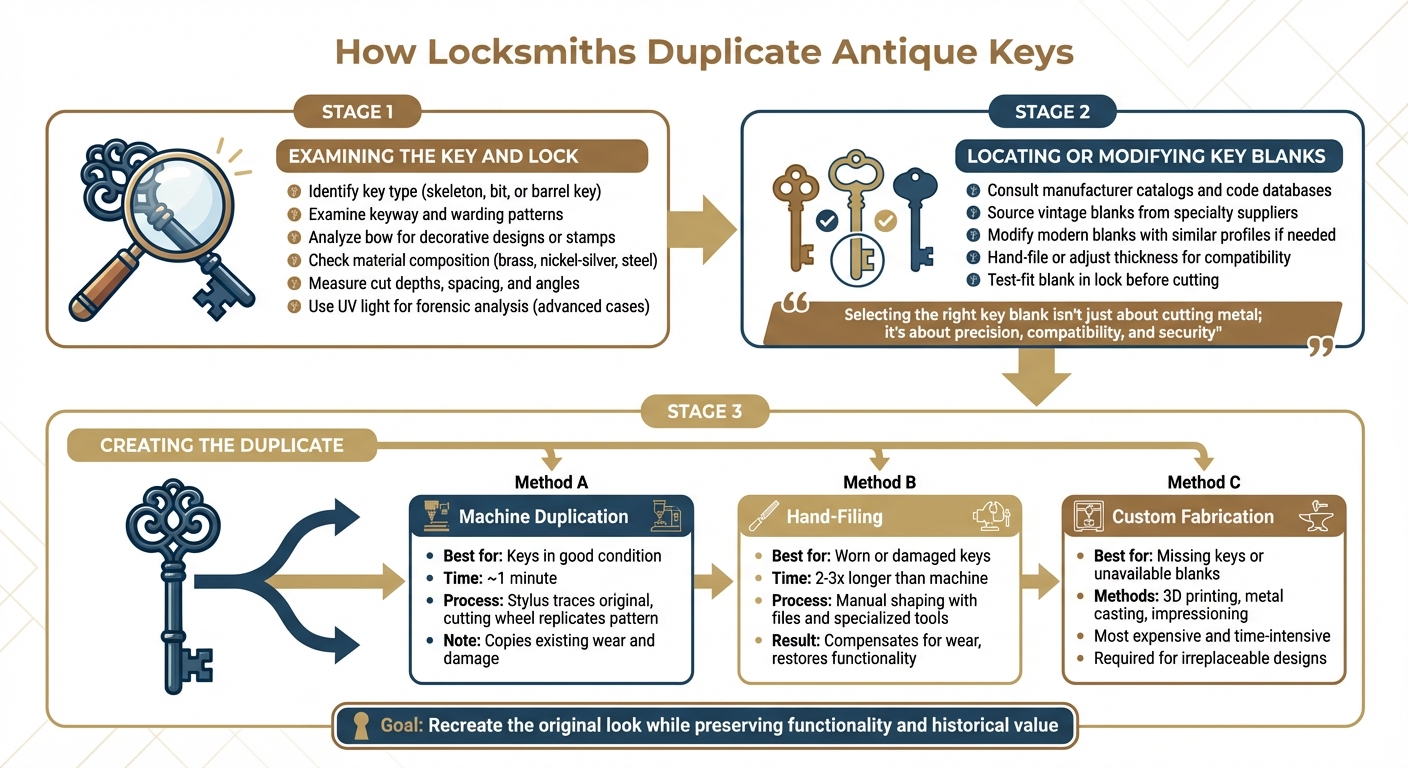
Antique Key Duplication Process: From Examination to Restoration
Examining the Key and Lock
Before duplicating an antique key, a locksmith starts by carefully inspecting the original. This involves identifying the key type – whether it’s a skeleton key with a solid shaft, a bit key with distinct patterns, or a barrel key featuring a hollow shaft. This initial step helps the locksmith determine which blanks might be compatible and what specific techniques will be required.
The locksmith also examines the keyway and warding – the grooves and ridges on the key that align with the lock’s internal mechanism. Additionally, they analyze the bow (the head of the key) for decorative designs or manufacturer stamps, which can provide clues about the key’s origin.
Material composition is another critical factor. Antique keys are often made of brass, nickel-silver, or steel. Locksmiths check for plating, as original keys are typically plated after cutting, while duplicates often reveal bare metal. Measurements of cut depths, spacing, and angles are meticulously taken, and any imperfections are noted.
In more complex cases, advanced forensic techniques come into play. For example, ultraviolet light may be used to detect impression marks or residues. As Lockpicking Forensics highlights:
The keys to a specific lock can yield just as much information as the lock itself, sometimes more so because of the possibility of hair, fiber, and fingerprint transfer when handling keys.
Once all these details are documented, the locksmith moves on to selecting or modifying a key blank that matches the antique key.
Locating or Modifying Key Blanks
After the examination, the locksmith identifies a compatible key blank. They often consult manufacturer catalogs or key code databases to find matches based on stamped alphanumeric codes. For skeleton keys, vintage blanks may need to be sourced from specialty auctions or imported from niche suppliers.
If an exact match isn’t available, the locksmith modifies a modern blank with a similar profile. This involves hand-filing or adjusting the thickness to ensure compatibility. Peter Slauson Jr. from Lockpicks.com explains:
Selecting the right key blank isn’t just about cutting metal; it’s about precision, compatibility, and security.
Before cutting begins, the locksmith test-fits the blank in the lock to ensure it slides smoothly without resistance. This step is crucial to avoid damaging both the blank and the lock. If no suitable blank can be found or if the original key is beyond repair, the locksmith uses the lock itself to create a new key.
Creating Keys from Locks
When the original key is missing or too damaged to replicate, locksmiths turn to the lock for guidance. This may involve disassembling the lock to study its internal configuration or using code cutting, where alphanumeric codes from the lock cylinder guide the creation of a new key.
Another approach is impressioning, where a blank is inserted into the lock to reveal binding marks that indicate where material should be filed. For particularly rare or intricate designs, advanced methods like 3D printing or metal casting might be used to produce an accurate replica.
Hannah from Louisiana Locksmith explains the goal of this process:
The name of the game with these keys is restoration. In other words, the duplicate copy should be able to recreate the original look of the key while preserving its functionality.
sbb-itb-643e28e
Methods for Antique Key Duplication
Duplicating antique keys requires methods carefully chosen to match the key’s condition and intricate design.
Machine Duplication
If the antique key is in good shape and a compatible blank is available, locksmiths often rely on machine duplication. This process involves a stylus tracing the profile of the original key while a cutting wheel replicates the pattern onto the blank. It’s a quick method, with most keys duplicated in about a minute.
That said, machine duplication has its drawbacks. Since the stylus copies the key’s existing condition, any wear or damage on the original key is also transferred to the duplicate. For example, if an antique key has lost metal over time, the duplicate will reflect these imperfections. Machine-duplicated keys often bear a long, straight, polished line on their side, marking where the stylus traced the original. For keys that demand greater precision, locksmiths turn to more meticulous methods.
Hand-Filing and Custom Work
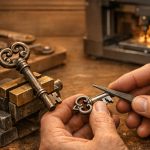
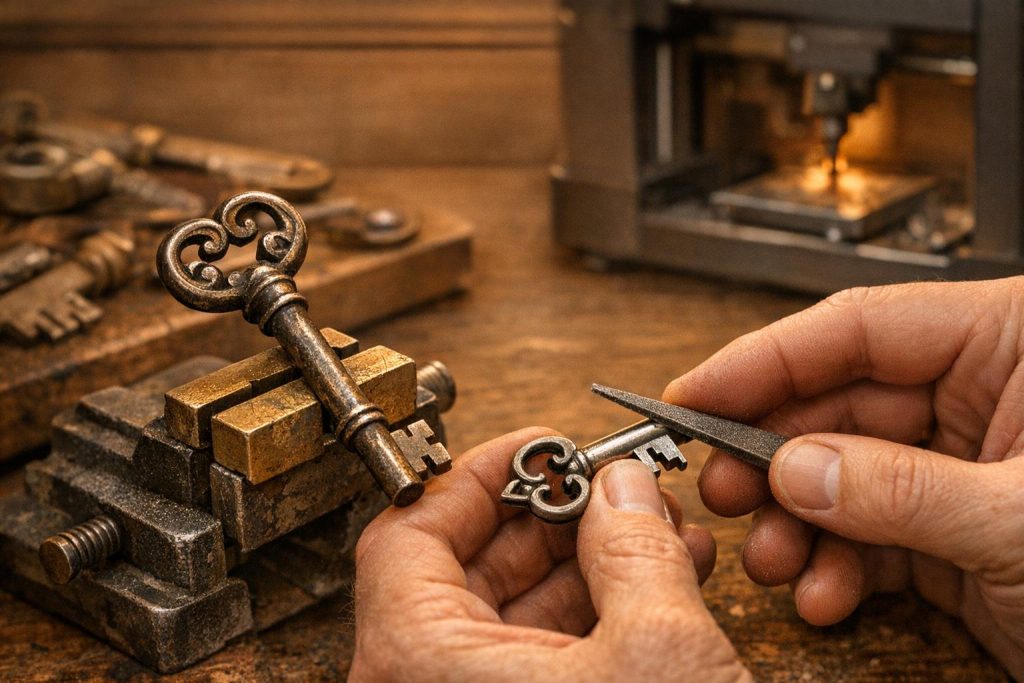
When machine duplication isn’t precise enough, locksmiths use hand-filing techniques. This method involves manually shaping the key with files and specialized tools to refine its features. While it takes significantly more time – often two to three times longer than machine duplication – hand-filing allows locksmiths to compensate for wear and restore the key’s functionality. Unlike the smooth finish of machine-cut keys, hand-filed keys show characteristic scratch marks at varying angles across the bitting.
Fabrication for Complex Keys
For keys that can’t be duplicated using standard blanks or tools, locksmiths turn to advanced fabrication methods. This might involve creating a mold with clay or other materials and casting a replica by pouring molten metal. For especially intricate designs, 3D printing or metal casting offers a precise solution. While fabrication is the most time-intensive and expensive option, it’s often the only way to recreate irreplaceable antique keys. The cost depends on factors like the key’s age, material, size, and decorative details.
When to Hire a Professional Locksmith
Situations That Require a Locksmith
Antique keys are intricate and often come with unique challenges, making it important to recognize when professional help is necessary.
If your antique key is lost, broken, or showing significant wear – like rust, corrosion, or stuck mechanisms – it’s time to call in an expert. DIY attempts or automated key duplication kiosks simply aren’t equipped to handle the delicate craftsmanship and intricate designs of antique keys. A professional locksmith has the expertise to decode the lock’s internal mechanism, retrieve broken pieces, and create an accurate duplicate.
When it comes to techniques like hand-filing or custom fabrication, professional intervention is a must. Many antique keys feature intricate bit patterns and ornate designs, which often require custom work, especially if the key is heavily damaged or if blanks aren’t readily available. Hand-filing or crafting a new key ensures the lock’s functionality remains intact while preserving its original charm.
Jean W from Broadway Lock and Key emphasizes this balance:
Restoring antique locks is not just about functionality – it’s about preserving their historical and aesthetic value.
If you’re dealing with these issues, consulting a professional locksmith is the best course of action. For those in Pittsburgh, PA, Sherlock’s Locksmith is a reliable option. Their certified technicians, available 24/7 through mobile service, have the tools and expertise to tackle even the most complex antique key challenges.
Conclusion
Antique key duplication goes beyond simply copying metal; it’s about preserving history. These keys often hold significant historical value and feature intricate designs that demand specialized techniques far beyond standard duplication services. From sourcing rare skeleton, bit, and barrel key blanks to custom hand-filing, the process requires a level of precision and craftsmanship that only skilled locksmiths can provide.
The challenges are clear: years of wear can distort a key’s original shape, outdated designs may call for custom-made blanks, and in some cases, locksmiths must fabricate a new key directly from the lock. As locksmith Mohammad Abdelhadi points out, each replication carries the risk of reduced accuracy and security if not handled correctly. DIY duplication attempts often lead to poor-quality results or even damage, highlighting the importance of professional expertise.
Experienced locksmiths can decode worn keys to recreate their original design while preserving ornamental details like intricate bow patterns. This delicate balance of function and aesthetics ensures that the key not only works but also retains its historical charm.
If you have a worn, broken, or missing antique key in Pittsburgh, PA, Sherlock’s Locksmith is a trusted resource. Their certified technicians are available 24/7, offering mobile services equipped with the tools and expertise to tackle even the most complex antique key challenges. They ensure your key is restored with both functionality and historical integrity in mind.
Before reaching out for professional help, take a few preparatory steps: identify your key type, bring the lock if necessary, and verify that your locksmith has experience with vintage keys. These small efforts will help ensure your antique key gets the expert care it deserves.
FAQs
What makes duplicating antique keys so challenging?
Duplicating antique keys is a whole different ballgame compared to modern ones. These keys often come in intricate styles like skeleton, warded, or barrel designs, and they usually don’t fit standardized blanks. This means a skilled locksmith has to either track down a suitable blank or custom-make one from scratch. Sometimes, this even involves hand-modifying the blank to match the original key’s unique shape.
The condition of the original key adds another layer of difficulty. Many antique keys are worn down, rusted, or damaged, which makes replicating their exact details tricky. In some cases, locksmiths might need to restore the original key first or even use the lock itself as a guide. On top of that, standard key-cutting machines are built for modern keys and can’t handle the complex shapes of antique designs. This often calls for manual craftsmanship or specialized tools.
That’s why turning to seasoned professionals like Sherlock’s Locksmith is the way to go. Based in Pittsburgh, their certified technicians have the know-how, advanced tools, and creative solutions to tackle even the toughest antique key duplication challenges.
How can a locksmith make a new key if the original is lost?
If you’ve lost the original key, don’t panic – a locksmith can craft a replacement by working directly with the lock itself. The most common methods include key impressioning, code cutting, and lock disassembly.
With key impressioning, a blank key is inserted into the lock, and the locksmith carefully files it down, guided by the marks left by the lock’s internal pins. Code cutting, on the other hand, relies on a key code – this might be stamped on the lock or stored in the manufacturer’s database. Using this code, a key-cutting machine produces an exact match. For high-security or more intricate locks, the locksmith may need to disassemble the lock entirely to measure its components and create an accurate key.
Thanks to these techniques, skilled locksmiths – like the experts at Sherlock’s Locksmith in Pittsburgh, PA – can craft a fully functional replacement key in as little as 15 to 45 minutes.
Why should I hire a professional locksmith to duplicate an antique key?
When it comes to duplicating antique keys, hiring a professional locksmith is essential. These keys often feature intricate and unique designs that standard key-cutting machines just can’t handle without the risk of damage. Professional locksmiths use specialized tools and techniques to create accurate duplicates while maintaining the key’s historical details and functionality.
In addition to duplication, an experienced locksmith can evaluate the condition of the antique key. They can address issues like rust or wear and even make minor repairs if needed. This ensures the duplicate key operates smoothly and helps preserve the integrity of both the key and the lock. Whether you’re a homeowner, a collector, or a museum curator, professional locksmith services provide the expertise required to handle these delicate tasks with the care they deserve.